Office lighting affects more than visibility. For project buyers, it influences visual comfort, space planning, energy use, maintenance, and how easily a lighting system can adapt when layouts change. A linear light fixture can support these priorities because its elongated form works naturally with desks, circulation routes, and architectural lines. For offices that need a coordinated appearance and performance, linear systems are worth evaluating alongside conventional luminaires.
Why Linear Lighting Fits Office Layouts
Open-plan offices rarely have a single lighting requirement. Workstations, meeting areas, corridors, reception zones, and collaboration spaces can require different distributions and mounting arrangements. A linear light fixture can follow these spaces, creating continuous visual lines and consistent lighting patterns.
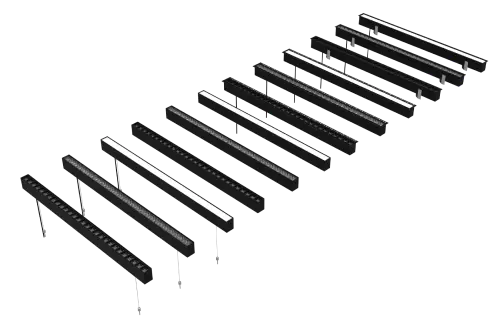
It can also suit modern office architecture. Suspended systems can become part of the ceiling composition, while surface-mounted or recessed versions can provide a more integrated appearance. For buyers, this flexibility matters because the luminaire should fit the project rather than force the project to fit one installation method.
Optics Matter for Visual Performance
Choosing office lighting should not stop at appearance. Illuminance, uniformity, luminance distribution, glare, and the visual relationship between work surfaces and surrounding areas all influence the quality of an interior lighting environment. Research presented by the CIE notes that luminance distribution affects task visibility and visual comfort, reinforcing the importance of optical design during specification.
This is where the optical configuration of a linear light fixture becomes important. Different lenses or diffusers can change how light is distributed. Buyers should therefore review photometric data, mounting height, spacing, and the intended task before selecting an optic instead of assuming that every linear product will perform identically.
Flexible Mounting Supports Different Projects
Office projects often combine new construction, renovation, and partial refurbishment. A system with multiple installation options can simplify specification across these situations. Suspension can work well where a visible architectural element is desired, while recessed installation can create a cleaner ceiling plane. Surface mounting can be useful where the existing ceiling makes recessing impractical.
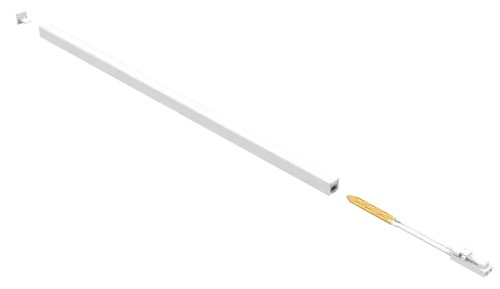
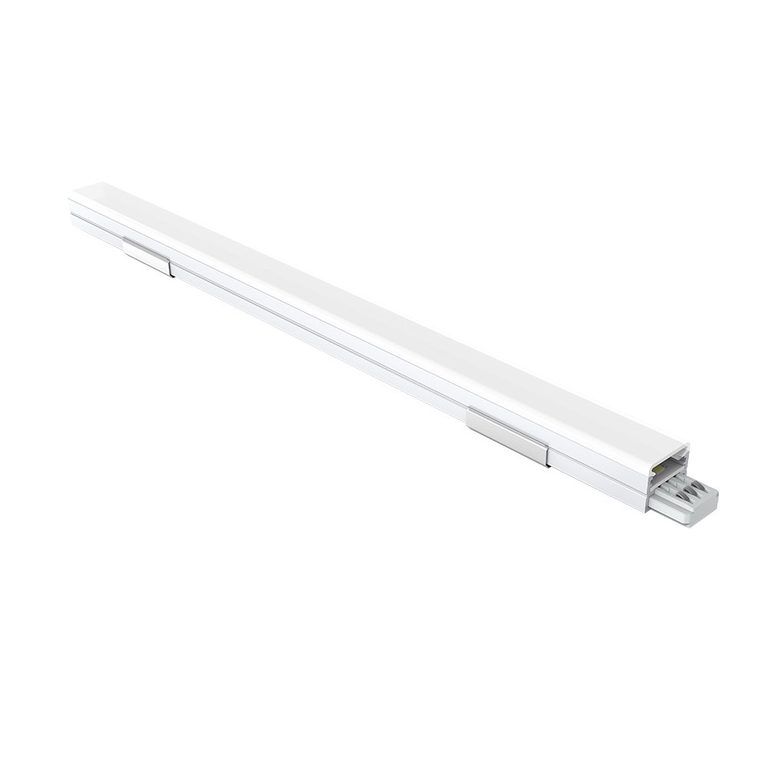
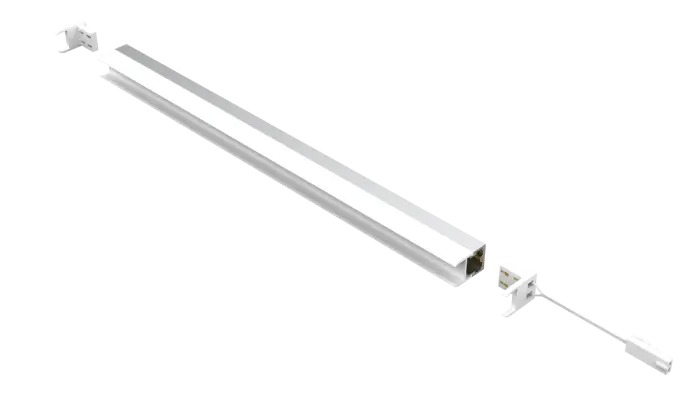
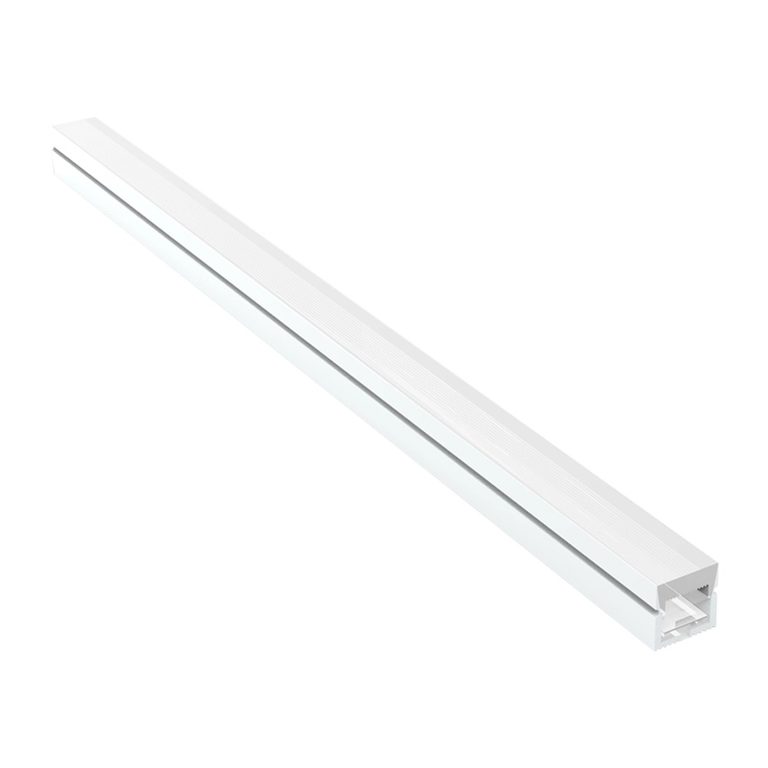
Our Kyros Series is designed around this project flexibility. We offer suspension, surface-mounted, recessed, and trimless installation options, allowing project teams to select an approach according to ceiling conditions and design intent. The series is intended for offices as well as galleries, libraries, and classrooms, where different architectural requirements may influence luminaire selection.
Why Consider a Linear LED Pendant Light?
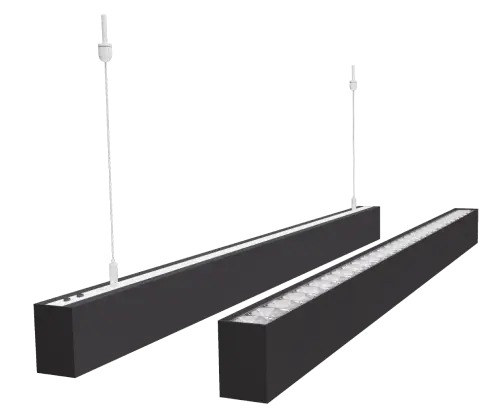
Suspended luminaires can be especially useful in offices because they place the light source at a deliberate position relative to work areas. A linear LED pendant light can also contribute to the visual identity of an open workspace, particularly when repeated modules are aligned over desks or shared tables.
For buyers, suspension should be evaluated beyond aesthetics. Mounting height, optical distribution, ceiling coordination, maintenance access, and control compatibility all affect the installed result. A well-specified linear LED pendant light should support the lighting plan rather than simply serve as a decorative ceiling feature.
CCT and Controls Add Specification Flexibility
Office projects may have different preferences for light appearance, while some spaces may need different settings at different times. Our Kyros Series offers changeable CCT, giving project teams flexibility when defining the desired lighting environment. Buyers should confirm the available CCT range and control configuration for the exact specification rather than treating tunable products as equivalent.
Controls are equally relevant to operating costs. The U.S. Department of Energy notes that LED luminaires can work with occupancy sensing, daylight harvesting, dimming, and other control strategies. Its guidance also identifies dimming as useful for open-plan offices, private offices, and conference rooms when properly specified.
Kyros Series Options for Project Requirements
We developed the Kyros Series with several specification variables so buyers can coordinate lighting with project requirements. The range includes various sizes and wattages, plus four optical choices: PC/PMMA diffuser, Lens, Honeycomb, and Grille. This gives designers more ways to balance appearance, distribution, shielding, and ceiling character.
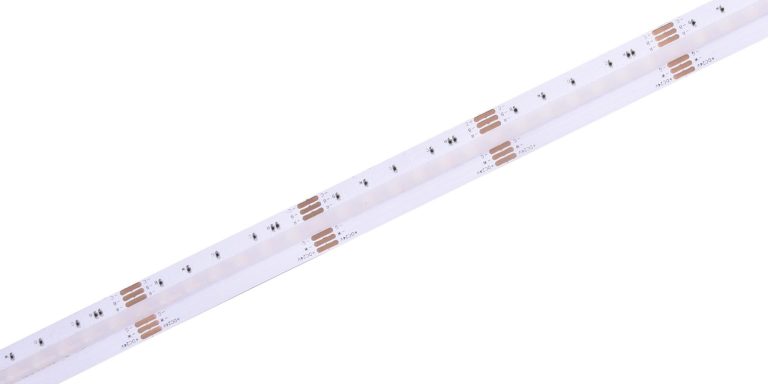
The series supports On/Off, 0–10V dimming, and DALI dimming options. This helps teams coordinate the luminaire with different control architectures. The LED module and optics can also be knocked down easily through the series’ design, which can be useful when access and component handling need to be considered during installation or service.
Consider Efficiency and Long-Term Maintenance
Energy consumption, controls, maintenance, replacement access, and expected operating conditions all affect lifecycle value. The U.S. Department of Energy identifies indoor-linear ambient as a commercial LED luminaire category and recommends considering performance data such as efficacy, power factor, color characteristics, and lumen maintenance when evaluating products.
LEDs can also support control-based energy strategies. DOE explains that LEDs are readily integrated with occupancy sensing, daylight harvesting, and local control because they are inherently controllable. Therefore, buyers should assess the luminaire and control system together instead of selecting a fixture first and addressing controls later.
A Practical Choice for Adaptable Offices
Office lighting decisions are ultimately project decisions. Buyers need to balance optical performance, architectural integration, installation method, controls, energy considerations, and maintenance requirements. A linear light fixture can be a strong candidate when a project needs consistent lines, adaptable mounting, and configurable optical performance.
For projects requiring suspended illumination, a linear LED pendant light can further combine functional lighting with a deliberate architectural presence. With our Kyros Series, we at LEDIA Lighting bring together multiple sizes and wattages, four optical choices, four installation methods, changeable CCT, and several control options. This approach gives project teams more room to match office lighting with design and operational requirements.