Commercial lighting buyers must evaluate more than a luminaire’s appearance. They need lighting solutions that meet functional requirements, complement architectural designs, support different working environments, and remain practical to install and maintain. For offices, educational institutions, galleries, and other public spaces, linear lighting offers a combination of visual consistency and installation flexibility. These advantages explain why many project developers, contractors, and lighting distributors consider it when planning commercial lighting projects.
A Clean Appearance That Complements Modern Architecture
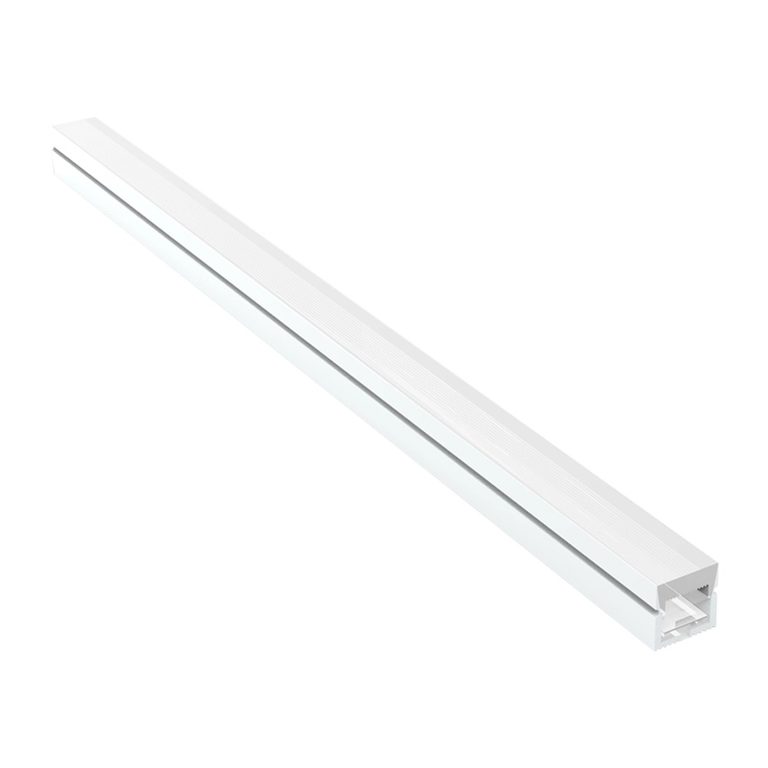
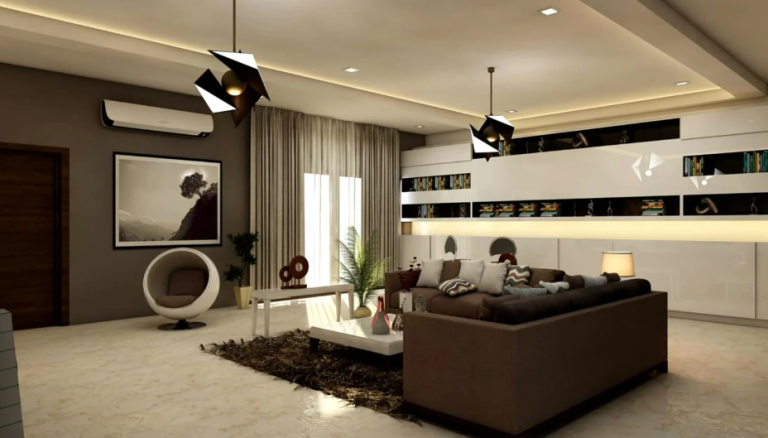
One major reason buyers choose linear lighting is its simple, streamlined appearance. Long, continuous lighting profiles create clear visual lines that complement contemporary architectural styles. Compared with conventional bulky luminaires, these fixtures can make ceilings look more organized while maintaining a professional atmosphere.
This design flexibility is particularly valuable in offices, reception areas, conference rooms, and commercial corridors. Designers can arrange fixtures in parallel rows, align them with desks, or use connected sections to create distinctive ceiling patterns. Lighting consequently becomes part of the architectural design rather than simply a functional building component.
For commercial developers, appearance can influence how employees, clients, and visitors perceive a workplace. A carefully planned lighting arrangement helps establish a consistent interior style without requiring unnecessarily decorative equipment.
More Consistent Illumination for Different Activities
Lighting distribution is another important consideration. Offices require sufficient illumination for reading, writing, computer work, and meetings. Uneven brightness can create distracting contrasts between workstations, while poorly positioned light sources may produce uncomfortable reflections on computer screens.
A well-selected linear light fixture can distribute illumination along a longer area, helping designers create a more consistent lighting arrangement. The actual result depends on optical design, fixture spacing, mounting height, and room geometry.
Buyers should therefore examine optical configurations instead of judging performance by wattage alone. Diffusers, microprismatic covers, and grille optics offer different light-distribution characteristics. Selecting an appropriate option helps balance brightness, visual comfort, and the requirements of specific working environments.
Flexible Installation for Different Ceiling Conditions
Commercial buildings rarely share identical ceiling structures. Some offices have suspended ceilings, while others feature exposed concrete slabs or limited installation space. Buyers benefit from lighting systems that accommodate these differences without requiring substantial changes to the building.
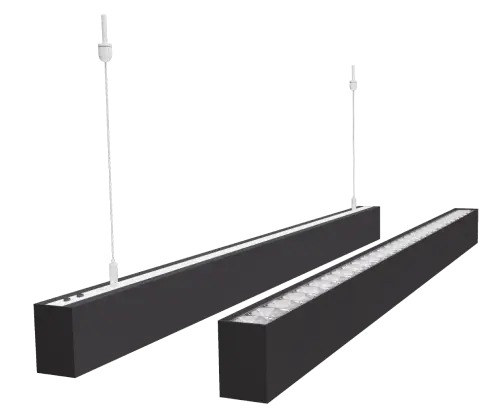
A hanging linear light is particularly suitable for spaces where suspended installation can become part of the interior design. It can establish a clear lighting line above workstations, conference tables, or shared areas. Suspension also allows installers to position the luminaire at an appropriate height.
Surface-mounted alternatives offer another practical solution for ceilings where suspension is unsuitable. When comparing installation methods, project teams should consider ceiling construction, fixing points, cable routing, maintenance access, and coordination with ventilation equipment.
Adjustable Lighting to Meet Changing Project Requirements
Different spaces require different lighting conditions. An open-plan office may need balanced general illumination throughout the day, whereas a meeting room may require adjustable brightness for presentations and discussions. Buyers increasingly consider lighting products that offer adaptable settings rather than fixed configurations.
A hanging linear light with dimming capabilities can provide greater flexibility when connected to a compatible control system. Depending on the project, buyers may specify conventional on/off drivers, 0–10V dimming, or DALI dimming to match the building’s lighting infrastructure.
Color temperature is another important factor. Adjustable correlated color temperature (CCT) allows project teams to select lighting tones according to the intended atmosphere and application. Separate control of direct and indirect illumination can further expand the available lighting options.
However, compatibility should always be verified before procurement. Buyers need to confirm driver specifications, control protocols, wiring arrangements, and the functions supported by the selected luminaire.
Multiple Optical Options Support Application Diversity
A single lighting configuration cannot address every commercial requirement. Classrooms, libraries, galleries, and offices have different visual tasks, ceiling arrangements, and aesthetic expectations. Having several optical options within one product family makes specification and procurement more convenient.
For example, PC diffusers can provide a straightforward diffused appearance, while PMMA microprismatic optics are designed for more controlled light distribution. Grille and honeycomb options offer additional possibilities for projects with particular optical or architectural preferences.
When evaluating a linear light fixture, buyers should compare optical performance, material quality, maintenance requirements, and compatibility with the intended installation environment. They should also review relevant photometric documentation to determine whether the proposed configuration meets project specifications.
This evaluation is especially important for distributors and contractors handling multiple projects. A versatile product range can simplify product selection while allowing different installations to maintain a recognizable design language.
Connected Configurations Can Simplify Project Planning
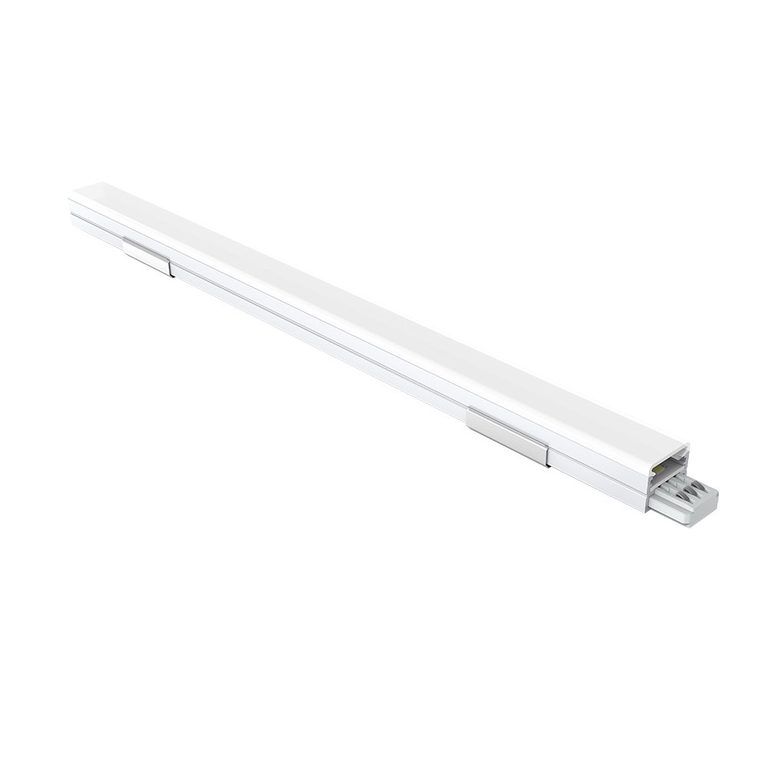
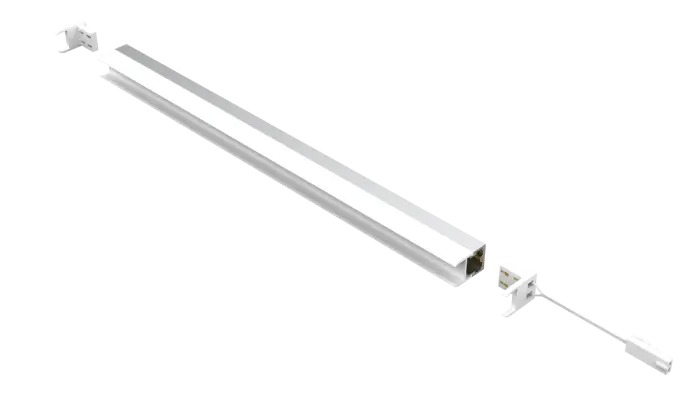
Large commercial spaces often require multiple luminaires arranged in continuous rows or coordinated lighting patterns. Compatible connectors make it possible to link individual units, creating longer lighting arrangements without treating every section as an entirely separate design element.
For buyers, this modular approach can simplify layout planning and provide more freedom when adapting lighting to different room dimensions. However, connector compatibility, electrical loading, installation instructions, and maximum connection lengths must be checked before ordering.
We incorporate different connector options into our Juno Series to support flexible linking arrangements. This gives project teams additional choices when designing coordinated office lighting layouts.
Why Product Versatility Matters to Buyers
From a procurement perspective, product versatility can influence specification efficiency, inventory planning, and project coordination. Buyers often prefer product families offering several sizes, wattages, mounting methods, and control options because these choices can address different requirements within a consistent product range.
Our Office Linear Light-Juno Series is designed around these practical considerations. We provide four sizes and wattages ranging from 30W to 60W, alongside PC diffuser, PMMA microprism, grille, and honeycomb optical options.
The series supports both surface-mounted and suspended installations. It also offers adjustable CCT through a slider switch, separate controls for upward and downward illumination, and compatible on/off, 0–10V dimming, and DALI dimming power supply options.
These features allow us to support different project specifications across offices, galleries, libraries, and classrooms. For buyers evaluating a linear light fixture, this range of configurations provides useful flexibility when balancing architectural requirements and lighting performance.
Making Better Lighting Decisions for Commercial Projects
The reasons buyers consider linear lighting extend beyond its minimalist appearance. Installation flexibility, optical choices, adjustable controls, and modular configurations all contribute to its suitability for modern commercial environments. Nevertheless, successful selection requires evaluating the complete lighting system, including photometric performance, electrical compatibility, installation conditions, and long-term maintenance.
At LEDIA Lighting, we develop office lighting solutions that address these practical requirements. Our Juno Series combines multiple installation methods, optical configurations, wattages, and control options. Whether buyers are specifying a linear light fixture for a new office or considering a hanging linear light for a renovation project, we aim to provide adaptable solutions that support different commercial lighting needs.