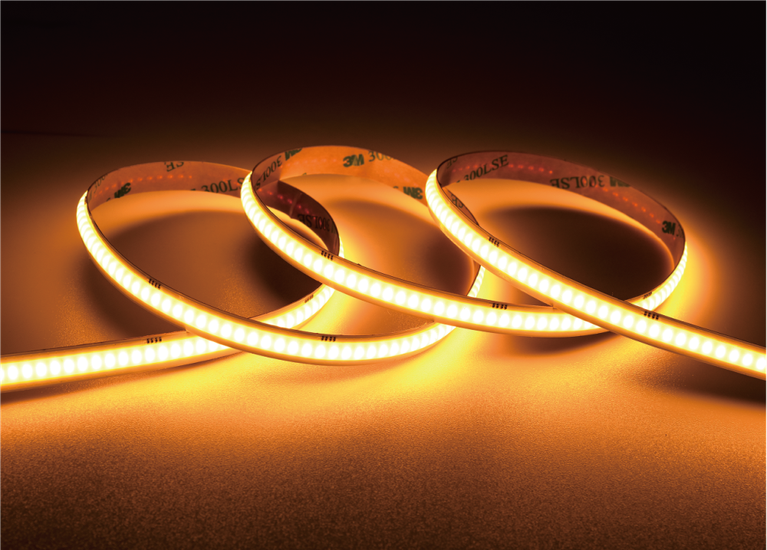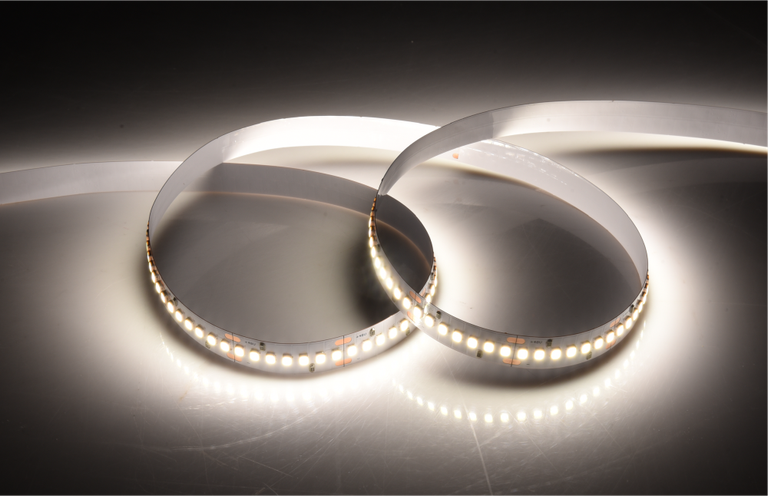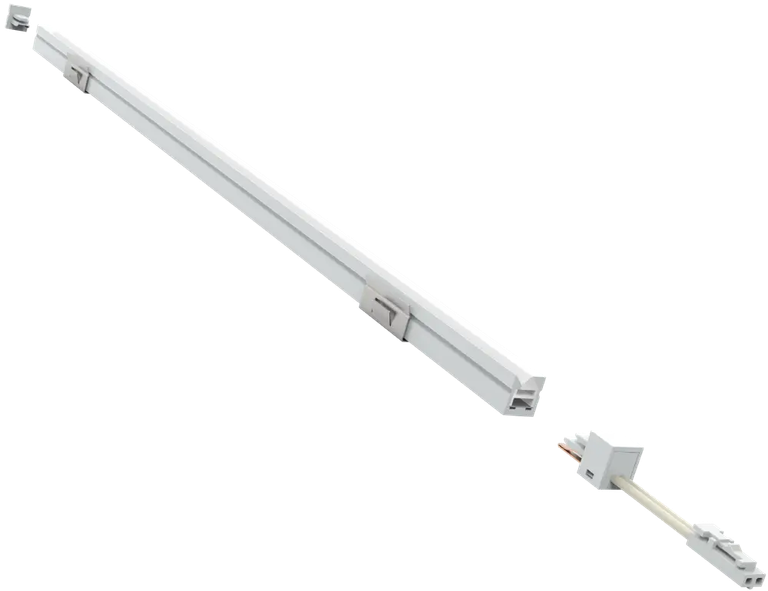
A signage buyer usually starts with the sign itself, not the lighting. The lettering may have tight curves, the logo may need a continuous outline, or the sign may contain a narrow channel where a conventional fixture simply does not fit. Once those conditions appear, the lighting source has to follow the sign rather than compete with its construction.
That is where linear strip lighting can become a practical option. We look at it as part of the sign’s physical design: where the light travels, how much space it occupies, what the viewer should see, and how the installer can reach it. Those questions often explain why a flexible linear format is considered in the first place.
The Sign’s Shape Usually Comes Before the Lighting
A straight rectangular sign is relatively easy to illuminate. Curved lettering, rounded logos, narrow outlines, and irregular graphic shapes create a different problem.
The lighting has to reproduce the intended visual path without introducing obvious breaks. A rigid fixture may require multiple pieces to follow a curve, while a flexible linear product can be planned around the route of the letter or graphic.
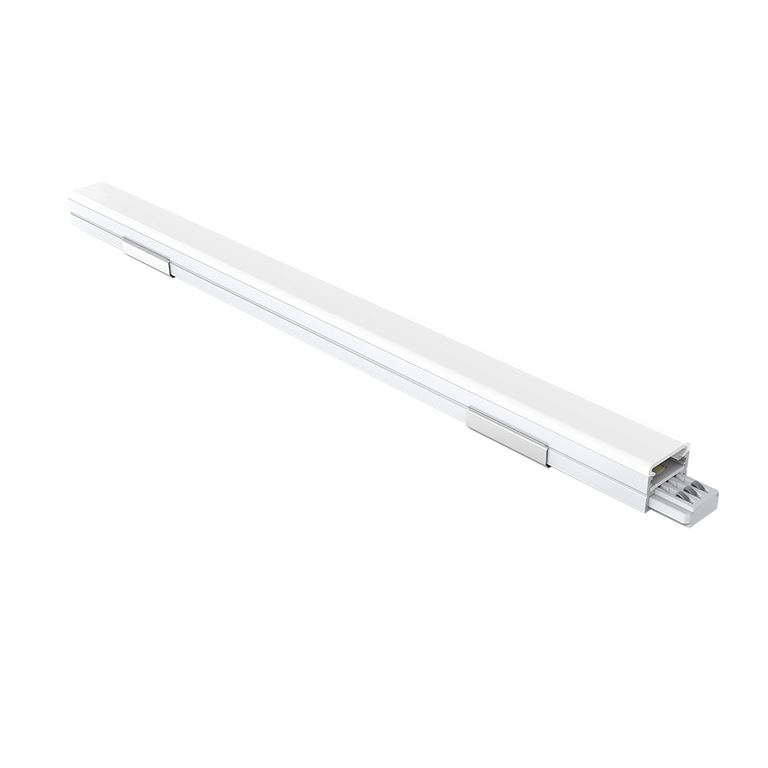
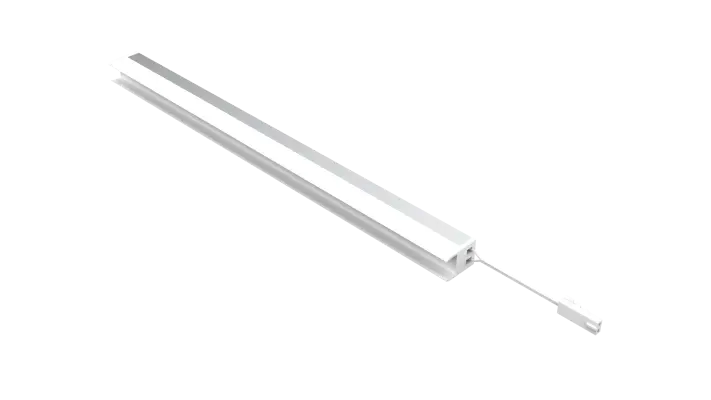
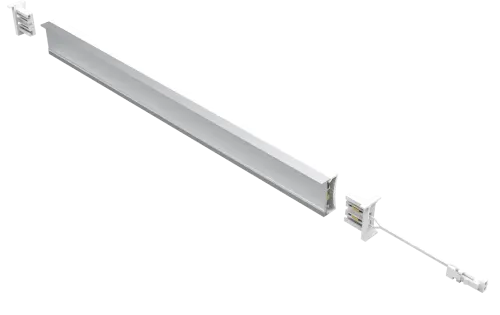
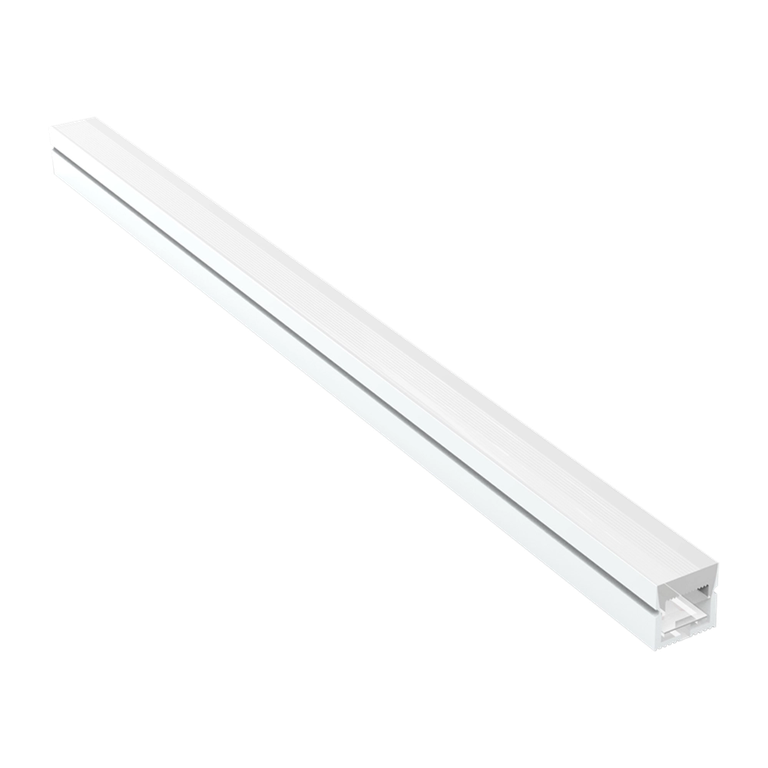
Our silicone strip-light range includes solid, hollow, and arc constructions, with several cross-sectional formats listed for different physical requirements.
For a buyer, that means the first drawing should show more than the sign’s external dimensions. The lighting path should be marked as well. Once the path is known, the required flexibility, profile dimensions, and mounting arrangement become much easier to evaluate.
A Continuous Line Can Solve What Point Sources Cannot
Signage does not always need individual bright points. Sometimes the design calls for an uninterrupted illuminated line.
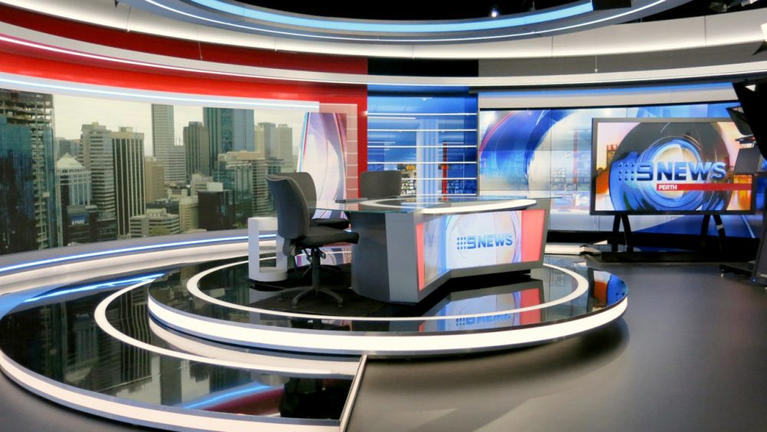
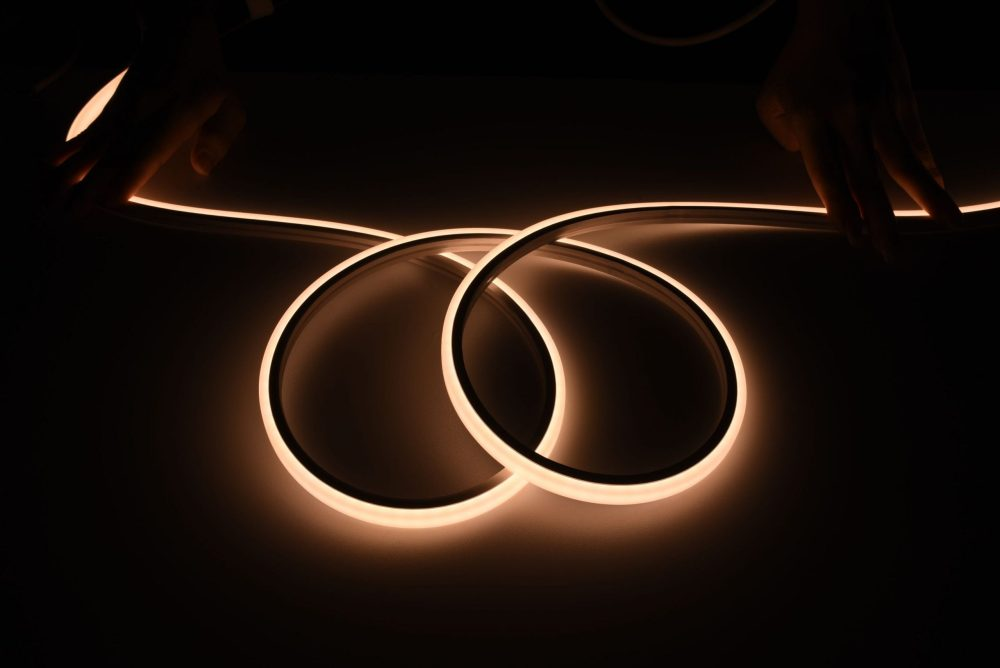
An outline around a letter, a glowing border, or a continuous graphic element can benefit from a linear source because the light follows the visual structure being created. Instead of deciding where to place multiple individual fixtures, the buyer can establish the illuminated route and select a product that fits it.
A silicone LED strip light can therefore be relevant when the lighting needs to occupy a defined linear path. The silicone category currently includes products with configurations such as 120 or 144 LEDs per meter, alongside different physical profiles. These are product-specific configurations rather than universal characteristics of every strip light.
The visual result still depends on the sign construction, viewing distance, installation position, and selected product. A linear format does not automatically guarantee uniform illumination; the complete sign assembly needs to be evaluated.
The Available Channel Determines the Right Strip Format
Once the lighting route has been established, the next question is surprisingly physical: how much room is actually available?
A sign may provide a shallow groove, a recessed channel, a narrow letter return, or a deeper cavity. A product that fits one construction may be unsuitable for another simply because its width or height does not match the available space.
The current silicone range includes 6×12 mm, 10×10 mm, 12×12 mm, 10×4 mm, 12×4.8 mm, and other profiles. It also includes hollow and solid versions.
That is why we would not specify a silicone LED neon flex solely because a project requires “flexible neon.” The buyer should first measure the channel, determine the bending direction, and identify how the product will be secured.
Product terminology is useful only after the physical requirement is clear. The sign’s construction should drive the selection.
Visible Light and Hidden Light Are Different Signage Strategies
Another decision changes the entire appearance of the sign: should the lighting source itself be visible?
Some signs are designed around a visible illuminated line. In that situation, the linear product becomes part of the graphic language of the sign. A silicone LED neon flex can be considered when the project requires a continuous visible light form rather than a concealed source.
Other signs are designed so that the light source disappears behind a face or inside a channel. Here, the buyer may be more concerned with where the light is positioned and how the sign face distributes or reveals it.
Those two approaches should not be specified in the same way. The viewing angle, distance from the sign face, channel geometry, and intended appearance all influence the required arrangement.
We therefore recommend approving the lighting together with a section of the actual sign construction whenever the visual result is critical. A product sample by itself cannot demonstrate how it will interact with the finished letter or sign body.
Outdoor Signs Put the Installation Detail Under More Pressure
Outdoor signage makes the physical specification even more important because the lighting assembly has to work within the actual environmental and construction conditions.
The product category includes silicone constructions identified with different profiles and electrical configurations, including a product listed as a 12V waterproof LED strip light. The same category also contains 24V products and an AC230V configuration, so voltage should be treated as a product-specific specification rather than assumed from the category name.
Outdoor buyers should consequently review the complete installation rather than selecting a product based on flexibility alone. Consider the sign channel, mounting method, connection points, cable entry, and the exposure conditions at the actual location.
A flexible product can solve the geometry problem while still requiring careful attention to how the complete assembly is installed.
The Purchase Decision Starts With the Sign Drawing
Linear strip lighting is especially compelling when the sign’s geometry creates a lighting path that a conventional fixture would struggle to follow.
To start, procurement talks should center on the sign drawing by defining illuminated paths, profile sizes, viewing directions, installation settings, and visual expectations, after which available strip constructions can be evaluated.
At LEDIA Lighting, we offer multiple silicone strip formats, including solid, hollow, and arc-oriented options, giving project teams different physical configurations to evaluate against the sign design.
This approach also makes the supplier conversation more productive. Instead of asking for a generic “signage strip,” the buyer can provide the actual geometry and installation requirements and evaluate a specific product against them.
Let the Sign Define the Lighting
Buyers may consider linear strip lighting for signage when the project needs a light source that can follow a continuous route, fit into a constrained channel, or become part of the visible sign design.
The important decision is not simply whether strip lighting is flexible. It is whether the selected construction matches the sign’s geometry, available space, visual objective, and installation conditions.
A silicone LED strip light may suit one signage structure, while a silicone LED neon flex format may make more sense for another. We see the best results when that distinction is made from the sign drawing first, with the lighting product selected to solve the physical problem rather than forcing the sign to accommodate an unsuitable light source.
Consequently, signage buyers benefit from sharper specifications, more precise conversations with suppliers, and a pre-production evaluation process that is straightforward and reliable.