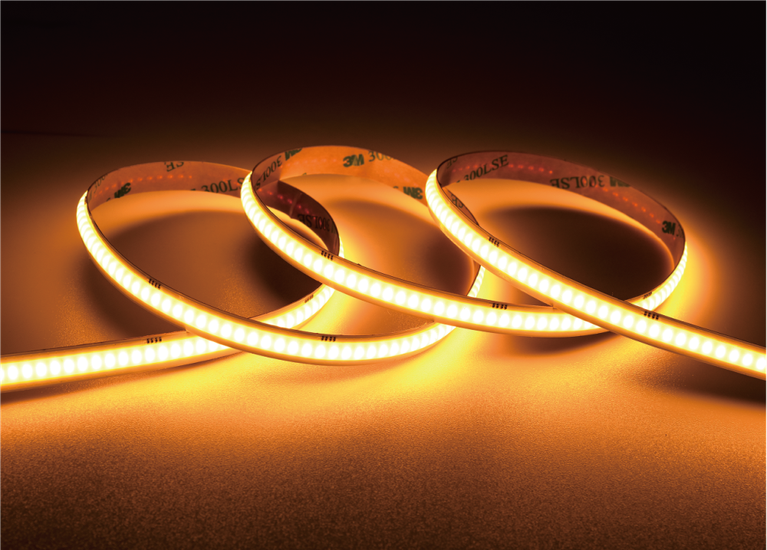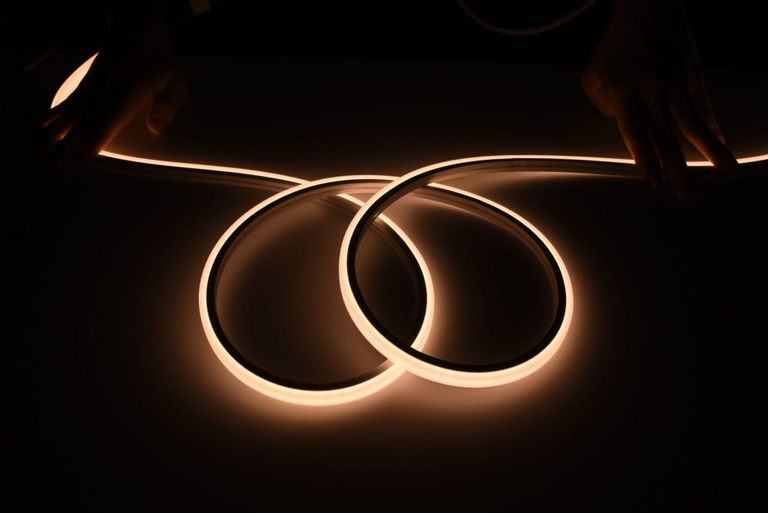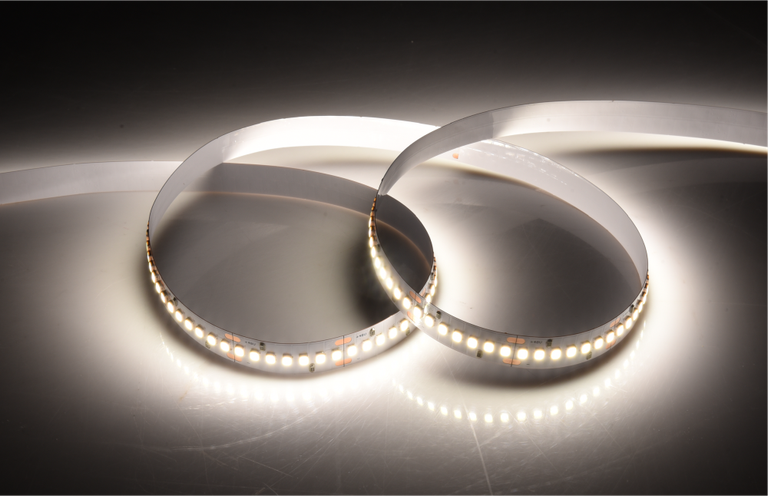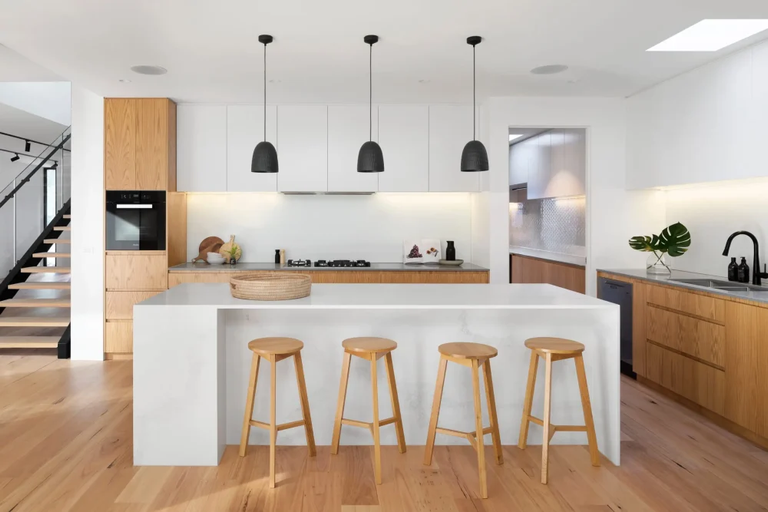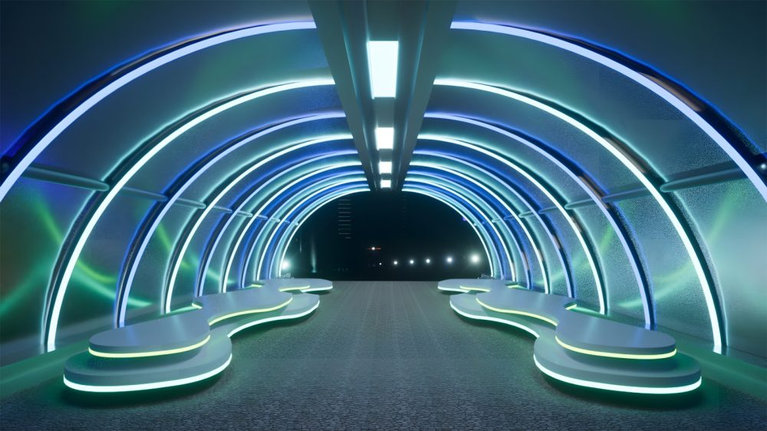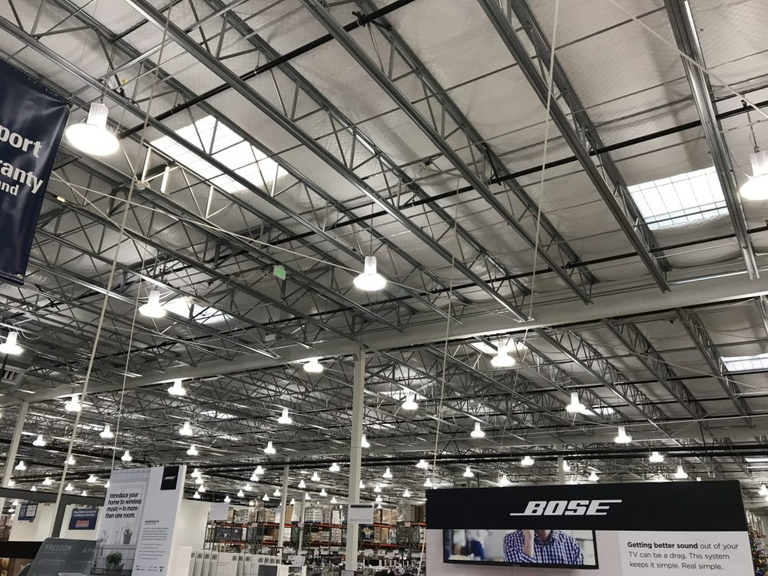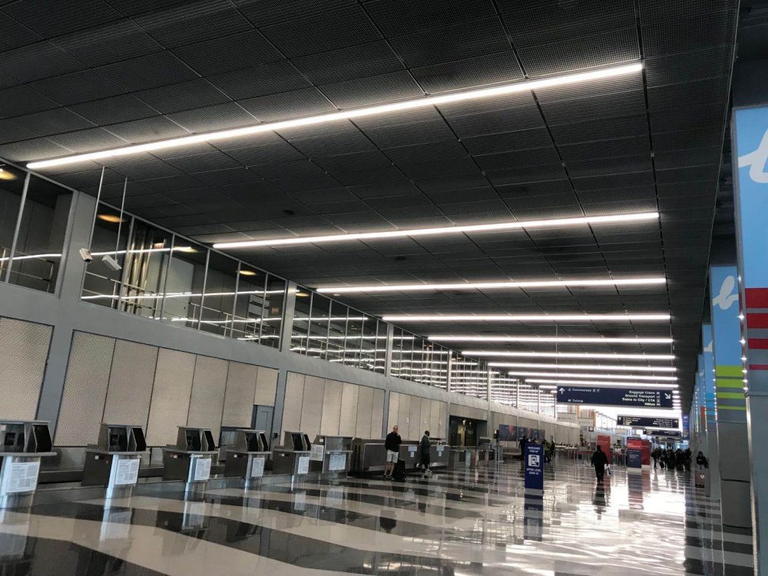
Retail lighting does not always need a complicated arrangement to make an interior feel considered. A few well-positioned continuous lines can define circulation, frame merchandise, reinforce architectural details, and create visual rhythm across a store.
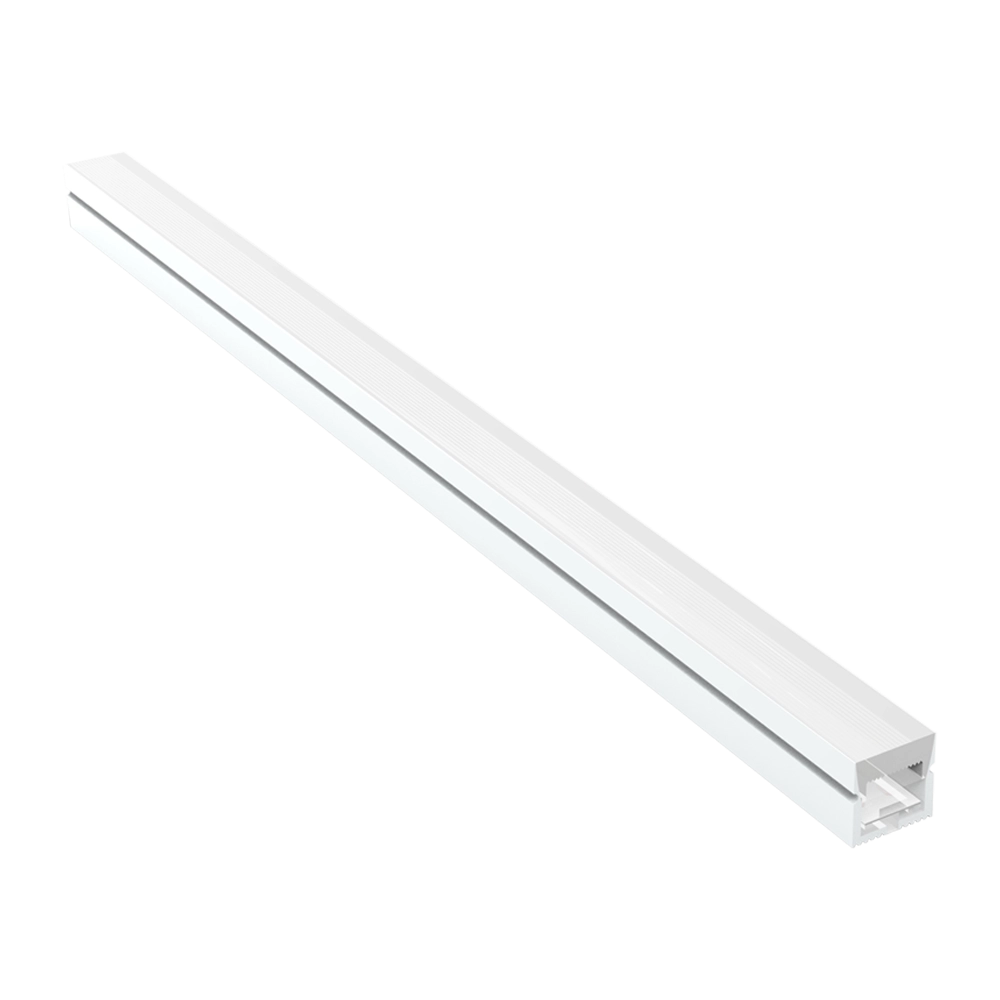
The challenge is deciding where those lines should go. At LEDIA Lighting, we look at the relationship between the retail layout, display furniture, ceiling structure, and customer movement before deciding how a lighting system should be arranged.
Let the Ceiling Lines Organize the Store
A ceiling provides one of the simplest places to establish a lighting pattern. Long fixtures can follow aisles, run parallel with shelving, or cross the main circulation area to create a clear visual direction.
The arrangement does not need to cover every part of the ceiling. Leaving selected areas without a fixture can make illuminated zones more noticeable and prevent the interior from becoming visually crowded.
A linear light fixture can also help connect separate areas of a store. Rather than treating each section as an independent lighting zone, repeated lines can create a consistent ceiling language from the entrance through the main sales floor.
Use Light to Give Display Areas a Clear Boundary
Merchandise displays often benefit from a stronger visual hierarchy. A lighting line positioned above a display wall or along a shelving system can distinguish that area from the surrounding space without requiring decorative elements.
Retail lighting guidance from LEDIA identifies product highlighting and customer flow as important uses for linear lighting in stores.
The position matters more than the number of fixtures. A line that follows the geometry of the display can make the merchandise zone feel intentional, while random fixture placement can weaken that relationship.
A Long Line Can Do More Than Illuminate a Shelf
Shelving is another opportunity to use simple linear arrangements. Instead of placing individual light sources above every section, a continuous installation can create a more unified visual effect across a long product run.
The exact solution depends on the construction. Open shelving, enclosed cabinets, wall-mounted displays, and freestanding retail units each provide different installation conditions.
A linear LED light fixture can be particularly useful where the lighting itself needs to become part of the architectural language. LEDIA’s product range includes linear lighting solutions alongside other fixture formats, allowing the specification to be matched to the physical application.
Recessed Details Keep the Interior Visually Quiet
Minimal retail interiors often benefit from hiding the source rather than making the fixture a prominent feature. Recessed lighting can sit within ceilings, walls, or architectural details so that the illuminated line becomes more visible than the hardware.
LEDIA describes recessed linear lighting as an option for seamless integration into ceilings and walls, while surface-mounted and suspended formats provide different visual relationships with the architecture.
That distinction gives designers a straightforward way to vary the atmosphere without changing the basic lighting language. A concealed line can support a minimalist area, while a suspended element can become a stronger visual feature over a central zone.
Repetition Creates Order Across Different Retail Zones
A store usually contains several functions: entrance areas, product displays, aisles, fitting rooms, service counters, and sometimes seating or consultation spaces. Each zone can have its own lighting requirement, but the overall interior should still feel connected.
Repeating similar lines, proportions, or installation directions can establish that connection. The fixtures do not have to be identical in every location; what matters is that their relationship with the architecture feels deliberate.
This approach becomes especially useful when the brand has a recognizable interior identity. A consistent lighting language can be adapted to different store dimensions without requiring an entirely different design concept for every location.
Let the Store Layout Decide the Fixture Arrangement
A simple lighting plan begins with the floor plan rather than the fixture catalogue. Shelving runs, customer circulation, checkout positions, structural columns, and feature displays reveal where continuous lighting can reinforce the way people experience the space.
Suspended lines can help define open areas, while surface-mounted solutions may suit locations where installation depth is limited. Recessed options make sense where the ceiling or wall has already been designed to accommodate the lighting.
LEDIA’s linear-lighting guidance groups fixtures by surface-mounted, recessed, and suspended installation, providing a useful framework for matching the format to the architectural condition.
Keep the Lighting Language Simple as the Store Gets Larger
A small boutique can tolerate a highly customized lighting arrangement because there are fewer zones to coordinate. Larger retail environments need another level of discipline. Too many fixture types can make procurement, installation, and maintenance unnecessarily complicated.
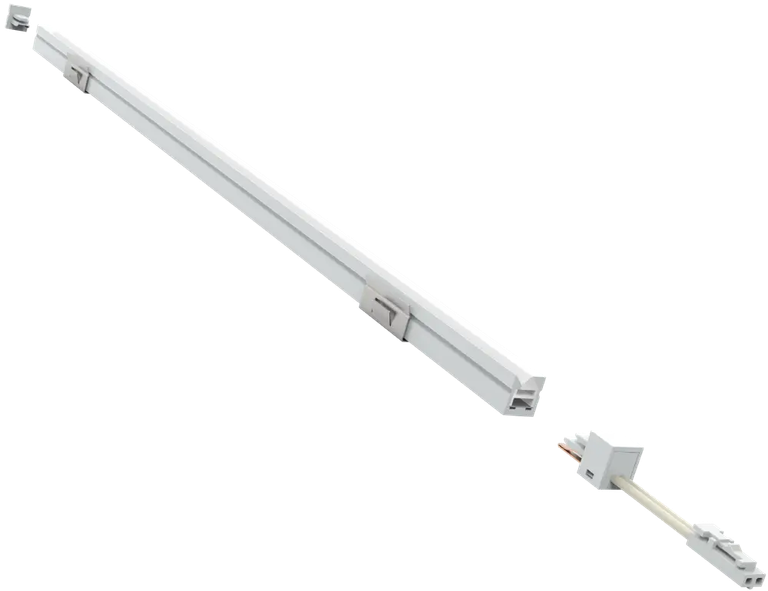
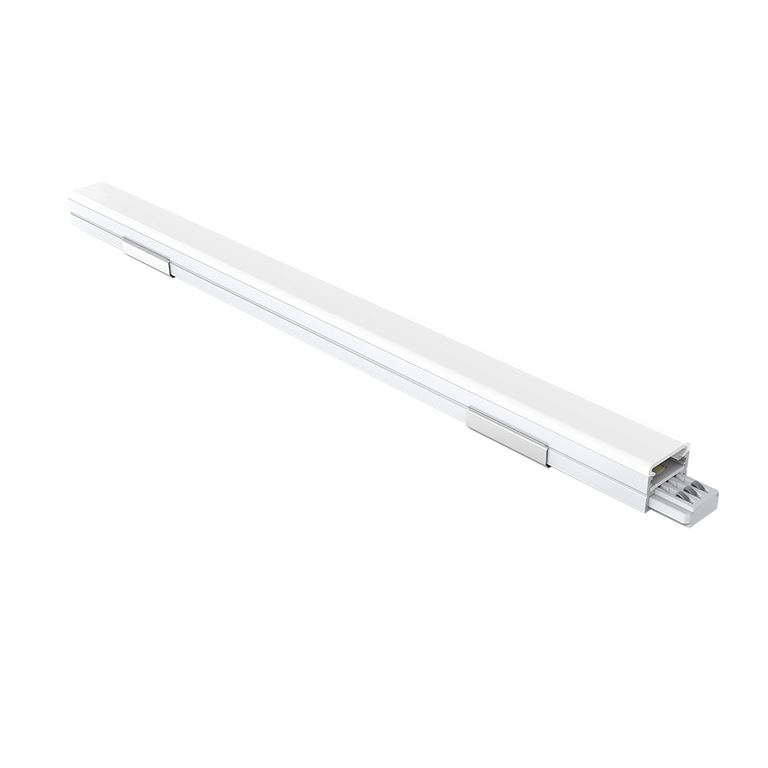
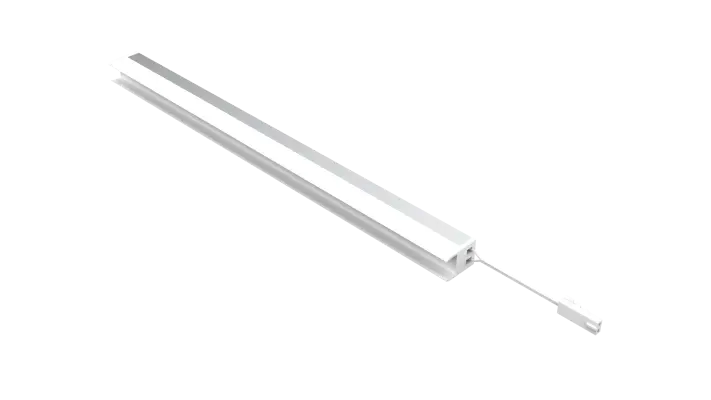
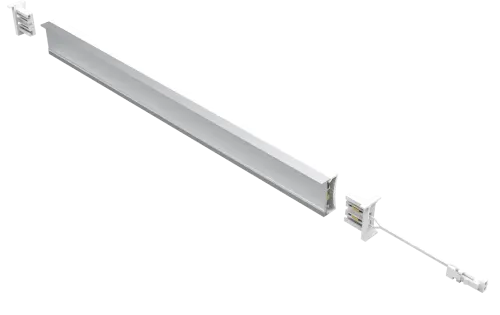
For larger projects, modularity can help. LEDIA has described linear fixtures with pre-wired connectors, mounting brackets, and series connection options intended to simplify installation and allow configurations to be expanded or adjusted.
That kind of thinking is useful for retail chains, where the same basic design may need to be reproduced across different floor plans.
Simple Design Does Not Mean Basic Lighting
The most effective retail lighting schemes are often simple because every illuminated line has a clear reason to exist. One may guide movement, another may emphasize merchandise, and another may reinforce the geometry of the architecture.
For us, the goal is to make those decisions work together rather than fill the store with fixtures. LEDIA Lighting approaches retail projects by considering the relationship between lighting layout and the physical environment, including shelving, display structures, ceilings, and circulation areas.
A well-planned linear LED light fixture can therefore become part of the store’s visual structure instead of simply providing illumination.
The strongest simple retail interiors usually rely on a small number of repeatable ideas: follow the architecture, clarify important displays, keep circulation visually legible, and avoid unnecessary fixture variation. A linear light fixture can support those goals when its position is determined by the space rather than selected independently from it.
When you’re rolling out lighting across a massive retail chain, this mindset is a game-changer. It lets you create a cohesive brand look across every store without forcing a one-size-fits-all layout on tricky floor plans. LEDIA Lighting focuses on hitting that exact sweet spot: keeping the design unified while making sure it’s dead simple to pull off in the real world.