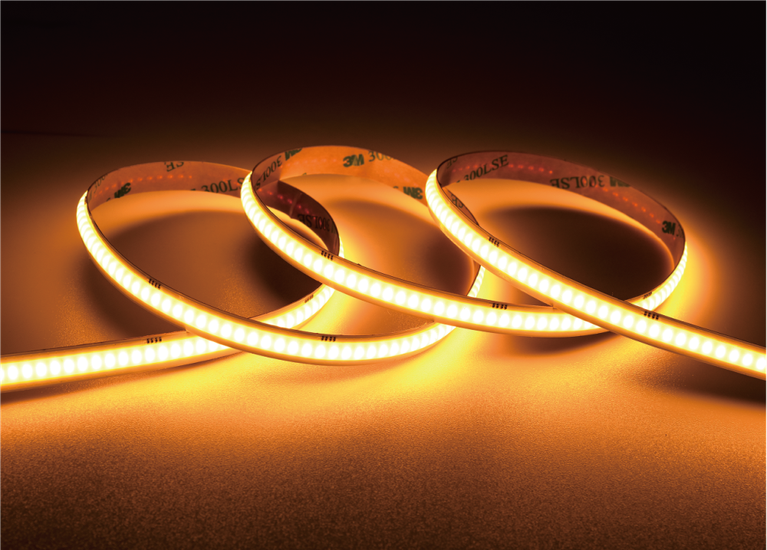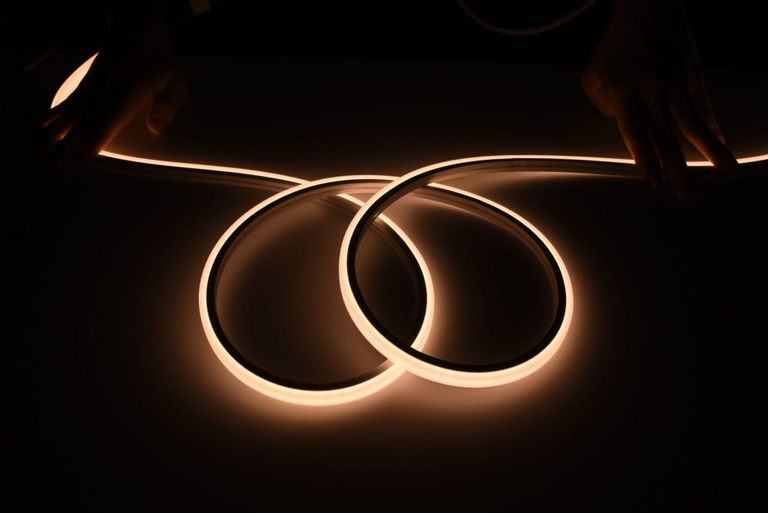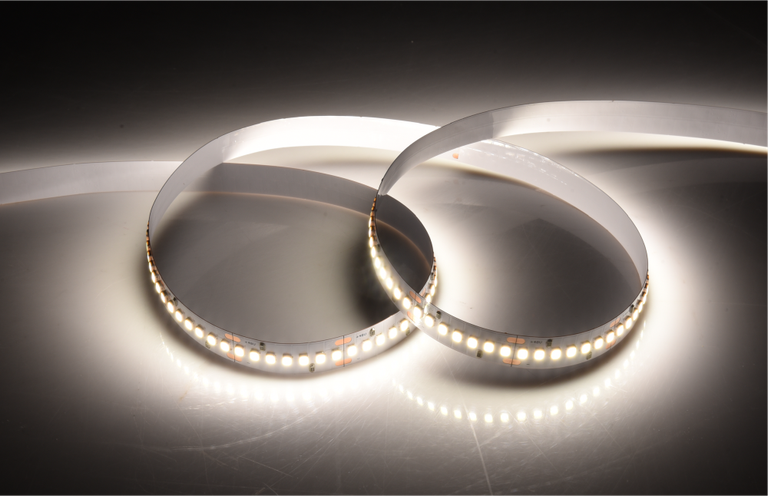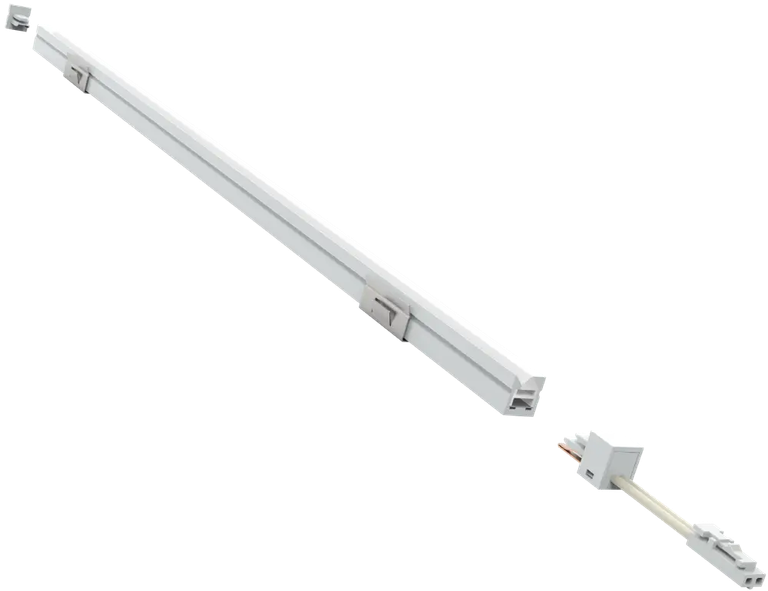
Choosing a recessed LED profile should start with the installation detail, not with a product catalogue. A profile may look suitable on paper but still create problems if its dimensions do not match the recess, its length is difficult to adapt, or its connection method slows down installation.
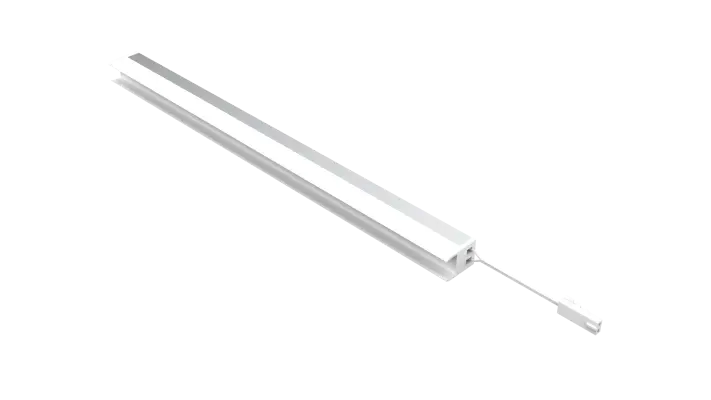
We approach selection by asking what the project actually requires at the point of installation. For contractors and project managers, this means looking beyond appearance and checking dimensions, cutting requirements, light quality, and installation efficiency before the specification is finalized.
Choose the Profile Around the Recess You Actually Have
The first question is simple: how much physical space is available for the lighting component? A recessed installation has to work within the furniture, ceiling, wall, or architectural detail already designed, so the available width and depth should determine the profile rather than the other way around.
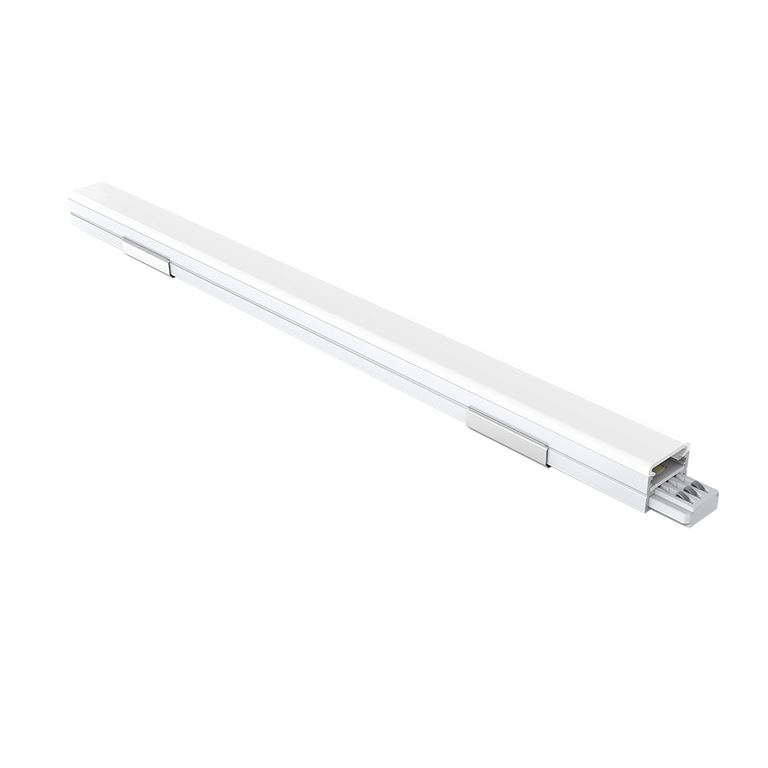
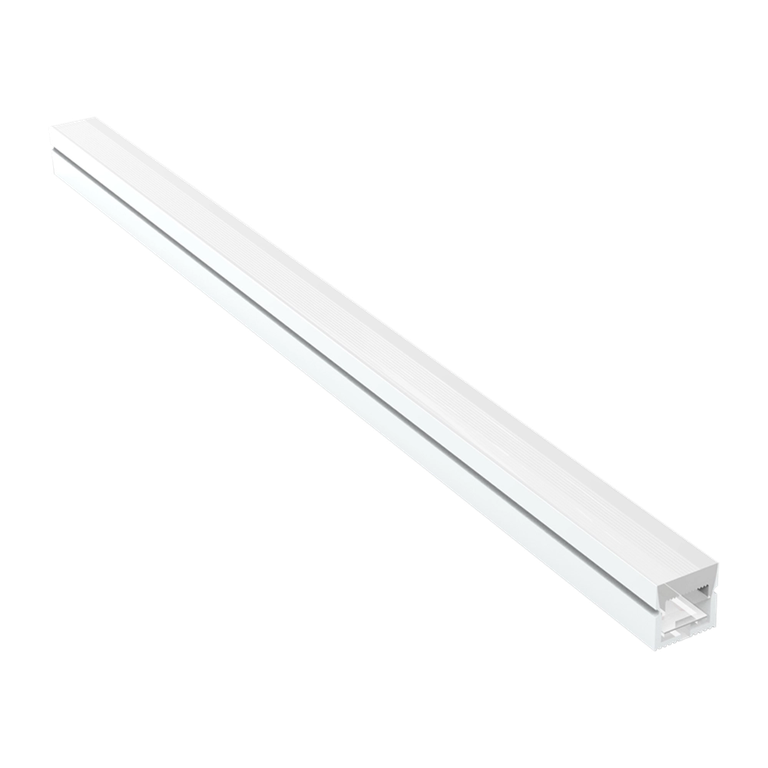
Dimensions become especially important in furniture lighting. LEDIA Lighting’s F02, for example, is listed at 19 mm wide and 11 mm high for its 2 m and 3 m versions, giving a project team a concrete dimensional reference when coordinating the lighting detail with cabinetry or other built-in elements.
We would therefore confirm the recess before ordering. A few millimeters can affect whether the fixture sits correctly, remains visually integrated, or requires changes to the surrounding joinery.
Let the Installation Length Influence Your Specification
Length is often where a seemingly simple linear-lighting project becomes difficult. Cabinets, wardrobes, shelving, and retail displays rarely have identical runs, so ordering only fixed-length components can create unnecessary cutting, joints, or material waste.
The F02 is designed around this issue. Its product information states that the light can be cut at any length and can be supplied in lengths up to 3 meters. That makes the free-cutting feature particularly relevant when every lighting run has to follow a different piece of furniture or display element.
Our selection decision is therefore based on the project’s actual dimensional variation. If multiple installations require different lengths, a system designed for flexible sizing can simplify both specification and fabrication. Standardized runs may be preferable where dimensions are repetitive and already controlled.
Decide Whether Site Cutting Will Affect Project Efficiency
A recessed LED profile is not fully specified until we know how installers will turn the supplied length into the finished lighting run. This matters because cutting, wiring, and joining can become repetitive labor across a large commercial project.
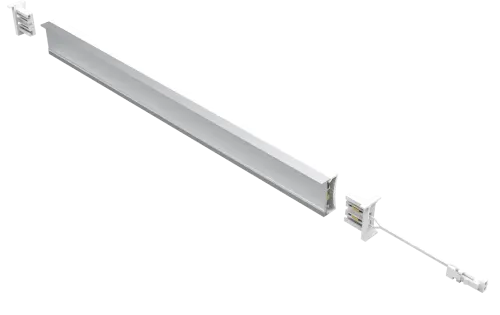
F02 is described by LEDIA Lighting as a free-cutting, soldering-free solution with a quick plug-in terminal. The stated design eliminates the need for traditional soldering during installation and is intended to make installation more convenient.
That distinction can influence selection more than a small difference in appearance. Imagine a retail rollout involving dozens of shelves with slightly different lighting lengths. Reducing repeated soldering or complicated connection work can make the installation workflow more predictable.
We would evaluate the installation method together with the number of lighting points, site conditions, installer skill requirements, and required completion time.
Match the Lighting Character to the Space
Once physical fit and installation method are established, the light itself becomes the next selection filter. Different spaces can require different color temperatures or levels of color rendering, particularly where the lighting is used around products, materials, clothing, or food.
The F02 specification includes fixed 3000K and 4000K versions as well as a 2CCT option covering 2700K–5000K. The listed versions also specify CRI greater than Ra90.
That gives us a practical way to connect the lighting specification with the application. A fixed CCT can make sense where the project has a consistent lighting brief, while an adjustable CCT can provide more flexibility when different scenes or user preferences need to be accommodated.
For an under cabinet light strip, we would also consider what the illuminated surface looks like rather than choosing CCT in isolation. Cabinet finishes, work surfaces, merchandise, and surrounding lighting can all influence the desired visual result.
Look Beyond the Channel: Connection and Installation Matter
A recessed profile should not be evaluated only by its aluminum shape. The connection method can have a direct effect on installation time and the number of operations required on site.
F02 uses a quick plug-in terminal and is described as soldering-free and plug-and-play. Its aluminum housing is also specified as providing heat dissipation for the LED PCB.
We would treat those characteristics as part of the system specification rather than optional extras. A profile that fits perfectly but requires a labor-intensive connection process may be less suitable for a project with hundreds of individual lighting sections.
The same thinking applies to an under cabinet light strip installation. The profile, light source, connectors, power arrangement, and furniture detail need to be coordinated before production so installers are not forced to solve connection problems after the cabinets arrive on site.
Turn These Checks Into a Practical Specification
Our selection process can be reduced to a project-specific checklist: confirm the recess dimensions, identify the required lighting lengths, determine whether cutting flexibility is needed, select the appropriate CCT and CRI, and verify how the system will be connected and installed.
That sequence keeps the decision tied to the actual project instead of selecting a profile simply because its appearance looks appropriate. It also gives contractors and purchasing teams clearer information to communicate with manufacturers.
Effective lighting specifications connect on-site installation realities with the complete project workflow—a principle demonstrated by LEDIA Lighting‘s F02. Featuring a 19 × 11 mm footprint, tool-free cutting, quick connectors, aluminum framing, and diverse CCT options, it delivers an all-in-one furniture lighting solution.
Choosing a recessed LED profile ultimately requires matching hardware capabilities to actual construction workflows. When dimensions, scalability, optical quality, and mounting are considered in unison, specifications become far more reliable and field-ready.