Wholesale LED strip lights can simplify procurement for commercial, residential, retail, and decorative projects, but choosing the right product requires more than comparing unit prices. Buyers need to evaluate light quality, efficacy, protection ratings, physical design, consistency, and warranty terms. Working with the right LED strip supplier also helps reduce specification gaps between samples, bulk orders, and installation requirements.
Start With the Application and Lighting Objective
Project requirements should come before product selection. A retail display may prioritize accurate color rendering, while a decorative installation may focus more heavily on a clean, continuous appearance. Office and residential projects can require a balance between visual comfort, efficiency, and integration with architectural details.
For procurement teams, defining these requirements early makes supplier comparison more objective. Instead of asking which flexible LED strip light is simply the brightest or least expensive, buyers can compare products against the actual lighting brief, installation environment, and expected operating conditions.
Compare Efficacy and Light Quality
Efficacy indicates how efficiently a lighting product converts electrical input into light output, commonly expressed in lumens per watt. The U.S. Department of Energy notes that both source efficacy and the efficiency of the complete lighting system influence energy consumption. Therefore, project buyers should review product efficacy alongside the power supply and overall system design.
Color rendering is another important specification. DOE guidance notes that CRI 80 is generally recommended as a minimum for interior lighting, while CRI 90 or higher represents excellent color fidelity. Buyers should therefore select the CRI level according to the project rather than treating every application identically.
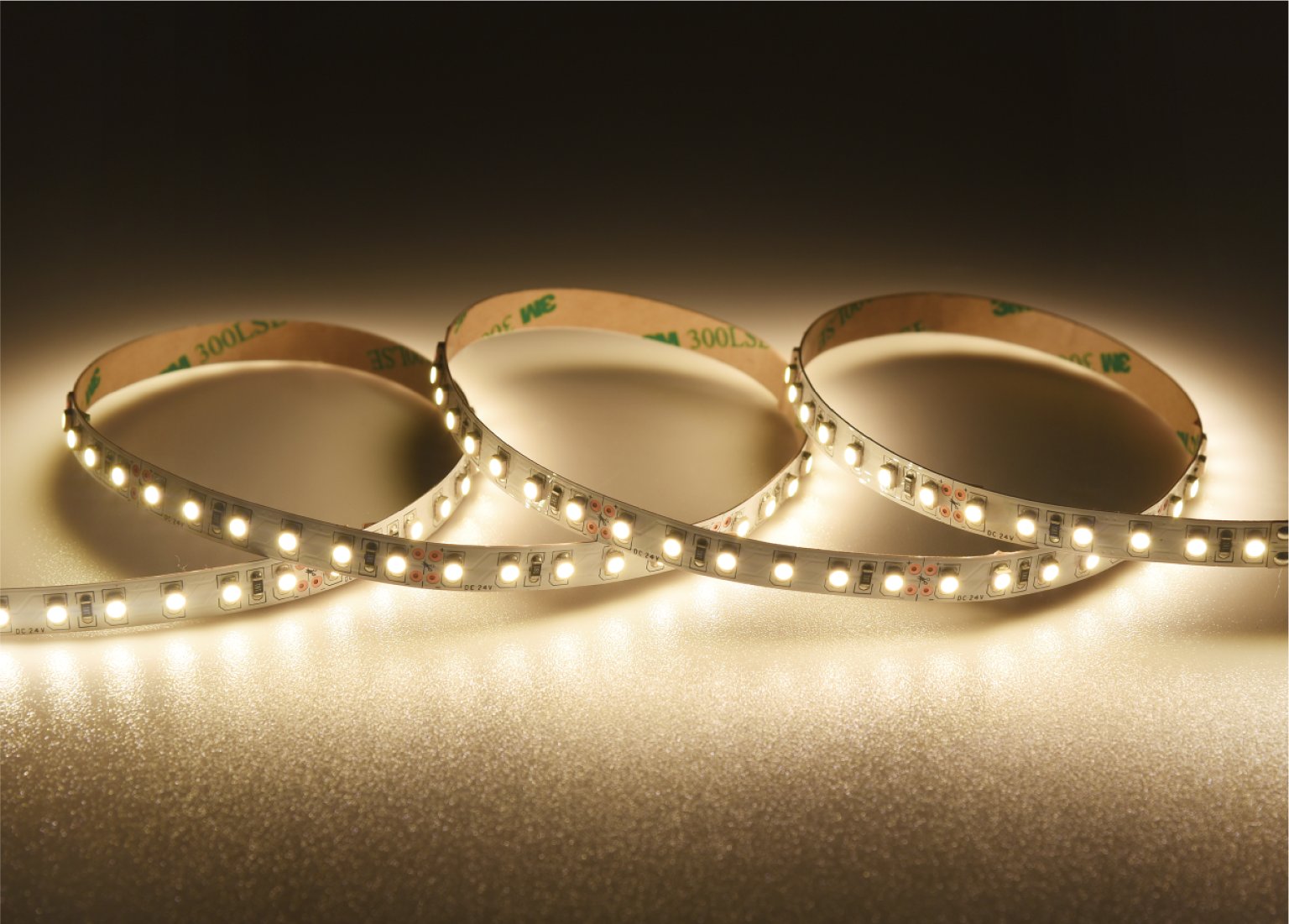
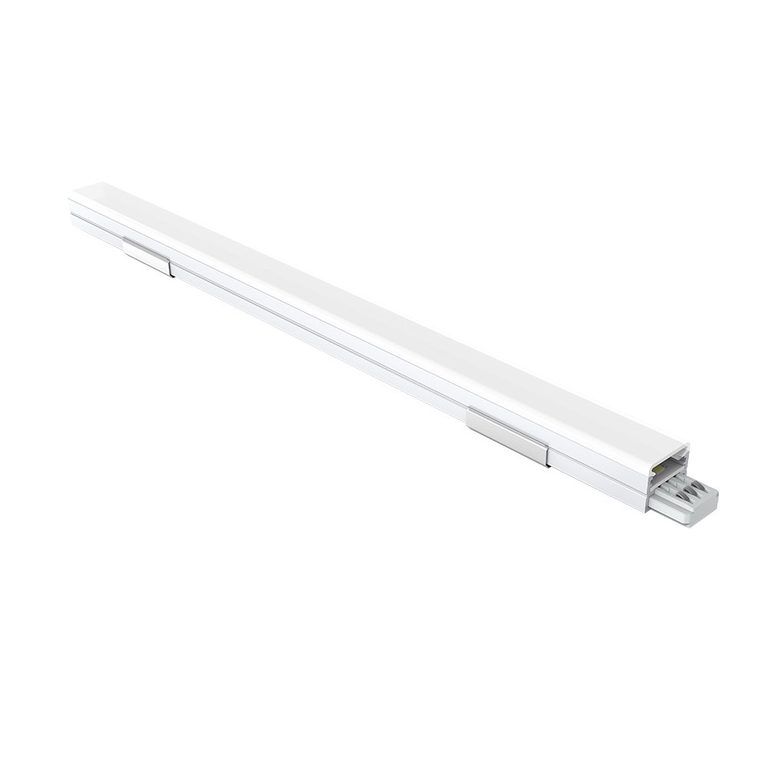
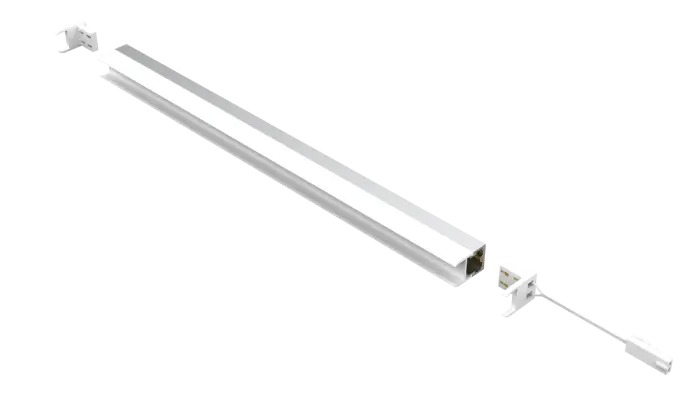
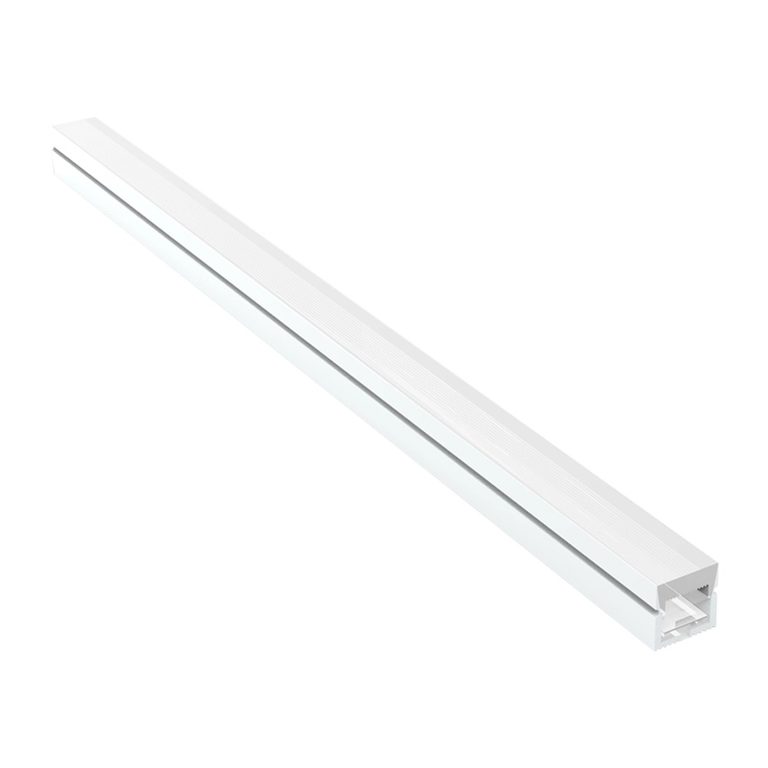
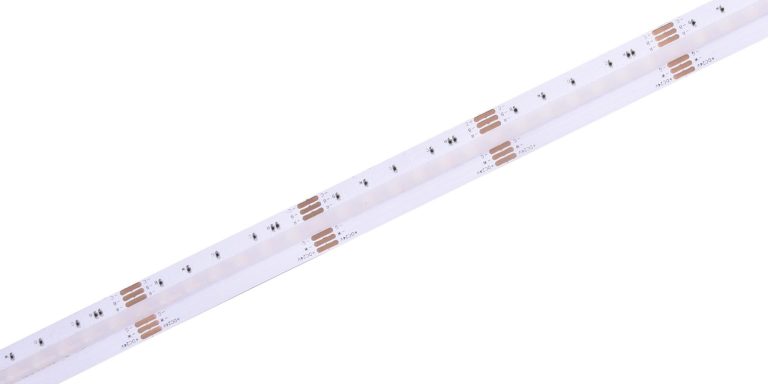
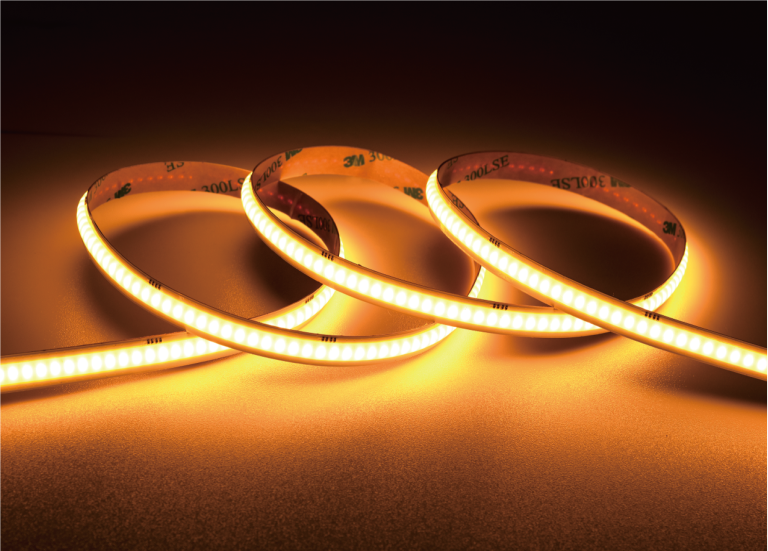
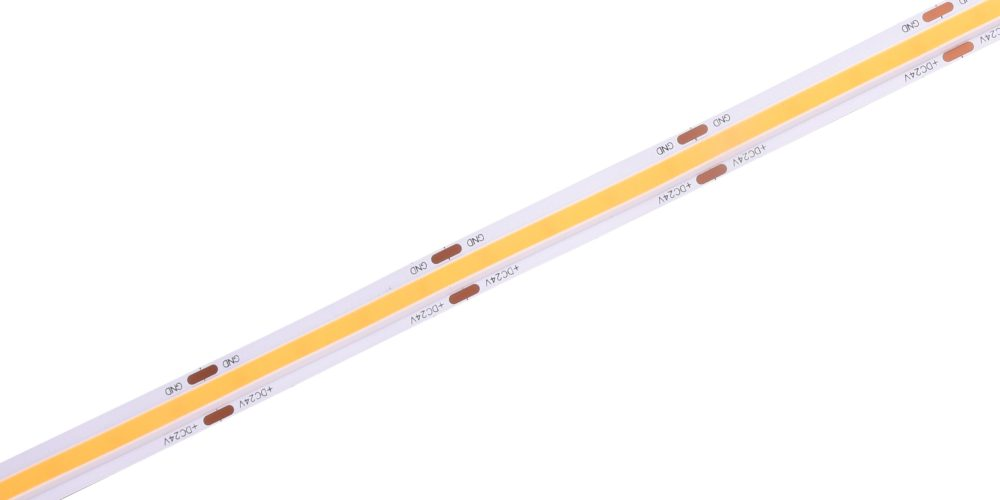
Our COB Digital Series is well suited to projects where light quality and visual consistency are both important. Its COB design produces dot-free illumination, helping create a smooth line of light for concealed cove lighting, display features, and other applications where individual LED points could distract from the overall design.
With CRI80+, CRI90+, and CRI95+ options, project teams can select the appropriate color-rendering level for their needs, from general ambient lighting to spaces where materials, finishes, and merchandise must appear more true to life. At CRI90+, efficacy reaches up to 120 lm/W, offering a practical balance between color fidelity and energy performance. This combination helps buyers evaluate the series according to both the desired lighting effect and the project’s efficiency targets, rather than relying on a single specification.
Why Dot-Free Illumination Matters
Visible LED dots can become a significant aesthetic issue when strip lighting is installed in exposed channels, coves, shelves, signage, or architectural details. A continuous appearance is particularly important where the light source itself can be seen rather than concealed behind an opaque diffuser.
Our COB Digital Series uses a dot-free light design to create uniform illumination. Its super-narrow format can also support applications where available installation space is limited. For designers and contractors, these characteristics can simplify the process of achieving a continuous linear lighting appearance without making the strip unnecessarily prominent.
Match IP Protection to the Installation
Protection against moisture and environmental exposure should be considered according to the actual installation location. The IP Code is defined under IEC 60529, which classifies degrees of protection provided by enclosures for electrical equipment.
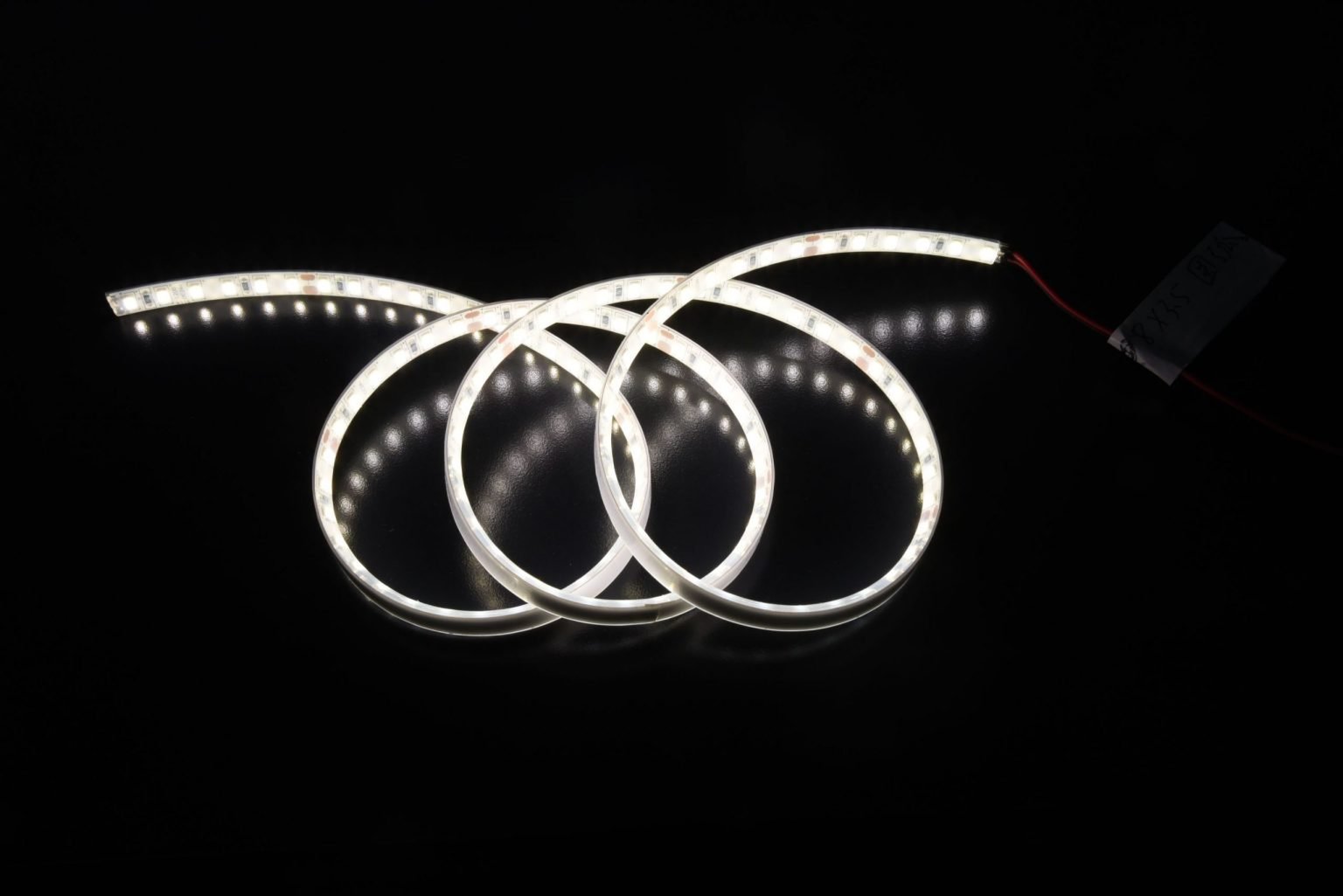
Our COB Digital Series is available in IP20, IP65, IP67, and IP68 options. This range allows buyers to specify different protection levels according to project conditions rather than selecting one configuration for every application. However, the IP rating should always be matched with the complete installation design and the environmental requirements specified for the project.
Evaluate Supplier Capability Beyond Price
A competitive quotation is useful, but it should not be the only purchasing criterion. Buyers should compare technical documentation, available configurations, quality consistency, communication, lead-time capability, and warranty coverage. These factors can have a direct effect on installation schedules and replacement costs.
When evaluating an LED strip supplier, project teams should also confirm whether the offered specifications are clearly documented and whether the supplier can consistently deliver the selected configuration at wholesale volumes. Clear communication before an order can prevent misunderstandings about CRI, protection level, dimensions, or performance.
We provide a three-year warranty for the COB Digital Series and offer multiple CRI and IP configurations. This specification flexibility allows us to support different project requirements while giving procurement teams defined parameters for product comparison and ordering.
Plan the Purchase Around Project Requirements
Wholesale purchasing works best when technical requirements are established before requesting quotations. Buyers should prepare a basic specification covering application, desired light quality, efficacy, protection rating, installation conditions, and quantity. Samples can then be evaluated against those requirements before a larger purchase is confirmed.
For projects that need a flexible LED strip light, consistency is especially important because long linear installations can make differences in light appearance more noticeable. Procurement teams should therefore avoid comparing products solely through photographs or headline lumen figures and instead review samples and documented specifications.
A practical buying process also separates essential requirements from optional preferences. For example, CRI90+ may be important for a retail environment, while IP67 or IP68 may be unnecessary for a fully indoor installation. This approach helps control costs without compromising the project’s core lighting objectives.
Make the Specification the Starting Point
Selecting wholesale LED strip lights becomes more straightforward when buyers treat the process as a technical specification exercise rather than a simple price comparison. Application, efficacy, CRI, uniformity, IP protection, supplier capability, and warranty should all be reviewed before placing an order.
At LEDIA Lighting, we designed the COB Digital Series around this practical approach, combining dot-free uniform illumination, a super-narrow form factor, efficacy up to 120 lm/W at CRI90+, CRI80+/90+/95+ options, and IP20/IP65/IP67/IP68 configurations. For project teams seeking a LED strip supplier capable of supporting varied commercial and decorative requirements, these defined options provide a clearer foundation for procurement decisions.