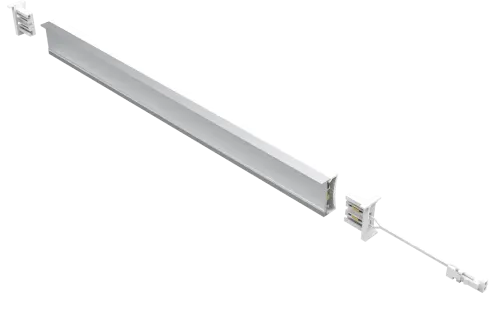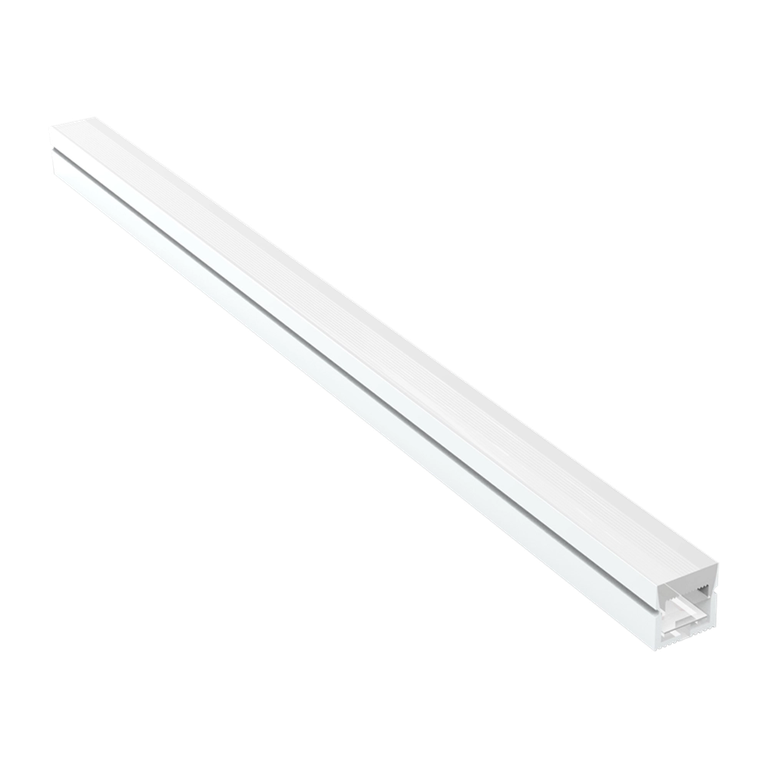
Modern lighting projects are rarely built around a single type of luminaire. An office, retail store, hotel, or mixed-use development may contain large open areas, circulation zones, display surfaces, furniture, ceilings, and architectural details—all with different lighting requirements.
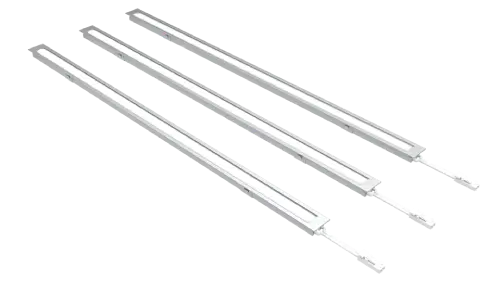
That makes the role of wholesale lighting fixtures more specific than simply supplying products in quantity. For contractors and distributors, the real opportunity is to identify which parts of a project require complete fixtures, which need integrated lighting, and where flexible sources can fill the smaller or more complex gaps.
Which Parts of a Project Actually Need Wholesale Fixtures?
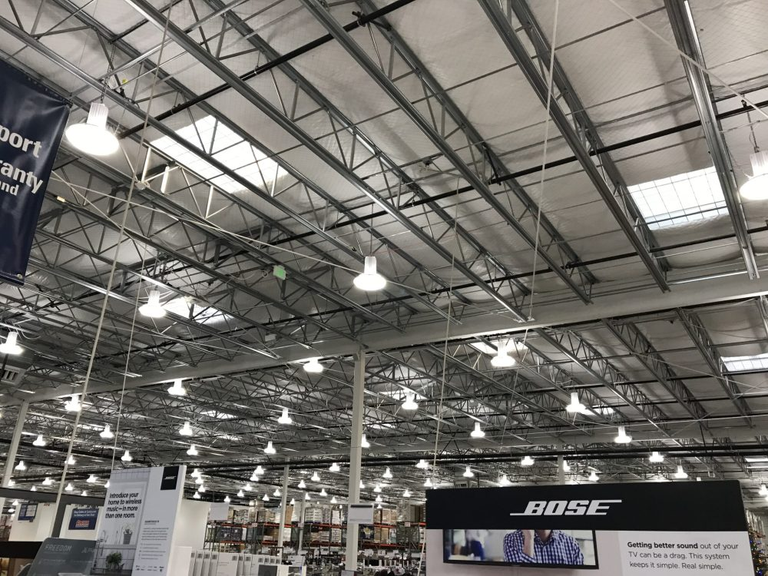
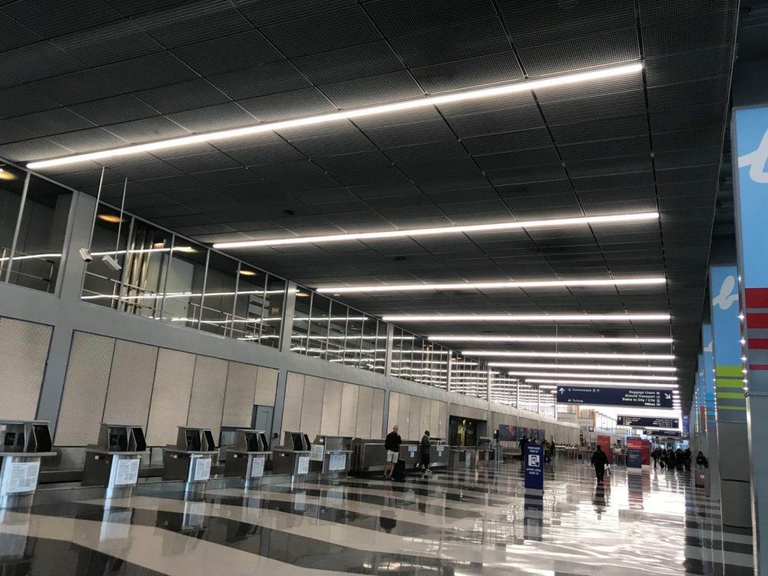
Large, clearly defined spaces are usually the most straightforward starting point. Offices, commercial interiors, high-bay areas, and other substantial zones often need dedicated luminaires that can be installed as complete lighting units rather than assembled from individual components.
A wholesaler serving these projects may therefore supply different fixture categories according to the environment. LEDIA Lighting, for example, organizes its product range into areas including office linear lighting, linear highbay, tri-proof linear, retail lighting, and furniture lighting.
That product structure reflects something we encounter frequently in project work: the lighting requirement changes as the physical environment changes.
An office ceiling may call for a dedicated linear fixture, while a warehouse-type area can require a different form factor. Retail spaces introduce another layer because merchandise and display zones may need lighting that relates more closely to the products being presented.
Consequently, wholesale sourcing becomes useful when a project contains repeated lighting requirements. Instead of purchasing isolated products for individual rooms, contractors can organize quantities around defined applications and build a more coherent supply package.
Why One Fixture Type Rarely Covers the Whole Building
The problem with selecting one universal fixture is not necessarily product performance. It is the physical diversity of the project.
A ceiling fixture designed for a broad commercial area may be completely unsuitable inside a cabinet. A luminaire intended for a large open space may also be visually excessive when the objective is to illuminate a narrow shelf or architectural recess.
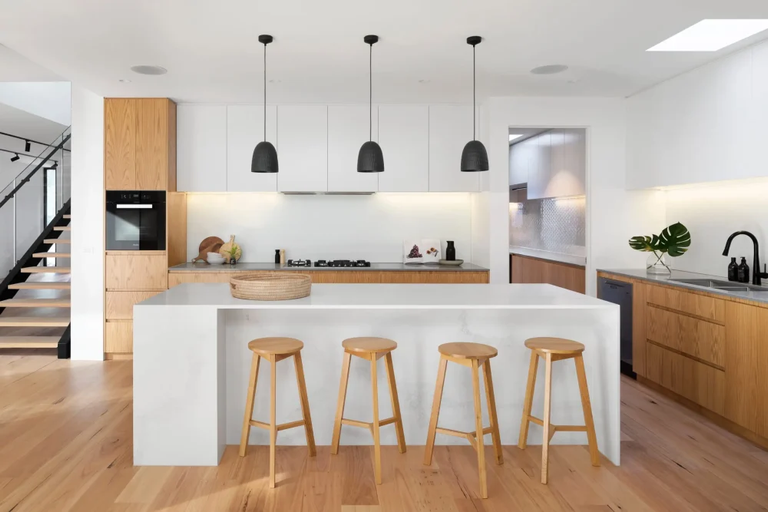
Project drawings make this distinction particularly obvious. Main circulation areas may require dedicated luminaires, while reception desks, display units, counters, wall details, and furniture introduce smaller lighting tasks.
Our product structure at LEDIA Lighting includes both complete fixtures and strip-light categories, including regular and silicone strip products, alongside furniture and linear lighting. The significance is not simply having more products; it is being able to address different physical conditions within one project.
This is particularly relevant to wholesalers supplying contractors who do not want to manage multiple unrelated suppliers for every lighting detail. A broader product portfolio can make it easier to coordinate the main fixtures with the integrated elements that appear later in the installation.
Where Flexible Strips Enter the Specification
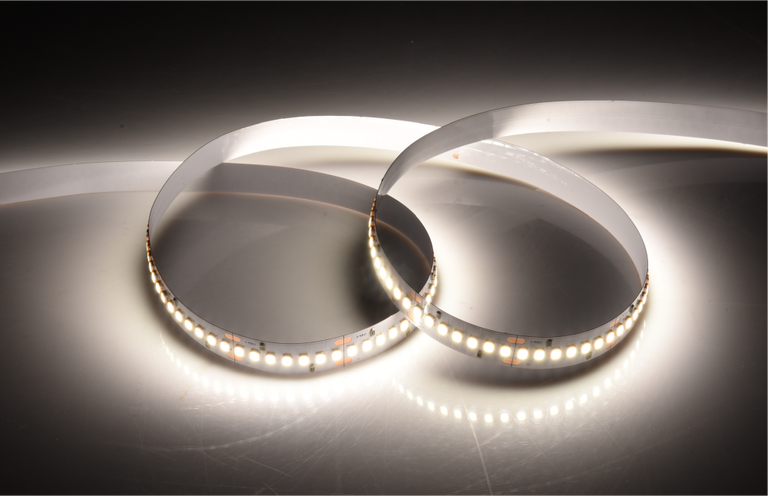
Flexible LED light strips generally enter a project where the lighting source needs to occupy less physical space or follow a particular installation path.
Consider a retail display. The main ceiling system can illuminate the store, but shelving may require a much narrower source positioned close to the merchandise. A complete fixture would occupy unnecessary space, whereas a flexible strip can be incorporated into an appropriate profile or furniture structure.
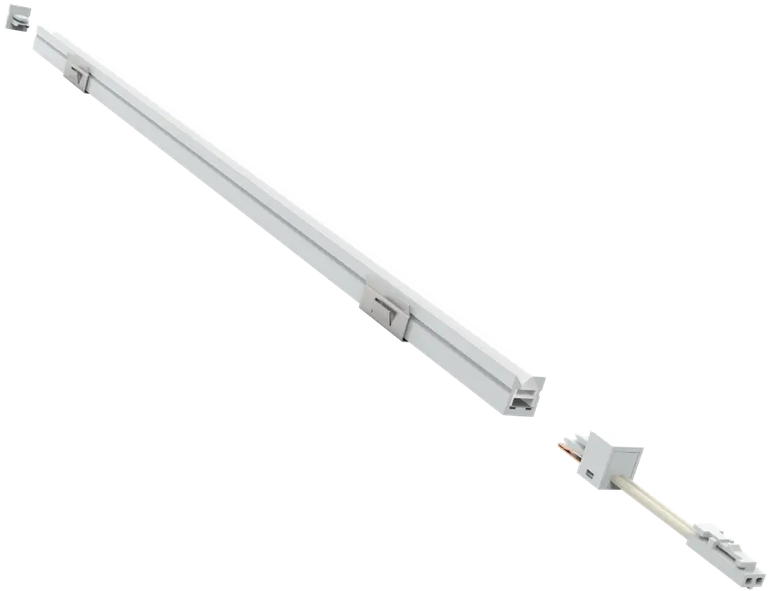
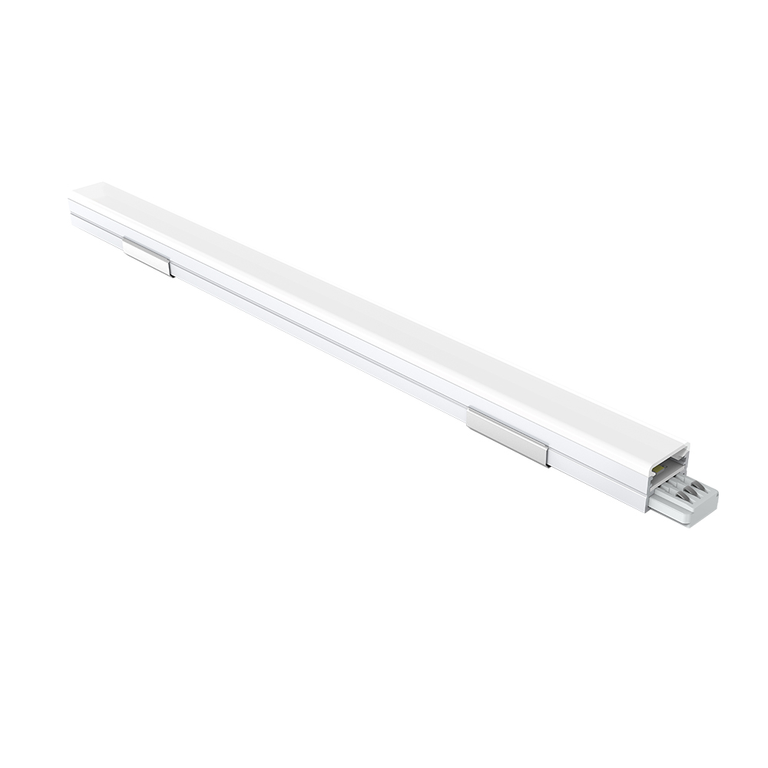
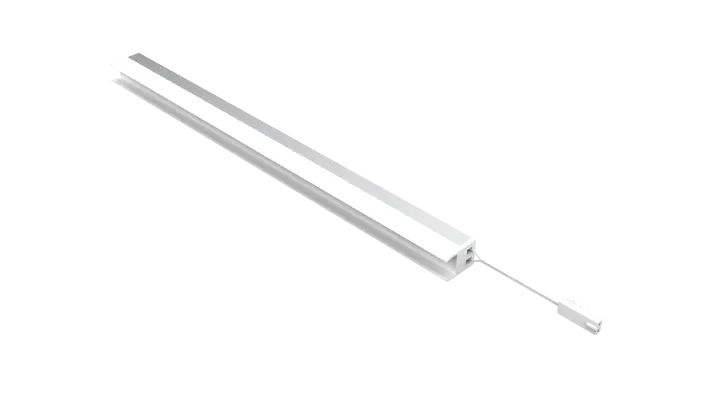
The same logic applies to counters, cabinets, wardrobes, coves, and decorative architectural details. LEDIA Lighting’s product range includes regular and silicone strip lights as well as built-in silicone and aluminum-profile strip products, showing how strip-based solutions can be configured for different integration requirements.
Flexible LED light strips are therefore not necessarily substitutes for conventional fixtures. In many projects, they perform a different job. One establishes illumination across a larger zone; the other introduces light exactly where the architecture or furniture requires it.
Installation conditions still need to determine the final choice. Available depth, bending direction, mounting method, power arrangement, and environmental exposure should be reviewed before a strip is specified. Flexibility alone does not make every product appropriate for every installation.
How a Wholesale Package Can Follow the Project Layout
A useful wholesale lighting package should mirror the way the building is actually divided.
One section of the order might cover office linear fixtures. Another could address retail areas, while furniture lighting and strip products handle integrated details. High-bay or specialized linear products can then be allocated to areas with different spatial requirements.
This approach gives contractors a clearer procurement structure. Quantities can be calculated according to zones, installation teams can identify which products belong in each location, and replacement or additional orders become easier to trace back to the original application.
For distributors, the same structure creates a more practical product portfolio. Rather than stocking products that compete for the same installation role, a range can cover different stages of a project—from general illumination through architectural details and furniture integration.
Determining where each lighting format belongs prior to calculating quantities is the standard approach we take with every project. By looking closely at the drawings, we can easily identify whether large spaces require dedicated fixtures or if narrow, integrated areas need a strip-based alternative.
That distinction also prevents over-specification. A project does not become more sophisticated simply because it contains more fixture types. Each product should have a defined purpose and a clear relationship with the surrounding architecture.
Wholesale sourcing becomes much more valuable when it follows this logic. Modern projects need lighting at different scales, and a successful package recognizes those differences instead of forcing one product format into every space.
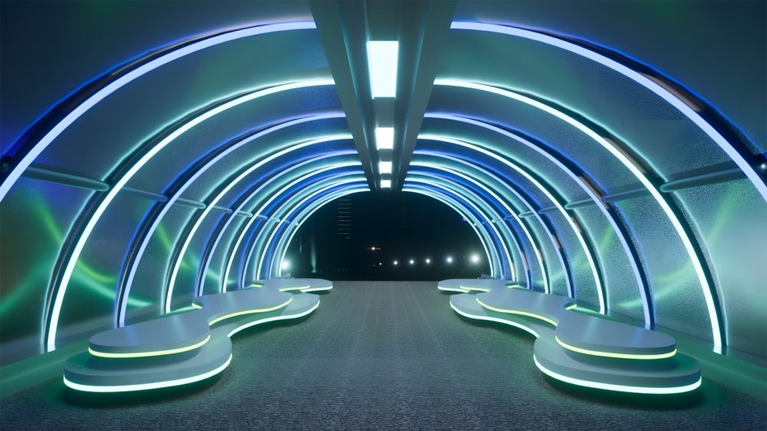
At LEDIA Lighting, we see the strongest project approach as a coordinated combination: complete fixtures where the space calls for them, linear products where continuous architectural illumination is needed, and flexible sources where lighting must become part of furniture or a built element.
Providing wholesalers and contractors with a clearer path from project drawings to final product quantities is a result we actively deliver—turning a complex lighting order into a tailored specification that truly reflects how the finished building will be utilized.