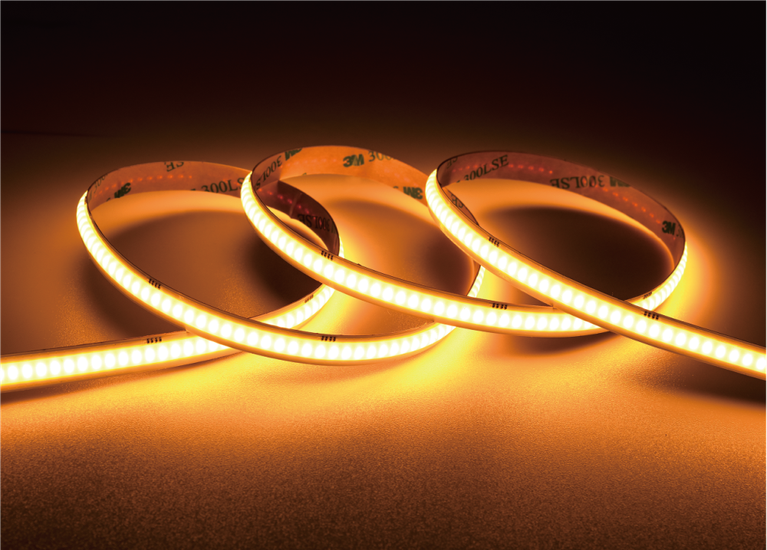
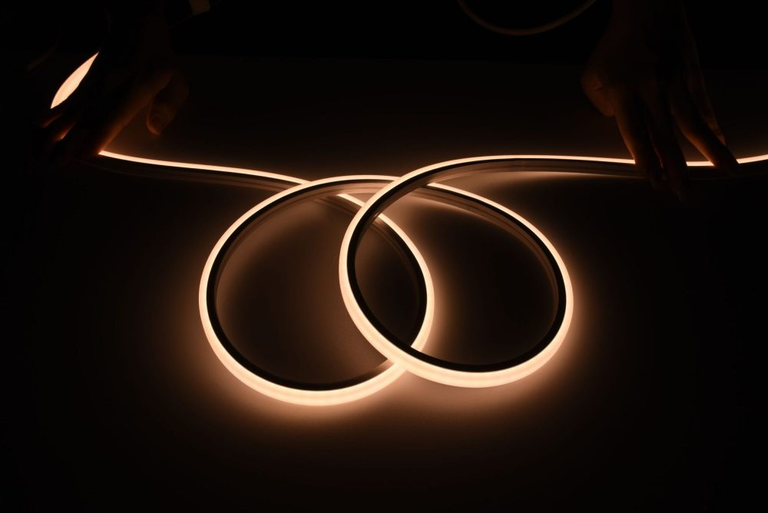
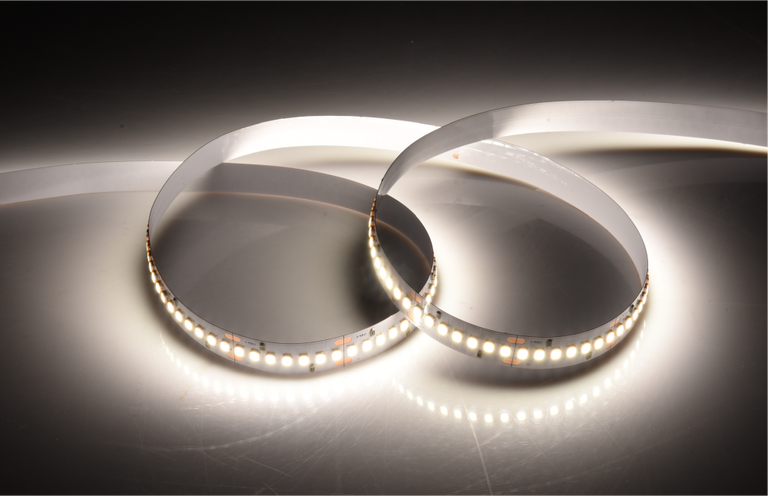
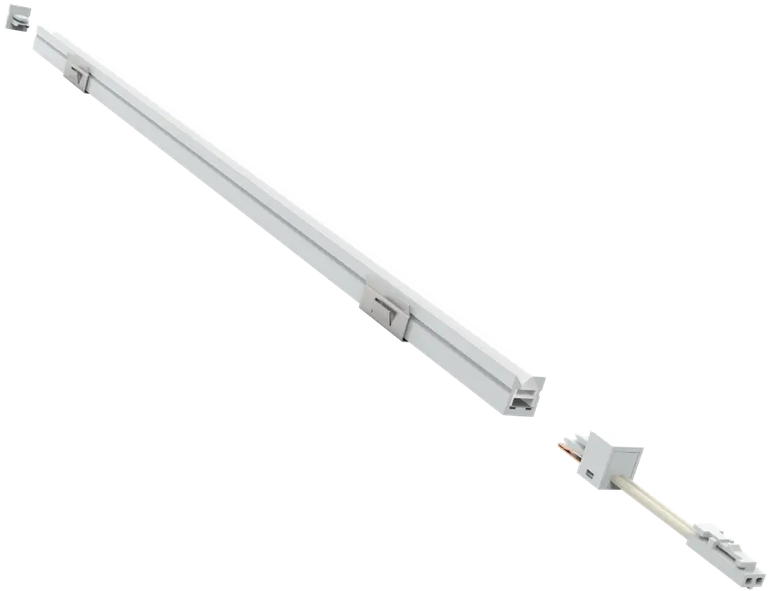
Recessed linear lighting works particularly well when the light needs to appear integrated with furniture or architectural details. Rather than adding a visible fixture to the surface, the lighting can sit within a prepared channel, cabinet, shelf, or joinery element.
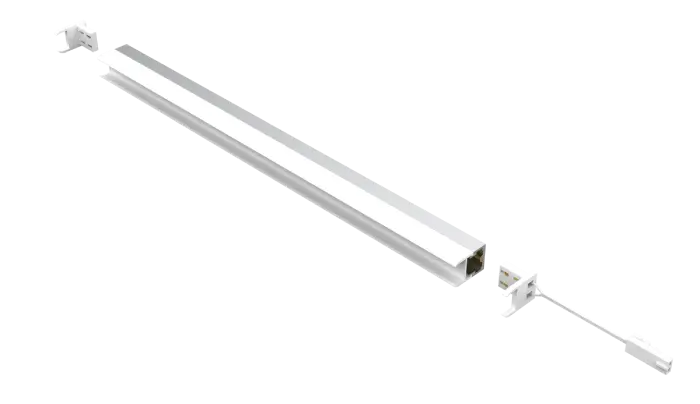
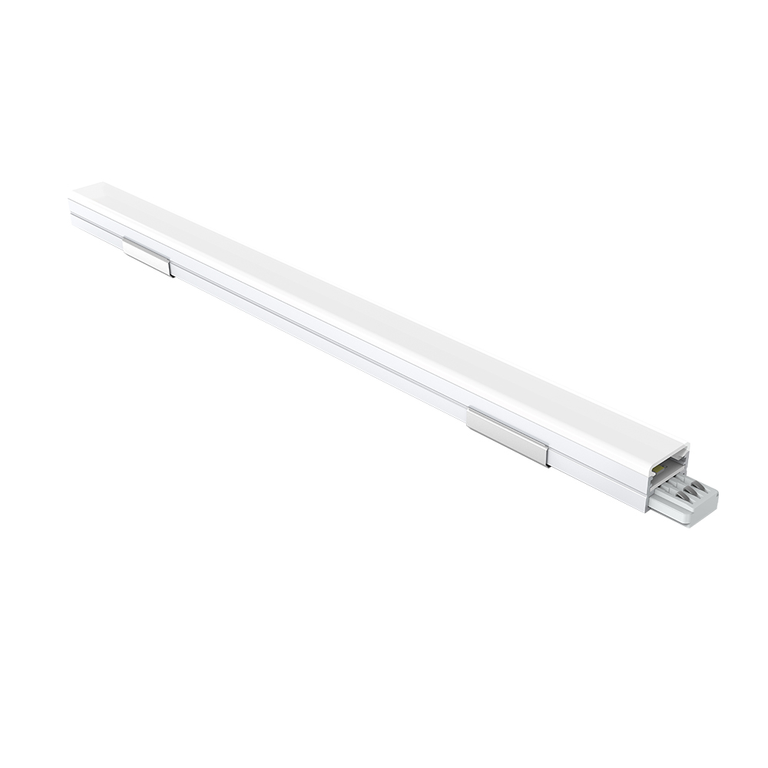
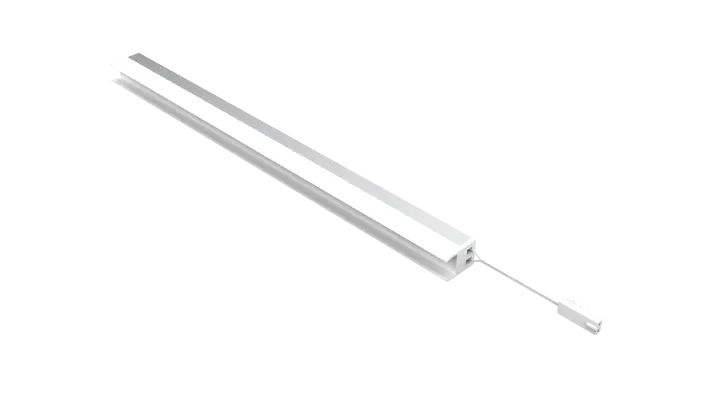
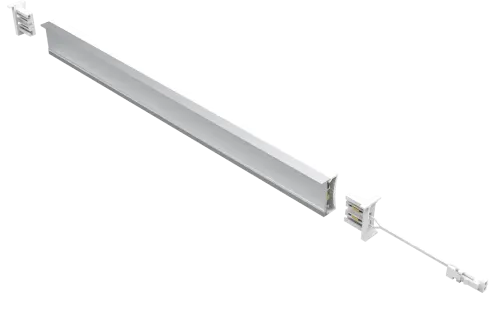
That makes the approach useful across both retail and residential interiors. A store may need lighting built into shelving and display furniture, while a home may require illumination inside wardrobes, kitchen cabinets, or other built-in furniture. LEDIA Lighting’s F02 series is designed specifically around these types of applications, with a built-in aluminum housing, free-cutting design, quick plug-in terminal, and soldering-free installation.
Retail Shelving Can Turn the Recess Into the Light Source
Retail shelving is one of the most straightforward places to use a recessed LED profile. A narrow linear light can be integrated into the shelf structure so that products receive illumination without a bulky fixture competing with the display.
The position of the light matters. Installing it near the front of a shelf can emphasize merchandise, while placing it farther back can create a softer wash across the display surface. The exact location depends on the shelf depth, product arrangement, and desired visual effect.
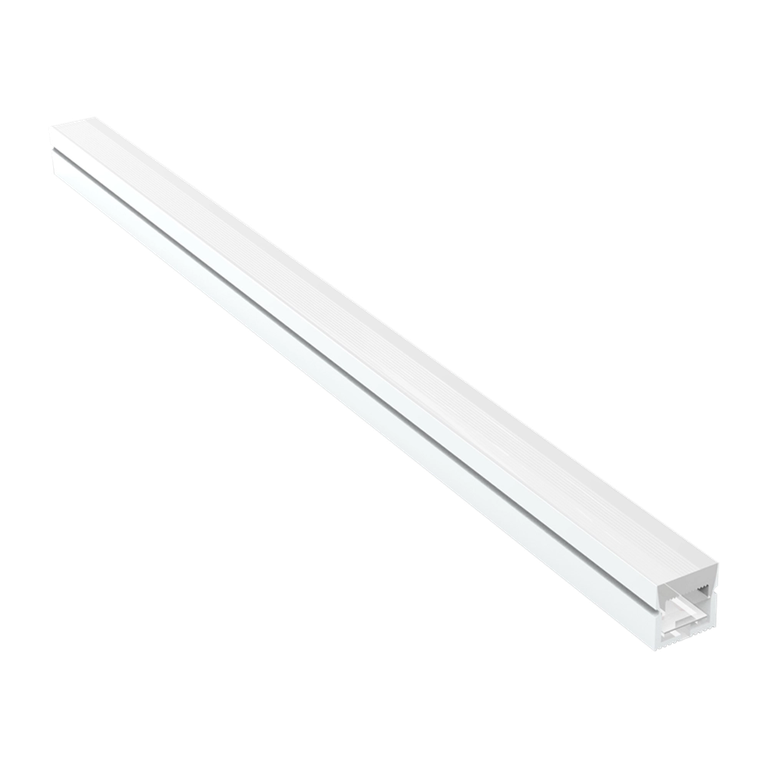
F02 is listed for retail applications and uses an aluminum housing that provides heat dissipation for the LED PCB. Its built-in construction is intended to simplify integration rather than requiring a separate aluminum profile.
That combination can be useful for retail contractors working with repeated shelving modules, where a clean installation needs to be reproduced across multiple sections.
Kitchen and Wardrobe Interiors Benefit From Built-In Light
Residential furniture provides another natural application. Wardrobes, closets, kitchen cabinets, and other built-in storage areas can become difficult to use when the interior is poorly illuminated.
A linear light recessed into the furniture can place illumination close to the stored items without taking up much usable space. Opening a wardrobe or cabinet then reveals a more evenly lit interior instead of relying entirely on the room’s ceiling fixture.
The F02 series is specifically described for wardrobes, closets, kitchen cabinets, and other built-in furniture. Its quick plug-in terminal is designed for soldering-free installation, while its housing is integrated into the product rather than requiring a separate aluminum profile.
For residential projects, this approach can also help maintain the visual simplicity of modern cabinetry. The lighting is part of the furniture detail rather than an accessory attached afterward.
Counters and Display Joinery Need Clean Linear Integration
Retail counters, reception desks, wall displays, and built-in joinery often contain long horizontal or vertical edges that can accommodate linear illumination.
A recessed aluminum strip light can be particularly useful where the designer wants the durability and heat-dissipation characteristics of aluminum while keeping the installation visually integrated with the furniture. F02 uses an aluminum housing and is designed for built-in applications, allowing the light source to become part of the furniture construction.
The important point is to coordinate the lighting channel with the joinery drawings. Depth, width, cable access, and the position of the illuminated surface should be established before fabrication begins.
That coordination is especially important in retail because display furniture may be repeated throughout a store. A lighting detail that is difficult to install once can become a much larger problem when it has to be repeated dozens of times.
Free-Cutting Design Helps Different Furniture Sizes
Furniture dimensions rarely remain identical across an entire project. One cabinet may be shorter than another, while shelving, wardrobes, and counters can all have different lengths.
F02 is designed to be cut at any length to meet different installation requirements. The product page also lists supplied lengths up to 3 meters, which can help reduce unnecessary material waste when planning longer furniture runs.
This is where a recessed LED profile becomes more practical than simply choosing a fixed-size fixture. The lighting can be coordinated with the actual furniture dimension rather than forcing the furniture design to accommodate the light.
For contractors and installers, the free-cutting feature also changes the way measurements can be handled on site. However, the cutting and connection method should still be established during specification so the installation team knows exactly how each section is expected to be assembled.
The Light Quality Still Matters After the Profile Disappears
Concealing the fixture does not make light quality less important. In fact, once the hardware disappears into the furniture, the quality of the illumination becomes the main visible result.
F02 is specified with CRI greater than Ra90. Available versions include 3000K and 4000K, while a two-CCT version can provide a range from 2700K to 5000K. The product page also identifies the two-wire CCT function as a way to create different lighting atmospheres.
Retailers may use these options to present products under a suitable visual tone, while residential users may prefer different color temperatures in kitchens, wardrobes, or other furniture areas.
The same consideration applies to an aluminum strip light installed inside a display or cabinet. A well-integrated profile is only successful if the light itself supports the purpose of the space and does not create distracting glare or an inconsistent appearance.
Designed specifically to serve furniture and retail spaces, our F02 series at LEDIA Lighting brings together built-in construction, free cutting, high CRI, robust aluminum housing, and soldering-free connection. For retail designers, furniture manufacturers, contractors, and residential teams, we engineer these features to simplify recessed linear lighting so it can be considered a core part of the furniture itself.
Whether illuminating a shelf edge, wardrobe interior, kitchen cabinet, counter, or display unit where lighting has a clear job to perform, we find the simplest applications often yield the best results.
Ultimately, the F02 demonstrates how we combine these practical requirements into a single product, enabling project teams to plan illumination alongside the joinery from day one rather than treating it as an afterthought once the furniture is built—ensuring a cleaner finish and much easier on-site coordination.