Commercial lighting procurement involves more than choosing a fixture that looks suitable. Buyers must confirm that the product meets the project’s illumination goals, fits the ceiling and electrical infrastructure, integrates with control systems, and can be delivered in the required quantity and schedule.
A linear light fixture is often selected for offices and public interiors because its elongated form supports orderly layouts and broad light distribution. Product options differ in optics, output, mounting, controls, and connections, so buyers should compare these details before ordering.
Define the Application and Lighting Objectives
Start by identifying where the fixtures will be installed and what users need from the lighting. Open-plan offices, meeting rooms, classrooms, libraries, galleries, and reception areas do not necessarily share the same requirements. Consider visual tasks, ceiling height, room dimensions, daylight, and operating hours.
For office projects, the design should address maintained illuminance, uniformity, color quality, and glare. Wattage or lumen figures alone cannot establish performance. Request photometric files and assess the proposed layout using actual room dimensions. Glare assessment, including the Unified Glare Rating (UGR), depends on the complete installation rather than the fixture name alone.
Compare Optics and Light Distribution
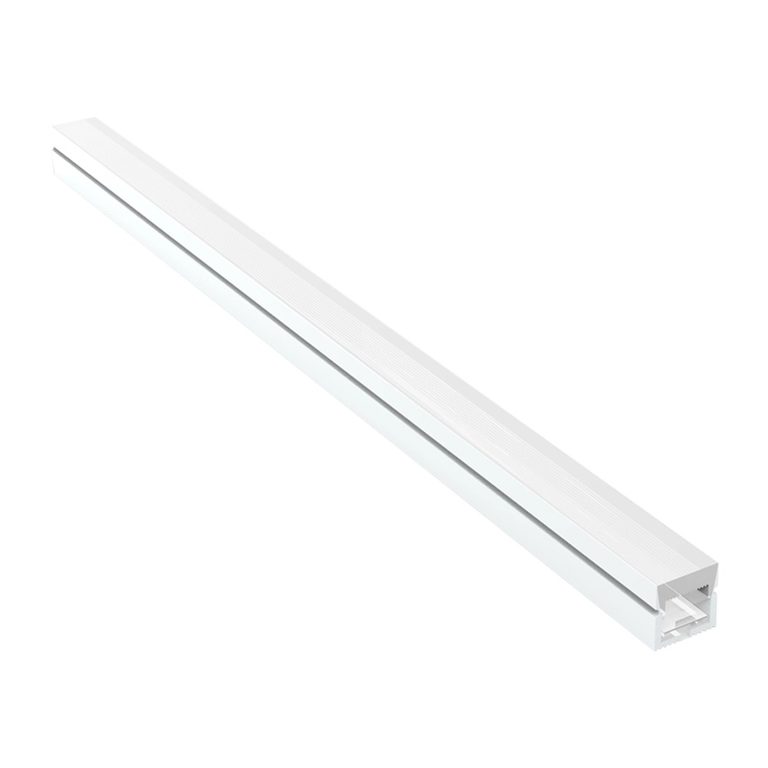
Optics influence how light reaches desks, circulation routes, walls, and displays. A conventional diffuser can provide a broad, softened appearance, while a microprismatic optic may help control high-angle luminance and visual comfort in workspaces. The choice depends on the task, viewing direction, and project calculations.
When evaluating a linear light fixture, ask whether the supplier offers photometric data for each optical option. Fixtures with the same wattage may have different distributions. Compare lighting calculations to verify visual comfort.
Confirm Size, Output, and Color Quality
Fixture length and luminous output should correspond to the room layout and spacing plan. A product range with several lengths can simplify installation across rooms of different sizes and reduce the need for awkward gaps or excessive fixture rows. Compare delivered lumens, efficacy, dimensions, and mounting clearances, not wattage alone.
Color temperature also affects the character of a space. Warm white may suit hospitality or informal areas, while neutral white is frequently considered for focused work environments. Color rendering is important where accurate color recognition matters. For office linear lighting, confirm the required CCT and CRI against the design brief, and check whether these values remain consistent across the ordered batch.
Check Mounting, Linking, and Site Conditions
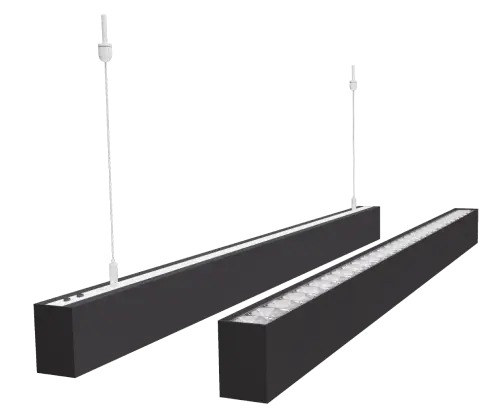
The ceiling structure determines whether surface-mounted or suspended installation is more practical. Surface mounting can be suitable where ceiling voids are limited, while suspension can position light closer to the task plane and make the fixture a visible part of the interior design. Confirm fixing points, cable entry, and maintenance access before ordering.
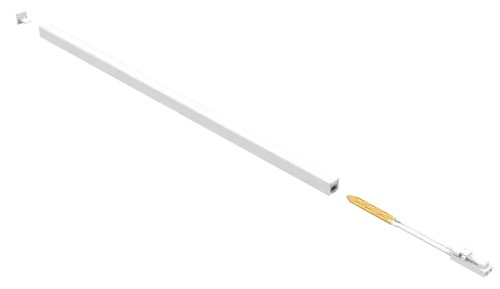
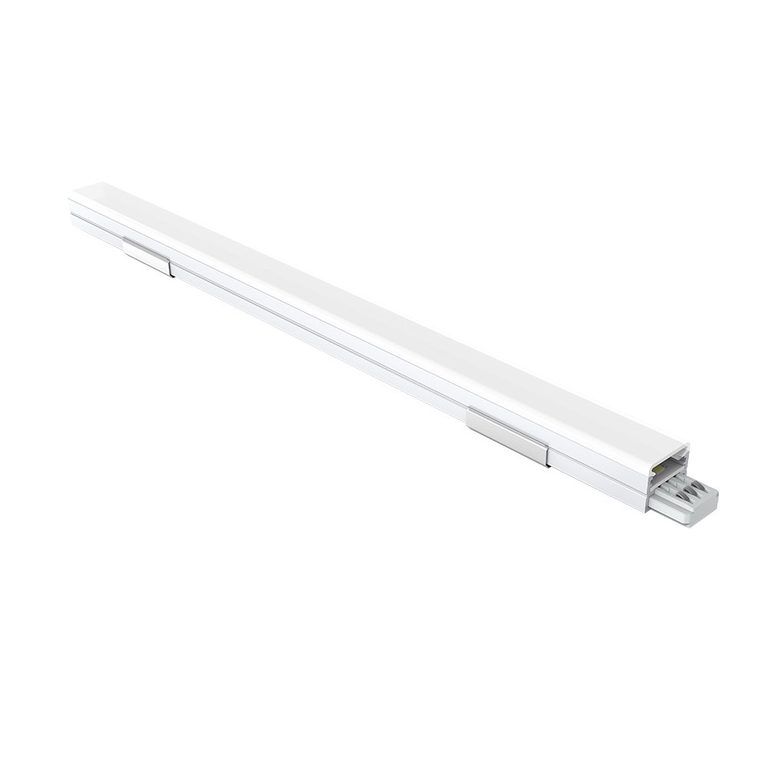
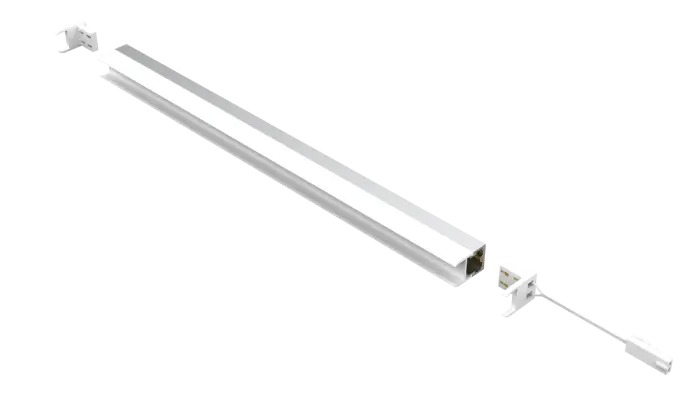
For continuous rows, investigate connectors and linking arrangements. Verify the maximum permitted run, electrical feed positions, and whether linked units maintain consistent appearance. A linear light fixture must also fit around sprinklers, HVAC equipment, partitions, and other ceiling services. Coordinate early with electrical and ceiling contractors to prevent site conflicts.
Match Dimming and Controls to the Building
Control compatibility should be settled before procurement, not after installation. Basic on/off switching may be sufficient for some areas, while 0–10V or DALI dimming may be required for zoning, scheduling, or integration with a building management system. Confirm driver type, wiring, commissioning, and control-system compatibility.
For office linear lighting, adjustable color temperature or separately controlled direct and indirect light can provide flexibility for different activities and room conditions. These functions add flexibility, but confirm operation and availability in the selected configuration.
Review the Product Configuration and Supplier Support
A complete quotation should identify the model, length, wattage, CCT, CRI, optic, mounting method, driver, dimming protocol, finish, connectors, and accessories. Ask for datasheets, installation instructions, warranty terms, certificates required by the destination market, and sample availability. Check sample and bulk-order lead times against project handover dates.
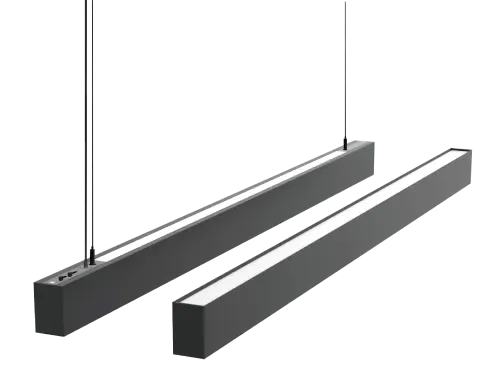
Our Glory Series office linear light is designed for offices and public environments such as galleries, libraries, and classrooms. Options include a PC diffuser or PMMA microprism optic, surface or suspended installation, and direct-only or up-and-down illumination. The range supports 3000K, 4000K, and 5000K, with CRI above Ra90.
At LEDIA Lighting, we offer selectable CCT, separate up/down adjustment on applicable configurations, linking connectors, and on/off, 0–10V, or DALI drivers. Confirm the required combination before ordering. As a linear light fixture supplier and manufacturer, we encourage project teams to review the complete configuration rather than relying on a series name alone.
Make the Specification Clear Before You Order
A successful order begins with a clear project brief: application, lighting criteria, layout, fixture dimensions, optics, mounting, controls, quantities, and delivery schedule. For office linear lighting projects, photometric verification and control compatibility are especially important because they affect the performance of the completed space.
At LEDIA Lighting, we support commercial buyers with office linear lighting options designed for different project requirements. Confirming details, reviewing samples, and documenting the configuration before production can reduce procurement uncertainty and support a dependable installation.