Surface-mounted linear lighting looks straightforward to order, but several costly mistakes can happen before the products reach the project site. A fixture may look right in a catalogue and still fail to match the ceiling, electrical schedule, required run length, or installation environment.
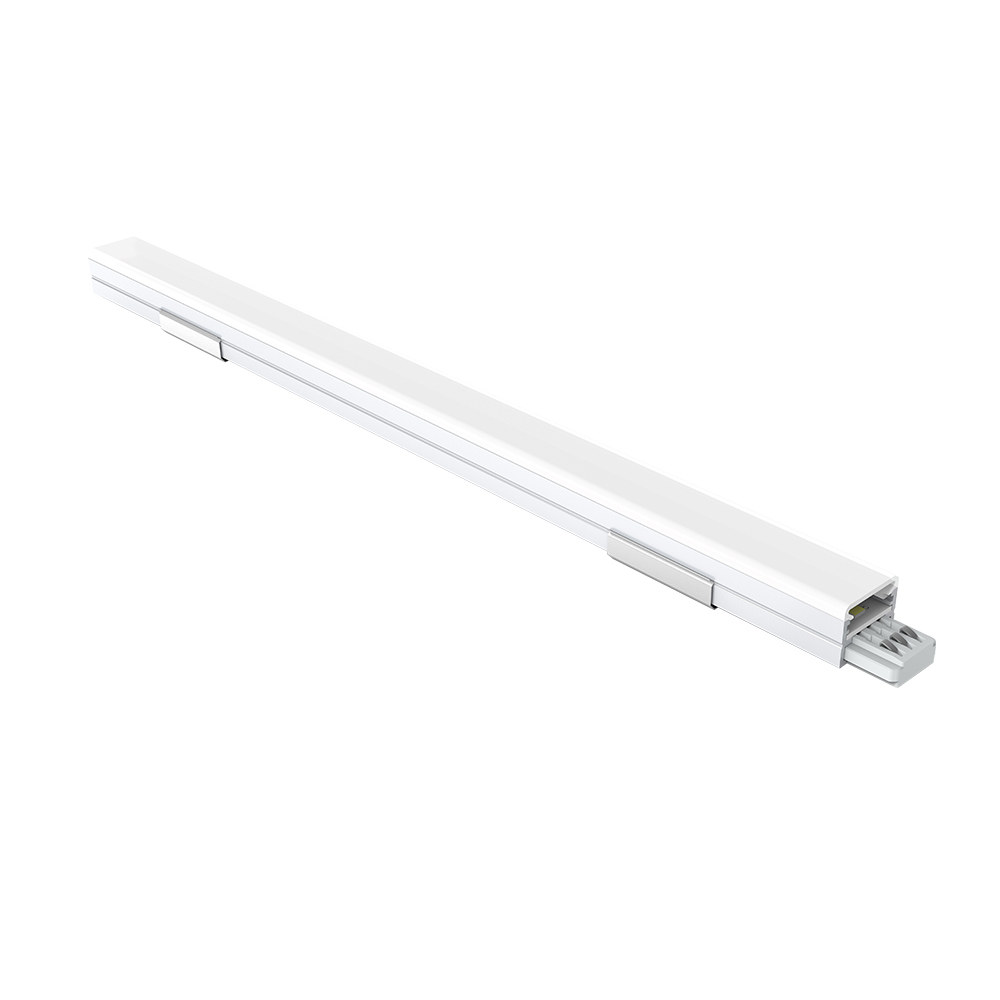
We approach the buying decision from the installation backward. Before releasing an order, we want the physical dimensions, electrical configuration, environmental requirements, mounting method, and connection arrangement to match the actual project.
Will the Mounting Surface Actually Accept the Fixture?
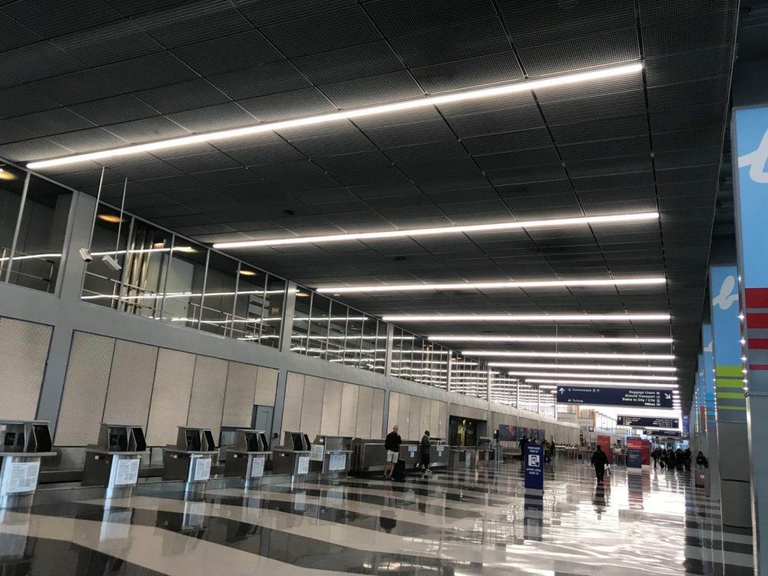
Surface-mounted linear lighting is fixed directly onto a ceiling or wall, so the mounting surface needs to be checked before the model is selected. We look at the available fixing area, cable entry, surface condition, and access for installation.
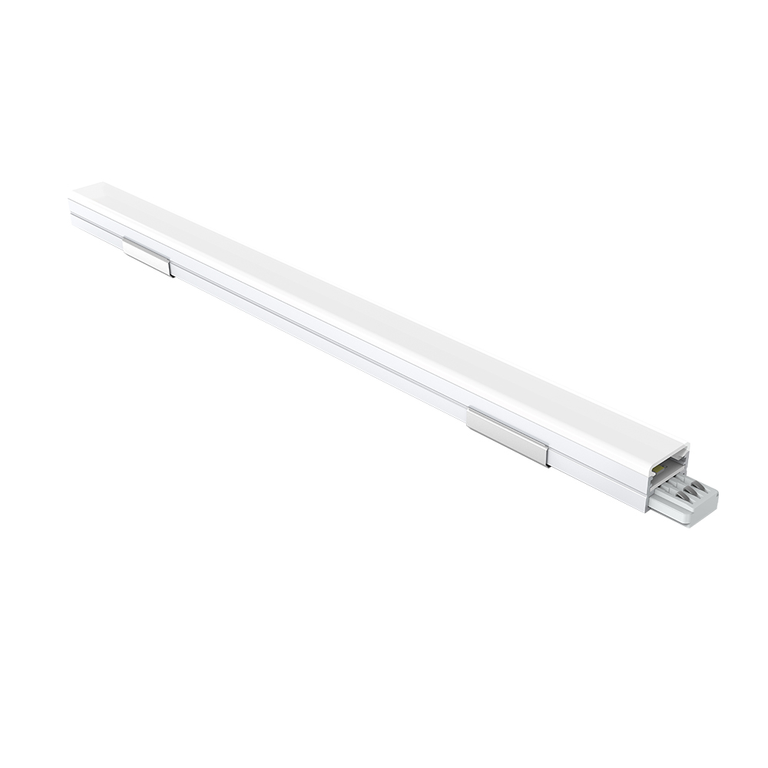
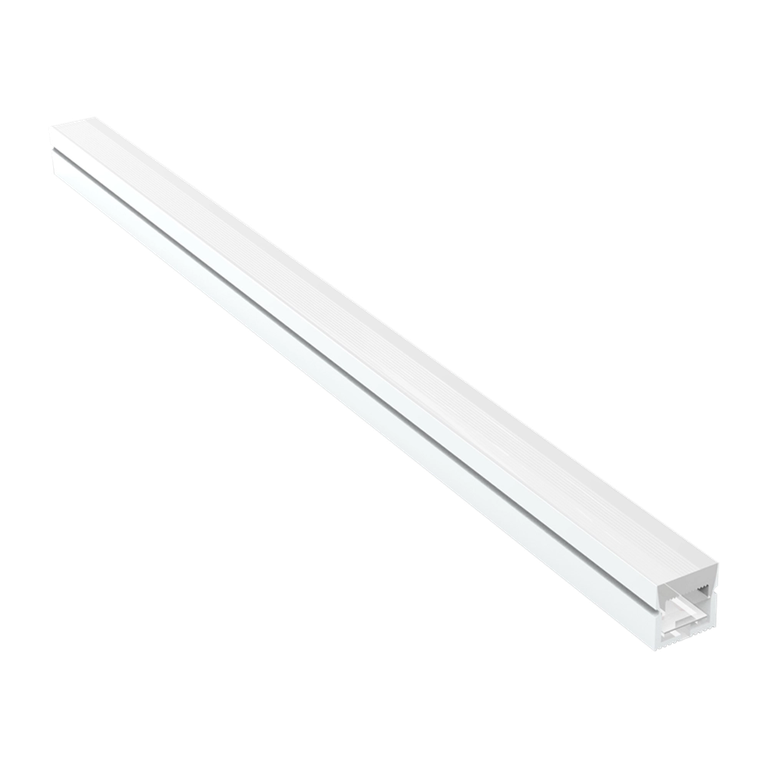
That becomes particularly relevant on commercial projects where concrete ceilings, finished ceilings, service routes, and structural elements can vary between areas. LEDIA Lighting includes surface-mounted installation among its linear lighting options, alongside recessed and suspended formats.
Rather than selecting a fixture from its appearance, we compare the mounting method with the actual construction drawing first.
Is the Fixture Length Right for the Run You Need?
Quantity should come after length. A drawing may show one continuous lighting line, while the actual order could require several fixtures with specific lengths, joints, or stopping points.
LEDIA Lighting’s published linear-light documentation includes 600 mm, 1200 mm, and 1500 mm configurations within its B Series. Different lengths are paired with different wattages, so dimensions should be treated as part of the product specification rather than a visual detail.
We measure the intended run, then account for corners, structural bays, end conditions, and any areas where the lighting line must stop. This gives us a more reliable quantity before the purchase order is prepared.
Are Wattage and Lumen Output Both Approved?
Wattage alone does not tell us whether two linear fixtures provide the same lighting output. When comparing quotations, we keep wattage and lumens together so the project team is not comparing products on only one number.
For listed B Series configurations, LEDIA Lighting specifies options such as 24W, 30W, 40W, and 50W alongside corresponding lumen outputs. The documentation also identifies 3000K, 4000K, and 5000K options and CRI above Ra80 for the listed models.
Our procurement reference therefore combines model, length, wattage, lumen output, CCT, and CRI where applicable. That makes any proposed substitution much easier to evaluate.
Does the Installation Really Need a Tri Proof Light?
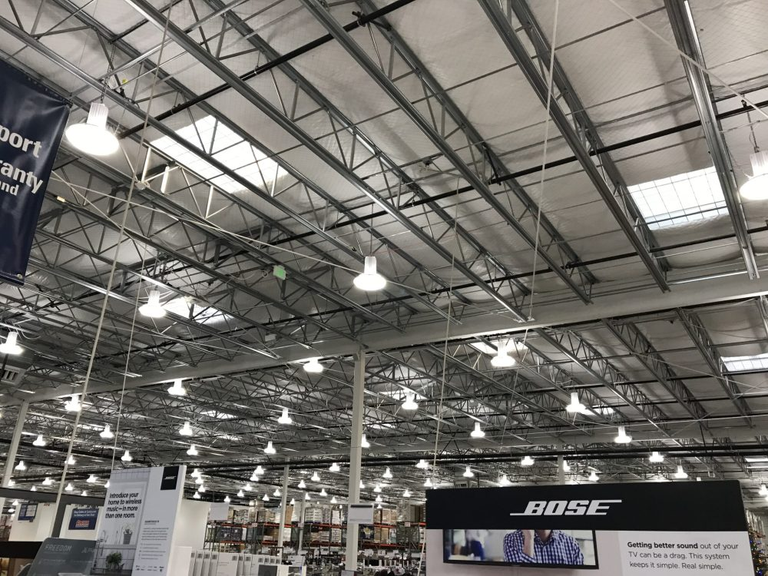
Environmental conditions should be established before the product is priced. Warehouses, garages, parking areas, underground passages, and other demanding locations can require a different construction from a standard interior fixture.
A tri proof light is designed for demanding commercial and industrial environments. LEDIA Lighting describes its tri-proof linear products as waterproof, dustproof, and resistant to impact and vibration, with relevant products intended for locations such as warehouses, garages, and parking areas.
The C Series also offers surface-mounted, recessed, and suspension installation, while its published information specifies an aluminum base design for heat dissipation. We still check the exact model rather than assuming every tri-proof product has identical specifications.
Which Voltage and Control Version Belongs on the Order?
Electrical information should be confirmed before production. We first compare the fixture’s input voltage with the project’s electrical schedule, then establish whether the system requires On/Off operation or a particular dimming method.
For its C Series, LEDIA Lighting lists 220–240V and 120–277/347V options, together with On/Off, 0–10V dimming, and DALI dimming configurations. These are specific product options, so the selected version needs to correspond with the project’s electrical requirements.
We place these details directly on the quotation and purchase order. That removes assumptions when several electrical versions exist within the same product family.
How Will Multiple Fixtures Become One Lighting Run?
A long line shown on a drawing does not necessarily mean one physical fixture. Many projects use several units, which makes the connection method relevant to both ordering and installation.
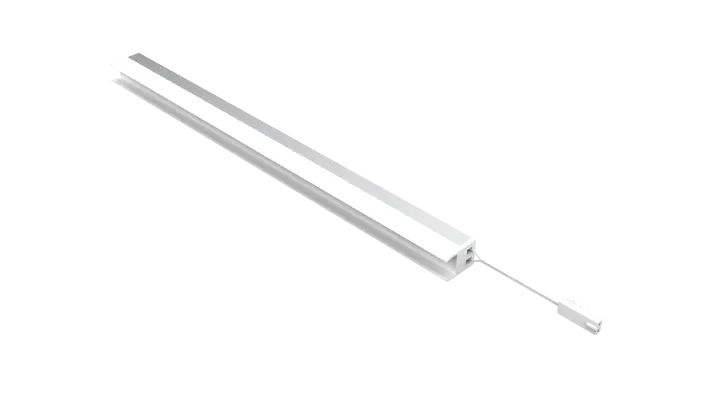
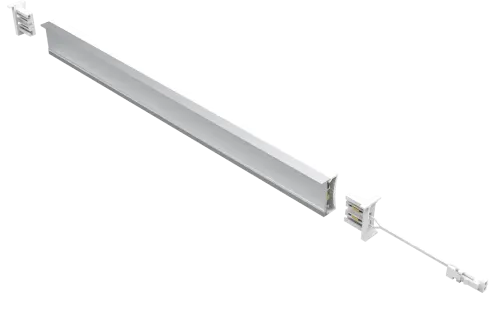
LEDIA Lighting states that its C Series supports linking with multi-connectors and can be linked up to 400W. That specification can affect the number of fixtures, connector requirements, power-feed locations, and installation sequence.
We therefore confirm the intended connection arrangement before ordering a large quantity. The installer should know how individual sections are expected to work together before the shipment arrives.
What Needs to Remain Identical Across the Whole Shipment?
For wholesale lighting fixtures, consistency is a procurement issue as much as a lighting issue. A project can become difficult to manage if different batches arrive with variations in CCT, finish, wattage, voltage, or control configuration.
We put the approved model number and relevant options into the purchase order rather than relying on a product photograph or a short product description. Depending on the project, the specification may include length, wattage, CCT, CRI, voltage, control, mounting method, finish, and environmental requirements.
The goal is simple: the factory, distributor, contractor, and project manager should all be working from the same product reference.
Can the Purchase Order Be Checked Against the Site One Last Time?
The final review should happen before production rather than after delivery. We compare the approved fixture information with the reflected ceiling plan, electrical schedule, quantity list, and installation requirements.
For wholesale lighting fixtures, we verify that the lengths match the layout, the electrical versions match the supply, and the mounting method matches the site. If a tri proof light is specified, we also confirm that it is being used for an area where its environmental construction is actually required.
At LEDIA Lighting, we offer several linear fixture families, including tri-proof products, giving project buyers different configurations to assess against their installation conditions.
A reliable order is therefore not simply the one with the lowest unit price. It is the one whose dimensions, output, electrical details, environmental requirements, and installation arrangement have already been reconciled with the project. For surface-mounted linear lighting, that final alignment is what turns a catalogue selection into a workable specification.