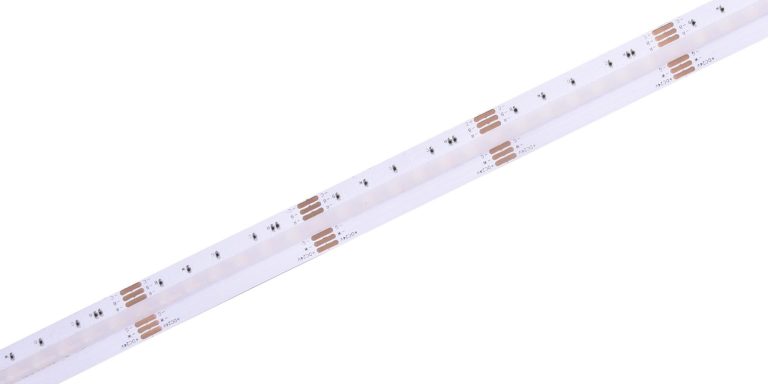
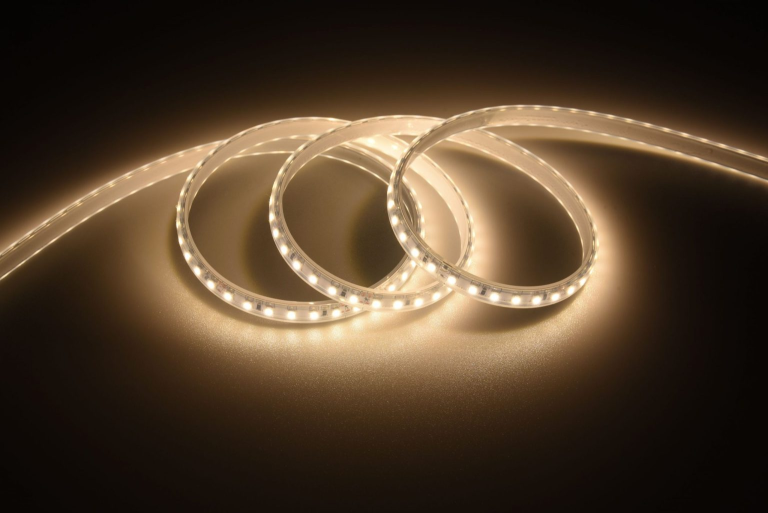
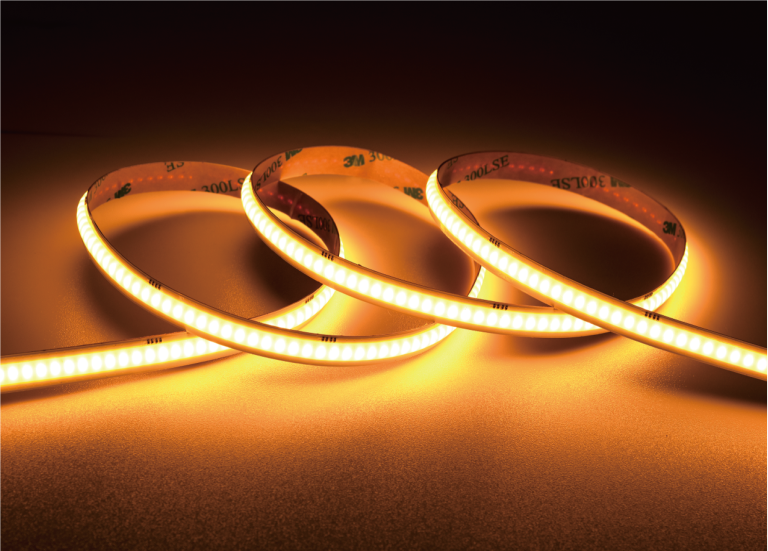
Lighting requirements vary considerably from one space to another. A retail store needs accurate product presentation, an office needs comfortable and functional illumination, while a residence may prioritize atmosphere and discreet integration. Choosing LED linear lighting strips therefore requires more than comparing brightness or price. Project teams need to consider the space, lighting purpose, installation conditions, visual effect, and maintenance requirements together.

Begin With the Function of Each Space
The first step is identifying what the lighting needs to achieve. General illumination, task lighting, accent lighting, and decorative lighting place different demands on a linear system. Professional LED strip guides commonly distinguish applications such as general, ambient, and cove lighting, with different lumen outputs and color temperatures suited to each purpose.
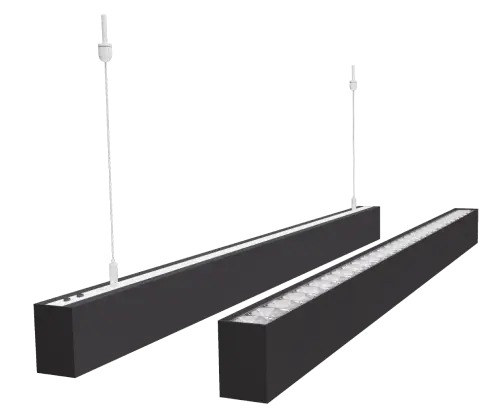
For offices, the priority is usually functional visibility and visual comfort. Linear lighting can be integrated into ceilings, suspended structures, or architectural details to create consistent illumination. Tunable-white systems can also provide adjustable color temperatures for changing workplace requirements.
Retail environments require a different balance. Lighting may need to highlight merchandise, shelves, display cases, and architectural features without overwhelming the products. Higher color rendering can be particularly useful where the appearance of materials and merchandise matters.
Match Brightness to the Lighting Role
Brightness should be selected according to the role of the light rather than simply choosing the highest available output. A concealed cove installation may require moderate illumination, while a strip serving as a primary lighting element needs substantially more output.
Commercial LED strip systems demonstrate this range clearly. Signify’s application guide lists products from approximately 300–700 lm/m for ambient applications, 500–1,000 lm/m for cove lighting, and 1,000–2,000 lm/m for general lighting.
For our project partners, this principle is important when specifying LED linear lighting strips. We consider the installation position, distance from the illuminated surface, surrounding finishes, and intended visual effect rather than treating lumen output as an isolated specification.
Choose Color Temperature and CRI Carefully
Color temperature affects how a space feels and how surfaces appear. Warm white can support hospitality and residential environments where a relaxed atmosphere is preferred. Neutral white is often suitable for offices, retail environments, and other spaces where balanced visibility is important.
Color rendering also deserves attention. Where products, finishes, artwork, or architectural materials must appear accurately, a higher CRI can be advantageous. Current professional strip systems offer options such as CRI 80 and CRI 90 alongside multiple color temperatures, allowing specifications to be adapted to different applications.
We recommend treating CCT and CRI as part of the design brief rather than afterthoughts. The right combination helps maintain a consistent appearance across a project and reduces the risk of installing a technically adequate but visually unsuitable system.
Consider the Installation Environment
Installation conditions can change the appropriate specification considerably. Dry indoor locations generally allow a broader selection, while areas exposed to moisture, dust, temperature changes, or outdoor conditions require suitable protection.
For indoor LED linear lighting, project teams should still consider whether the strip will be installed inside a kitchen, bathroom, commercial service area, ceiling cavity, or another location with different environmental conditions. Outdoor and damp applications may require products with higher IP ratings. Professional products are available with protection such as IP66 and IP67 for applications requiring greater environmental resistance.
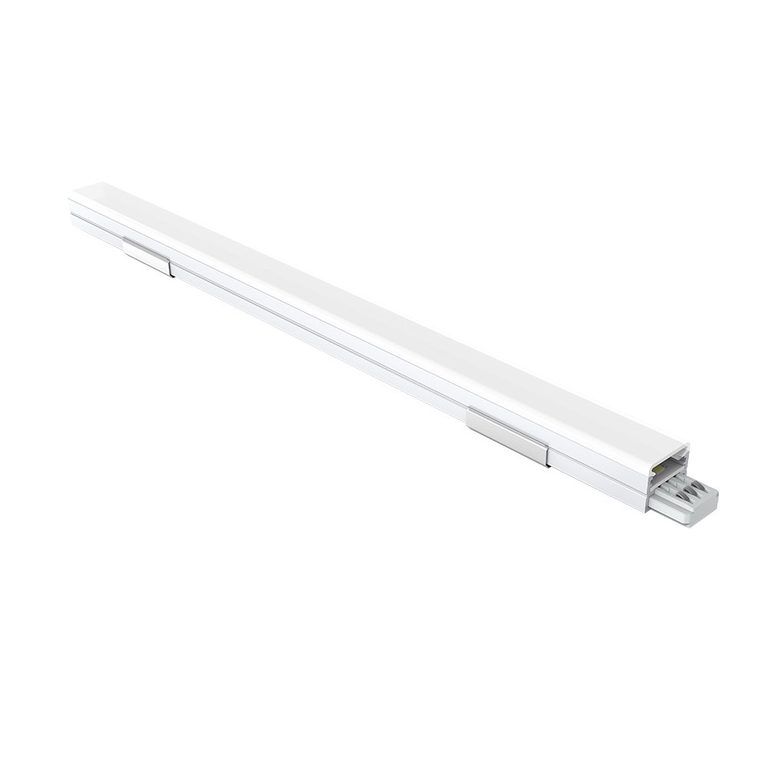
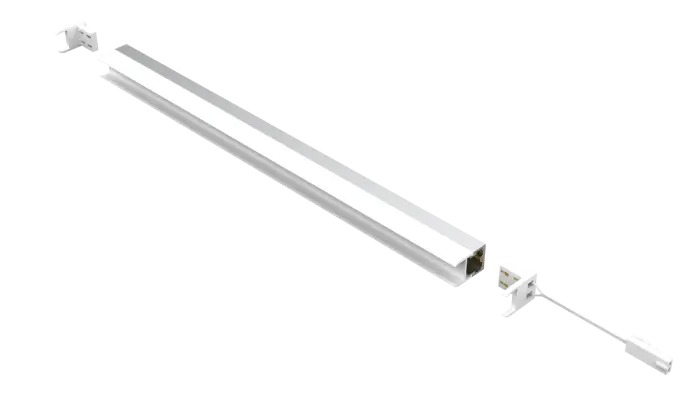
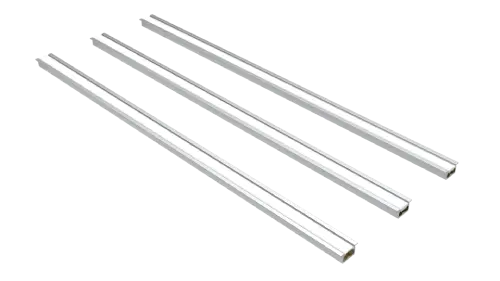
Installation accessories are equally important. Profiles, covers, connectors, mounting clips, and suitable drivers can influence both appearance and installation efficiency. Professional strip systems commonly provide accessory options for different mounting methods.
Adapt the Approach for Residential Spaces
Residential projects often benefit from concealed or integrated linear lighting. Under-cabinet illumination can support kitchen tasks, while wardrobe lighting can improve visibility inside storage areas. Ceiling coves, shelving, stairs, and furniture details can use linear sources to create softer layers of light.
Here, indoor LED linear lighting should complement the interior instead of competing with it. A discreet installation can emphasize textures and architectural forms while keeping the light source visually hidden. Dimming can also help users adjust the atmosphere according to different activities and times of day.
The same principle applies to hospitality-style residential spaces. Warm color temperatures and carefully controlled indirect lighting can create a more comfortable environment, while higher-output systems can provide stronger functional illumination where necessary.
Scale the Specification for Commercial Projects
Commercial projects introduce additional considerations, including operating hours, maintenance access, consistency between multiple areas, and system integration. A hotel, retail chain, office building, or restaurant may require lighting specifications that can be reproduced consistently across numerous rooms or locations.
For these applications, LED linear lighting strips can provide flexibility because they can be integrated into different architectural details while maintaining a common lighting language. Professional products are available for offices, retail, hospitality, and architectural applications, demonstrating the breadth of possible uses.
We also consider the complete installation rather than evaluating the strip independently. Power supplies, controls, mounting methods, thermal conditions, connectors, and maintenance access all contribute to the finished system. This approach is particularly important for larger business projects where installation reliability and repeatability affect the overall project outcome.
Build Compliance Into the Specification
For international projects, compliance should be considered during product selection rather than after the design has been completed. Documentation covering electrical safety, environmental requirements, quality management, and regional approvals can help project teams evaluate whether products are suitable for their intended markets.
As a professional LED lighting manufacturer, we integrate quality management, environmental responsibility, and product compliance into our manufacturing processes to support diverse market requirements. Recognized as a Key High-tech Enterprise of the National Torch Plan, we hold certifications including ISO 9001 and ISO 14001, alongside product certifications such as UL, CE, CB, SAA, and ETL. Compliance with applicable requirements, including RoHS, REACH, IEC, ERP, and ANSI, helps customers assess product suitability for their target markets and project specifications.
Create a Specification That Fits the Space
The lighting specification starts with the space rather than a product catalogue. Function, brightness, CCT, CRI, installation position, environmental conditions, controls, accessories, and compliance requirements should all be evaluated together.
At LEDIA Lighting, we support different indoor and outdoor project requirements through LED light strips, linear fixtures, cabinet lights, high-bay lighting, and tri-proof lighting. Our product development and manufacturing capabilities also allow us to provide customized LED lighting solutions when standard specifications do not fully match a project’s requirements. By aligning the lighting system with the actual space, we can help project partners achieve practical, consistent, and adaptable results.