A long LED strip-light catalog can make a simple purchasing decision unnecessarily complicated. Different voltages, densities, color temperatures, construction types, power levels, and color options can turn a shortlist into dozens of possibilities. Most projects do not need all of them.
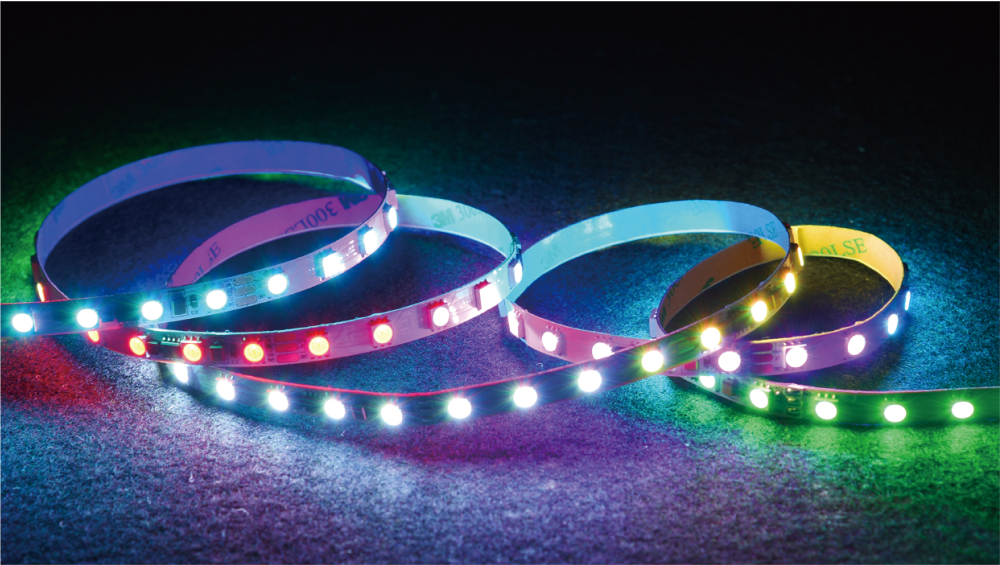
We’ve found that the most efficient way to choose is to filter out mismatched products in stages rather than comparing everything at once. By the time you lock down the installation method, electrical setup, visual intent, and core features, only a tight shortlist should remain.
First, Decide What the Strip Must Do
Before looking at specifications, describe the job in one sentence.
Is the strip providing concealed architectural illumination, adding light inside a cabinet, outlining a feature, creating decorative color, or contributing to general lighting? The answer immediately changes which products deserve attention.
A concealed cove installation, for example, may prioritize continuous and visually clean illumination. A decorative installation may place greater emphasis on color effects. A cabinet application may be driven by compact dimensions and the available installation space.
Our regular strip-light portfolio contains several distinct product families, including Classic, COB, Digital, Dual-color, High Efficacy, 48V, and other configurations. Rather than comparing every series, start by removing categories that do not perform the required function.
This first step is deliberately broad. The objective is simply to answer one question: which types of strip light are even relevant to this project?
Next, Eliminate Anything That Cannot Fit the Run
Physical and electrical compatibility should be the second filter because an unsuitable product cannot be rescued by better light quality.
Measure the required run and check how the strip will be cut and installed. Cutting intervals differ between products, so a strip that looks suitable on paper may become inconvenient if its cutting unit does not work with the required dimensions.
Voltage is another fast elimination criterion. Our published Standard Series includes both 12V and 24V configurations, with specifications varying between individual models. The available power supply and the planned circuit therefore need to be considered before comparing brightness or color.
Installation exposure provides a further filter. Indoor concealed applications may not require the same construction as locations exposed to moisture. Our Standard Series is available in different IP configurations, including IP20, IP65, IP67, and IP68, depending on the product.
At this point, a large catalog should already be much smaller. There is little value in evaluating the lumen output of a product that cannot be installed at the required length or connected to the project’s electrical system.
Then Choose the Light You Actually Need to See
After compatibility has been established, shift from installation mechanics to the appearance of the finished lighting.
Color temperature is one of the simplest ways to narrow the field. A warm interior atmosphere, neutral commercial environment, and cooler visual treatment may call for different CCT choices. Our published Standard Series includes models covering CCT options such as 2700K, 3000K, 4000K, 5000K, and 6000K, depending on the specific configuration.
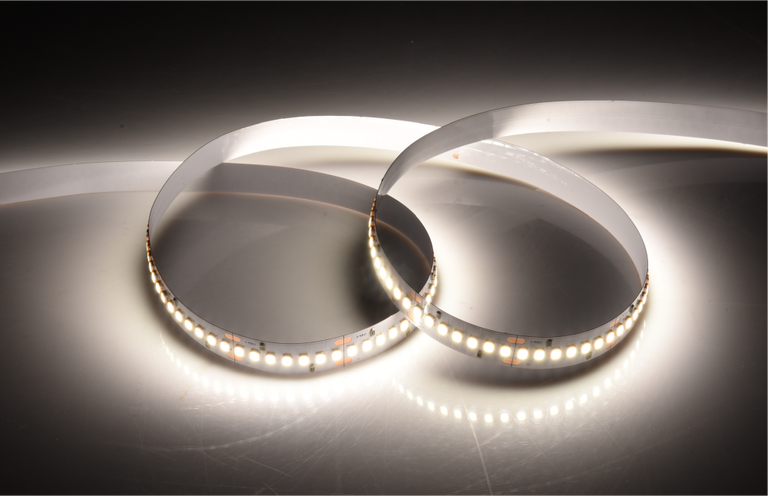
Color rendering can also remove options. If the project requires stronger color reproduction, compare the available CRI levels rather than treating all white LED strips as visually equivalent. Published Standard Series specifications include CRI80+, CRI90+, and CRI95+ options.
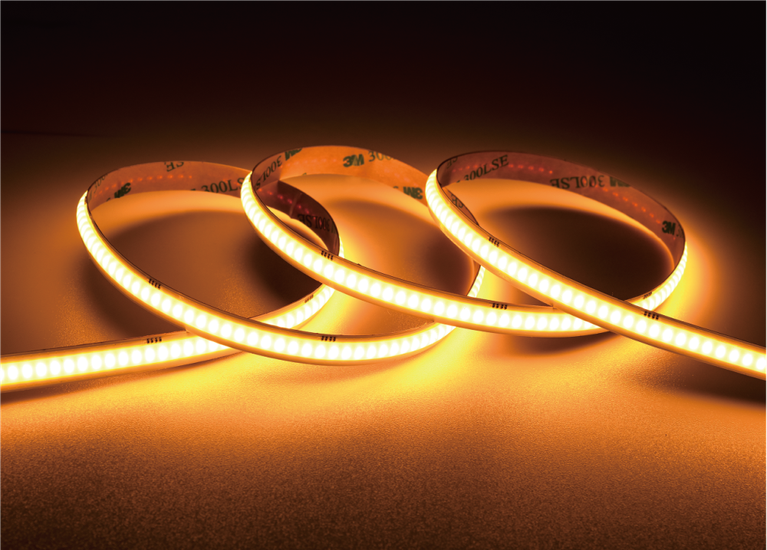
Construction matters particularly when the strip will be directly visible. COB technology is designed to create a more continuous appearance, and our COB range is described as providing uniform, dot-free illumination.
The important point is sequence. Do not compare every available CCT, CRI, and construction type before deciding what the installation should look like. Define the visual target first, then use those specifications to remove products that do not meet it.
Only Compare Advanced Options If the Project Requires Them
A common source of unnecessary complexity is assuming that a product with more functions is automatically a better choice.
Standard single-color lighting may be sufficient for a fixed architectural or commercial installation. Adding RGB or RGBW capability makes sense only when the project genuinely needs controllable color or multiple lighting effects.
The same distinction applies to COB. Its continuous visual appearance can be valuable in applications where LED spotting is undesirable, but not every concealed installation requires that characteristic.
Our range includes both conventional and COB configurations, as well as RGB and RGBW options. One published RGBW COB model is specified as a 24V product with typical power of 16W/m. Those additional capabilities can be useful, but they should enter the shortlist because of a project requirement rather than because they appear more sophisticated.
An RGBW COB LED strip is therefore a specific solution for a specific brief. If the project needs dynamic color together with a dedicated white-light component and a continuous-looking light source, it deserves consideration. If none of those requirements exists, there is little reason to keep it in the final comparison.
Finish With the Few Specifications That Can Change the Decision
Only now is it worth making a detailed comparison between the remaining products.
Check power consumption, lumen output, efficacy, CRI, CCT, dimensions, cutting unit, voltage, IP rating, and any required control characteristics. The exact specifications should come from the individual product rather than from assumptions about an entire product family.
This final phase allows us to separate products that are truly interchangeable from those that merely share a similar catalog appearance. Minor variations in cutting increments, operating voltage, or ingress protection often carry more weight on the job site than high-level performance metrics.
Buyers should also resist comparing specifications that have no bearing on the project. If two remaining products both meet the installation requirements, the decision may come down to availability, project consistency, or which specification is easier to standardize for future orders.
That is particularly useful for contractors and wholesalers. A reliable shortlist is easier to quote, specify, stock, and reorder than a constantly changing collection of products.
The same logic makes standard LED strip lights easier to evaluate. Instead of asking which product has the most features, start eliminating options that fail the actual project requirements. Installation conditions remove one group; voltage and dimensions remove another; CCT, CRI, and visual construction narrow the field further. Only then should advanced features and detailed performance figures determine the final choice.
This filtering approach drives everything we do at LEDIA Lighting: evaluating specs in installation order brings clarity to product choices. Rather than seeking out the flashiest catalog option, we focus on pinpointing a lean range of standard LED strip lights that get the job done, then filtering by what truly matters.
In standard installations, a curated shortlist beats an exhaustive lineup every time. It accelerates specification, eliminates product bloat, and roots every buying decision in solid technical reasoning.