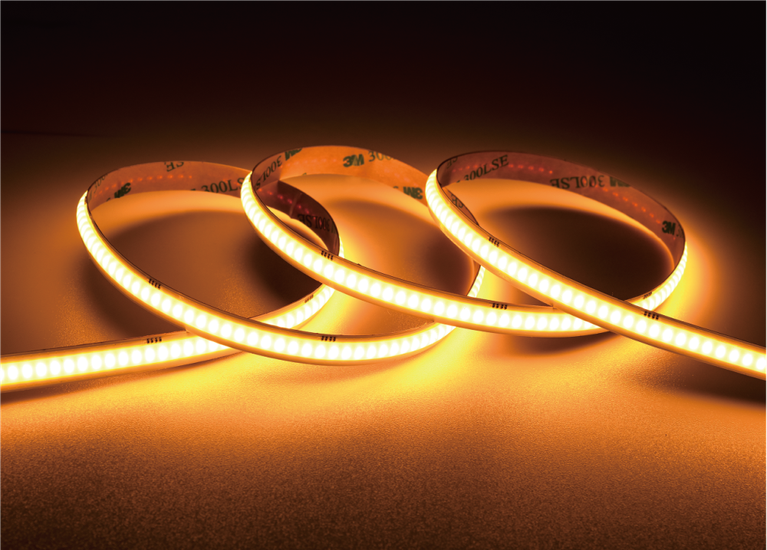
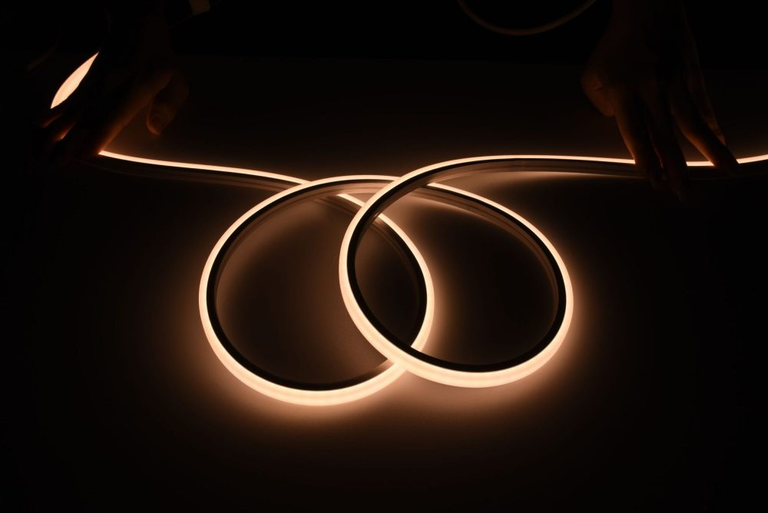
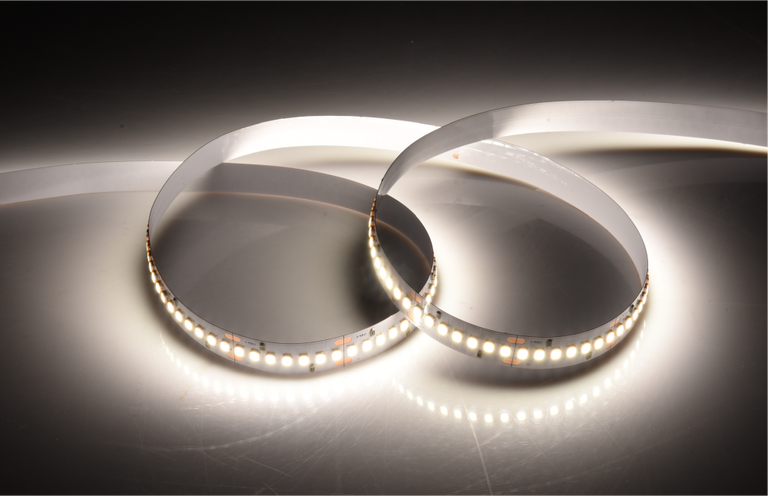
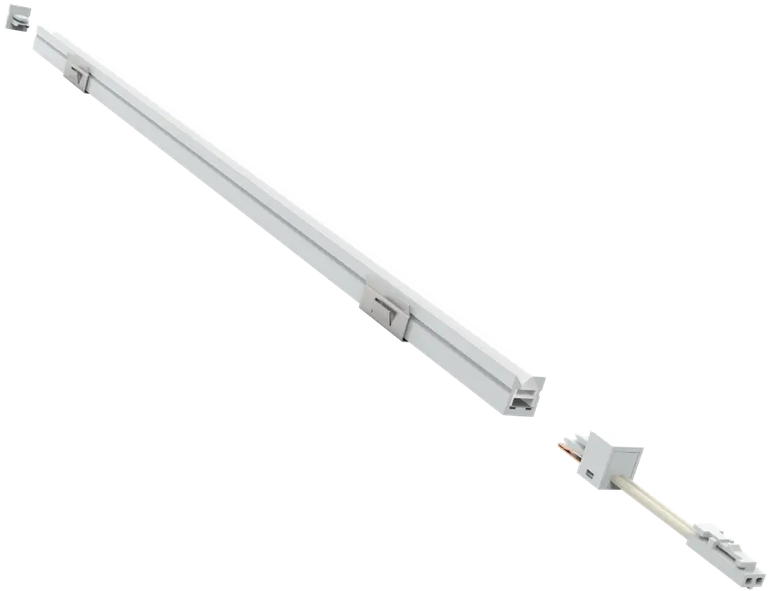
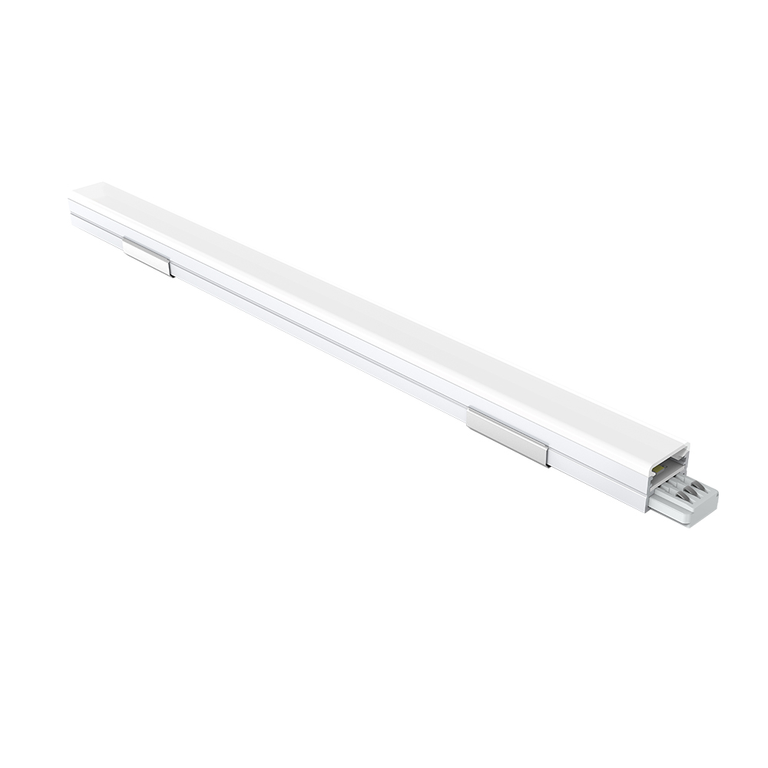
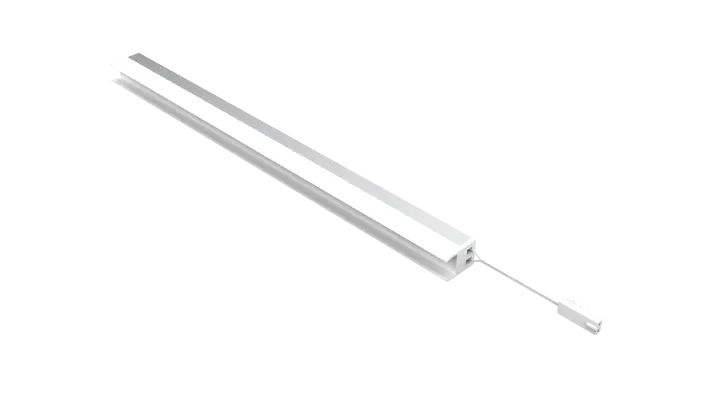
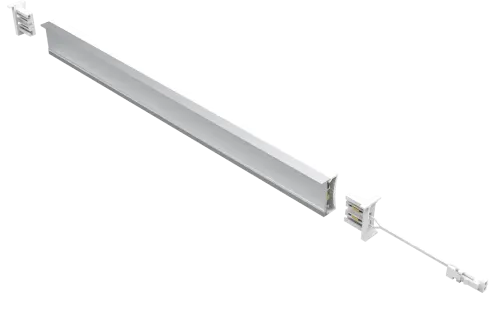
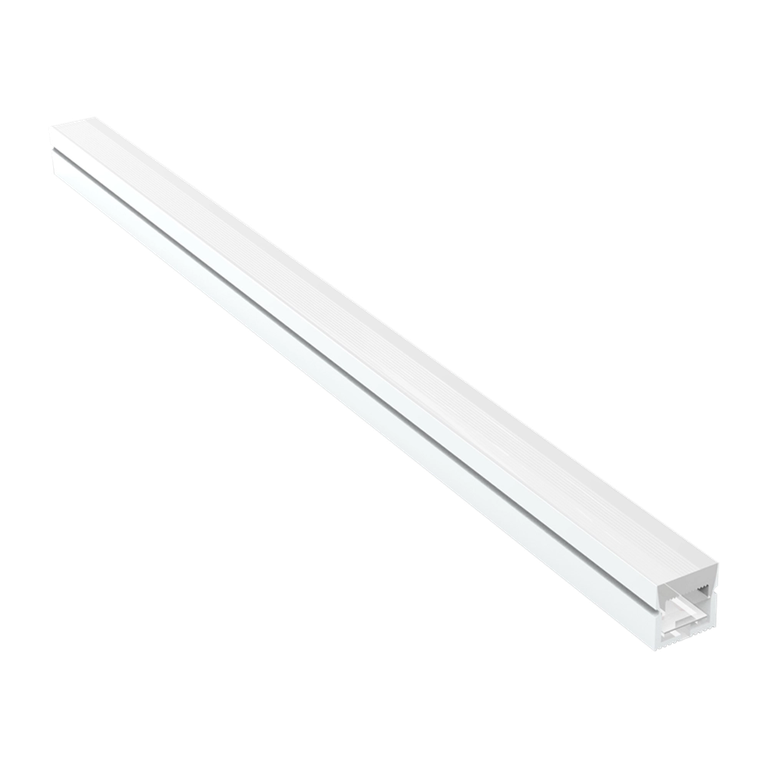
A customized lighting fixture should not be selected from appearance alone. A fixture may have the right profile in a rendering but leave insufficient clearance for installation, or fit the available space while producing a light distribution that does not match the architectural intent.
That is why custom light fixtures need to be evaluated from both directions at once. The finished installation determines what the fixture must physically do, while the desired appearance determines what the finished product must look like. Treating either side as an afterthought can create problems during fabrication or installation.
What Must the Fixture Look Like After Installation?
Appearance is more than the visible housing. Project teams may care about whether the fixture disappears into a ceiling, creates a continuous line along a wall, aligns precisely with architectural modules, or becomes an intentional feature within the space.
Those expectations need to be translated into physical characteristics. A slim recessed fixture, for example, may require a specific profile width and depth. A suspended fixture may need a particular housing proportion because its body remains visible from multiple angles.
Light itself also contributes to the appearance. The position of the LED source, diffuser, beam distribution, CCT, and brightness can change how the completed installation is perceived. Consequently, the fixture body cannot be designed independently from its optical output.
A useful starting point is to describe the finished detail rather than the product. Where should the light appear? Which parts of the fixture should remain visible? How should it relate to adjacent surfaces? Those answers provide a much stronger basis for customization than simply requesting a different shape.
Which Installation Details Can the Fixture Not Ignore?
Physical constraints eventually determine whether an attractive concept can become a workable fixture. Available recess depth, mounting clearance, cable access, fixing positions, power connections, and maintenance space should be identified before the customized design is finalized.
Architectural drawings are particularly valuable here. A plan may show where the light belongs, but a section can reveal whether the proposed housing actually fits within the ceiling or wall construction.
Long linear installations introduce further coordination requirements. Joint positions, power-feed locations, mounting intervals, and transportation or handling considerations may affect how a visually continuous fixture is divided into physical sections.
Outdoor projects add another layer because the installation environment can influence enclosure and construction requirements. LEDIA Lighting‘s customization resources distinguish commercial, industrial, residential, and outdoor lighting scenarios and describe environmental and IP testing as part of its quality-control process.
The practical point is simple: customization should begin with the actual installation envelope, not with an idealized fixture that has never been checked against the building.
Where Appearance and Installation Requirements Collide
The most difficult decisions usually appear where the visual target conflicts with physical reality.
A designer may want an extremely narrow illuminated line, for instance, while the installation requires room for wiring and mounting hardware. A continuous curve may look seamless in a rendering but require sections, connections, or a specific bending configuration in production.
Similar conflicts can occur with recessed fixtures. Reducing the housing depth may improve architectural integration, but the available space still has to accommodate the required components and installation method. Making a fixture thinner is therefore not automatically an improvement.
Appearance can also change after installation. A diffuser that looks appropriate in a sample may appear different when the fixture is mounted close to a reflective ceiling or wall. The surrounding material, viewing angle, and distance from the illuminated surface all contribute to the final visual effect.
For that reason, custom light fixtures should be reviewed as installed assemblies rather than isolated products. The relationship between the housing, mounting position, optical output, and surrounding architecture is what ultimately determines the result.
What Should Be Customized—and What Should Stay Standard?
Not every project requirement justifies changing the entire fixture. A more practical approach is to identify which characteristics directly affect the installation or appearance and customize those elements first.
Dimensions are often a logical starting point when the available space differs from a standard product. Housing shape, mounting method, diffuser configuration, cable arrangement, or light distribution may also warrant modification if they are critical to the architectural detail.
Other components may be better retained in an established configuration where they already meet the project’s requirements. Excessive customization can add unnecessary complexity without improving the finished installation.
For manufacturers, this distinction also affects production. LEDIA Lighting describes its customization workflow as consultation, design, sample confirmation, mass production, delivery, and after-sales service. The sequence indicates why the project specification needs to be settled before full production rather than relying on modifications after manufacturing begins.
A well-defined customization request should therefore distinguish between must-match project requirements and features that can remain standardized.
Why the Sample Matters Before the Full Order
Drawings can establish dimensions, but a physical sample answers questions that specifications cannot completely resolve. It allows the project team to check how the fixture fits, how the mounting system works, where cables emerge, and whether the visible finish matches the intended architecture.
Lighting appearance is especially difficult to judge from drawings alone. A sample can reveal whether the illuminated line is sufficiently continuous, whether the diffuser produces the expected effect, and whether the fixture appears too prominent or too recessed once viewed from the actual installation position.
Sample confirmation also creates a common reference for architects, engineers, contractors, procurement teams, and the manufacturer. Instead of approving separate interpretations of the same design, everyone can evaluate one physical solution.
The value of this stage is reflected in the documented customization process used by LEDIA Lighting, where sample confirmation takes place before mass production. For projects with tight dimensional or visual requirements, that checkpoint can expose a mismatch while changes are still manageable.
Choose the Fixture From Both Sides of the Detail
The right customized fixture is not necessarily the one with the most modifications. It is the one whose physical construction and visual behavior both make sense within the finished installation.
Start with the architectural result, then define the installation envelope that the fixture cannot exceed. From there, identify the dimensions, optical characteristics, mounting details, and visible elements that genuinely need customization. A sample can then confirm whether the proposed solution works in the real environment.
That is where OEM LED lighting becomes useful for project-based work. Rather than adapting the building around a fixed product, the fixture can be developed around defined project constraints. At LEDIA Lighting, the customization process places consultation and design ahead of sample confirmation and mass production, creating a practical sequence for resolving these requirements.
Treating appearance and installation as a single, unified selection problem is a principle we champion for commercial lighting projects. For us, the ultimate fixture is one that looks entirely intentional after installation because its physical design was engineered with that specific environment in mind from day one.