A clean RGB lighting line is not simply a strip that produces red, green, and blue light. Architectural projects expose interruptions such as LED points, mismatched segments, awkward corners, and inconsistent color response. We therefore work backward from the finished line.
We begin by asking how close the source will be to the viewer, where the line must turn or stop, and how each section will be controlled. Those answers determine whether the selected strip can actually create the intended architectural effect.
Make the LED Points Disappear from the Design
A strip can be technically correct and still look visually untidy. Exposed LEDs can break what should read as one continuous architectural stroke.
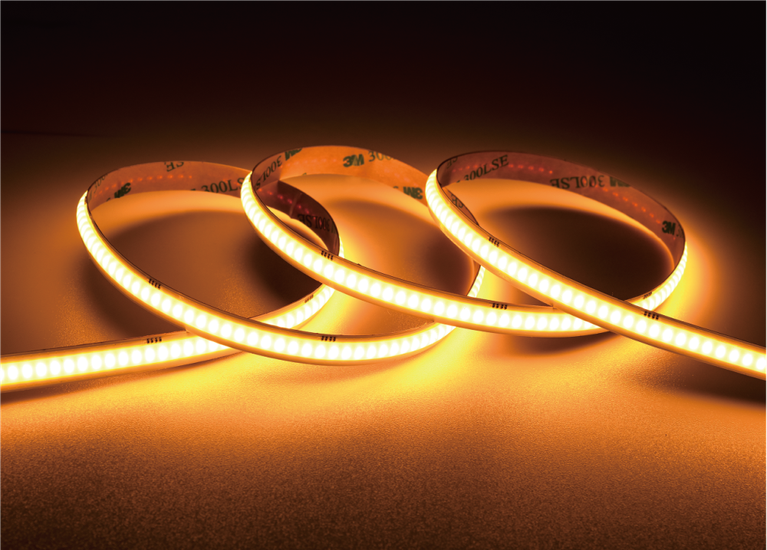
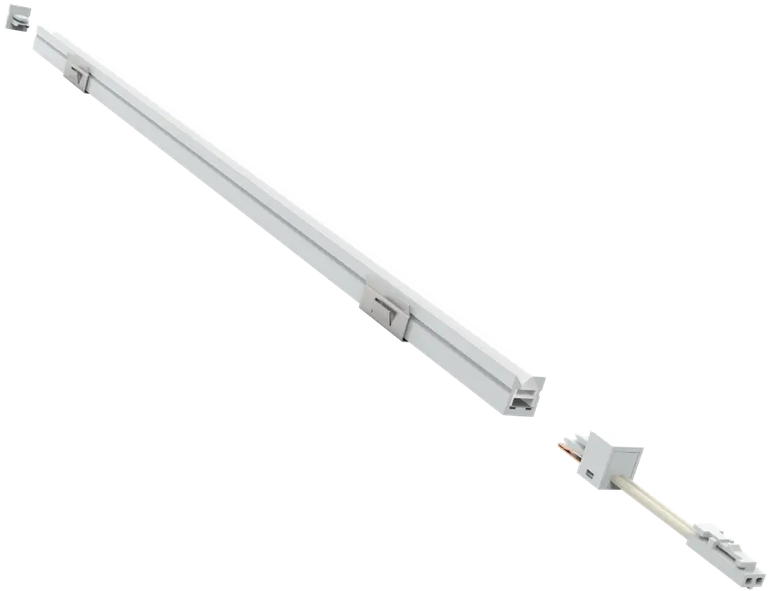
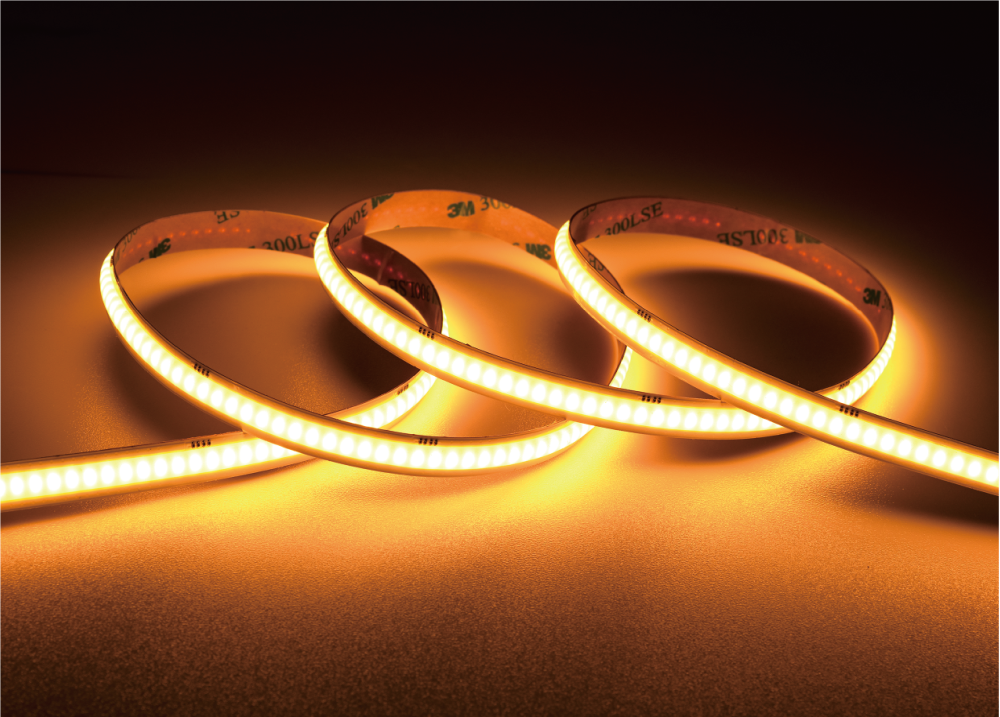
Our first decision is optical placement. A diffuser or architectural detail can soften the source, while direct-view installation demands greater attention to LED spacing. Higher-density or COB construction may suit a smoother appearance.
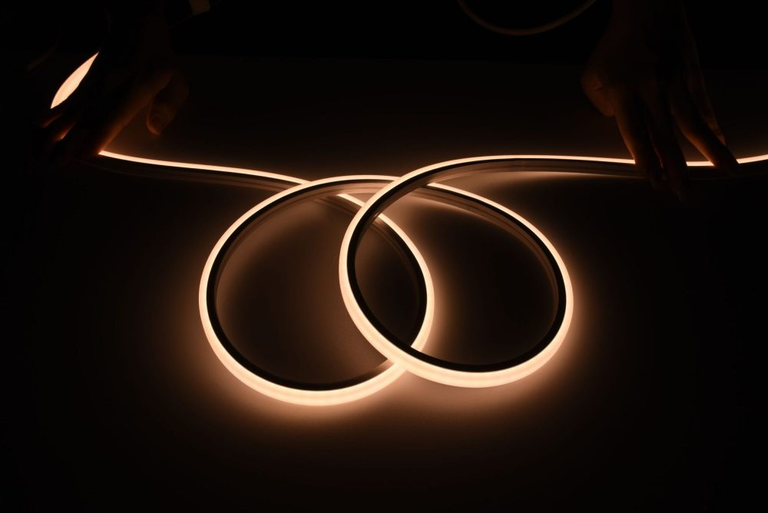
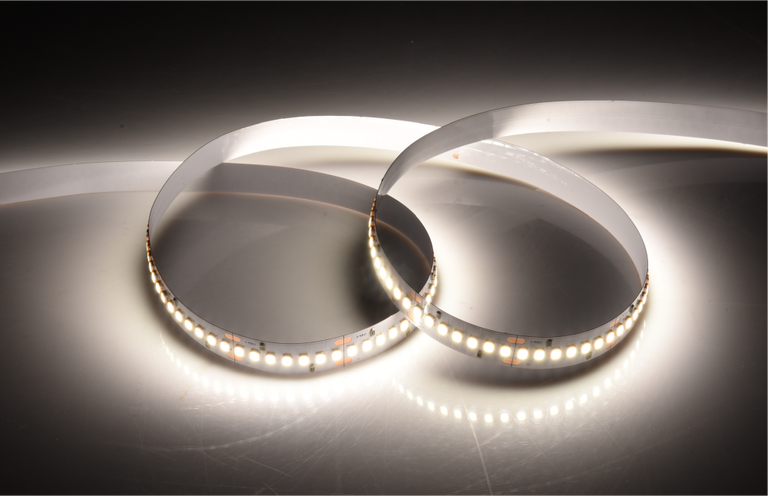
The LEDIA Lighting strip range includes regular, silicone, COB, and digital configurations, so we can match construction to the visual treatment rather than forcing one format into every project.
Let the Architecture Decide Where the Strip Is Cut
A lighting line often fails at its endpoints rather than along its straight sections. Poor segmentation can introduce unwanted gaps, visible connectors, or awkward cable routing.
We resolve this at the drawing stage. Every illuminated length should be checked against the product’s cutting unit before the installation schedule is finalized. The supplied RGB silicone strip specification, for example, lists 5 cm/10 cm cutting options for its 60-LED-per-meter 5050RGB configuration.
A short feature may therefore require different segmentation from a long ceiling perimeter. Planning cut locations first also gives the contractor clearer connection information and reduces on-site improvisation.
Treat Corners as Part of the Light Line
Curves, tight corners, surface transitions, and changes in direction often determine whether the line feels deliberately drawn or mechanically assembled.
We check the product’s physical limits before specifying the route. The referenced RGB silicone strip uses a flexible construction and is specified in 12V/24V versions with an IP67 rating, showing why voltage and environmental requirements must be considered alongside installation shape.
For a curved feature, we select a suitable flexible construction and define its routing rather than forcing a standard strip around a corner it was not designed to negotiate. The goal is to keep the source following the intended architectural line.
Keep Every Section Visually Related
A long RGB installation is rarely one uninterrupted piece. It may contain multiple segments, power feeds, connectors, and control zones. If those sections are specified independently, differences in construction or configuration can become visible once they operate together.
Our project drawings identify each segment as part of one lighting composition. Length, strip type, voltage, cutting position, connection direction, and control grouping are documented together. This comprehensive documentation also aids the LED strip supplier in fabricating consistent sections. This makes the visual logic easier to reproduce across repeated architectural bays.
RGB effects still depend on the controller and segment organization. Adjacent sections that do not react as intended can break visual coherence, even when the physical installation is perfectly straight.
Choose the RGB Format from the Effect
Not every RGB project needs addressable effects. Some installations need synchronized color changes; others require individually controlled pixels or programmed patterns. Treating them as interchangeable can make the system unnecessarily complex.
We start with the required effect. Conventional RGB suits synchronized color changes, while digital products become relevant for more detailed sequencing. LEDIA Lighting’s strip-light category includes RGB-oriented and digital product families, allowing the specification to follow the intended control behavior.
The referenced RGB silicone product is listed as IP67, but that rating belongs to its specified configuration. We do not assume every RGB strip has the same environmental protection simply because it carries the RGB label.
Make Procurement Follow the Lighting Drawing
For contractors and engineering teams, procurement is easier when the specification describes the installation rather than only naming an RGB strip.
We normally identify voltage, LED type, LEDs per meter, cutting interval, dimensions, power, IP rating where applicable, segment lengths, connections, and control requirements. The reference RGB specification provides several of these parameters directly, including 5050RGB LED type, 60 LEDs/m, DC 12V/24V, 5 cm/10 cm cutting, 8W/12W power options, and IP67.
That definition gives an LED strip supplier enough information to respond accurately. It also helps an LED strip light manufacturer identify when project-specific configuration may be required.
For customized architectural projects, we find that a detailed lighting drawing is especially useful because it connects the visual intention with measurable product requirements. The purchasing team can then evaluate the same specification that the contractor will use during installation.
A Cleaner Line Starts Before Installation
The finished lighting line is largely determined before the installer opens the packaging. Optical visibility, cutting intervals, corner geometry, segment coordination, control behavior, and environmental requirements all influence whether the RGB strip disappears into the architecture or becomes a collection of visible components.
Our role at LEDIA Lighting is to connect those decisions rather than treat the strip as an isolated item. We use the project geometry and desired visual effect to guide product selection, then translate that decision into clear segment and specification information.
In commercial and architectural design, clean RGB lines require a unified approach. Plan the layout first, select the appropriate strip for that geometry, and ensure all electrical and installation choices support the same aesthetic. By synchronizing the spec, product, and plan, RGB lighting stops looking like a collection of separate fixtures and reads as one cohesive architectural element.