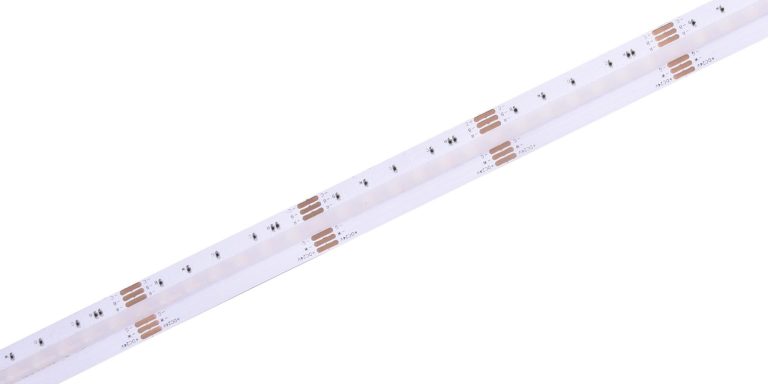
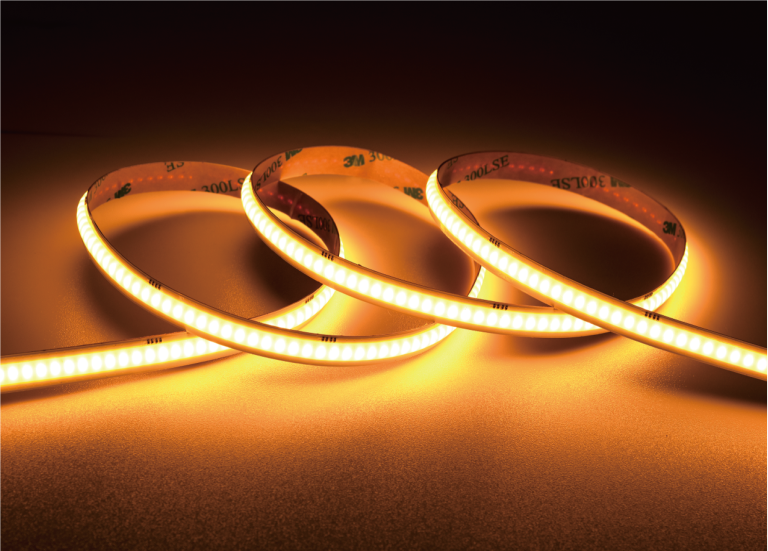
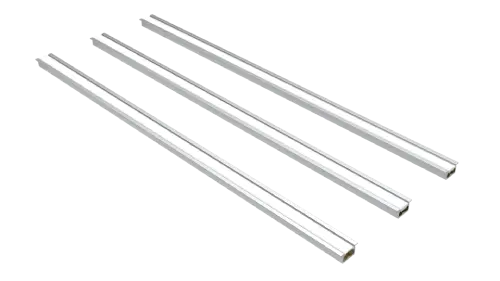
High-bay lighting is generally associated with interiors where the ceiling or roof trusses are more than approximately 6.1 meters (20 feet) above the floor, according to the Illuminating Engineering Society (IES). That definition covers many warehouses, distribution centers, manufacturing areas, exhibition spaces, and large retail facilities. Before selecting equipment, project teams should clarify the application, mounting conditions, illumination targets, optical distribution, controls, and maintenance strategy.
What Exactly Is the Space Being Illuminated?
The first question is what people will do beneath it. Storage aisles, production areas, sports spaces, retail floors, and circulation zones can have different visual requirements. IES guidance provides recommended maintained illuminance targets and uniformity criteria according to application, so a project should establish its target lighting level before fixture selection.
Designers should also identify the work plane and important vertical surfaces. Tall shelving may need light directed along aisles, while an open retail or assembly area may require broader distribution. Defining the task helps prevent over-lighting some zones while leaving others inadequately illuminated.
How High Are the Mounting Points?
Mounting height affects how light reaches the working plane. IES defines interior mounting height as the distance from the reference plane, normally the work plane, to the luminaire. The actual height should therefore be measured rather than estimated from general building dimensions.
Ceiling height alone does not determine the answer. Consider the luminaire position, floor level, rack height, equipment, suspended structures, and obstructions. Higher installations may require different optical distributions and lumen packages to maintain useful illumination at the target surface.
Does the Light Distribution Match the Layout?
A powerful light source does not automatically create a good lighting installation. Distribution determines where the available light goes, making optics particularly important in high-ceiling applications. Narrow, medium, wide, and aisle-oriented distributions can serve different layouts.
A warehouse with long shelving may benefit from aisle-oriented distribution, while a broad open floor can call for wider coverage. IES notes that photometric data describes how a luminaire distributes light, and IES files can be used in lighting software to model the expected result. That makes photometric verification valuable before ordering.
Would a Linear Fixture Suit the Project?
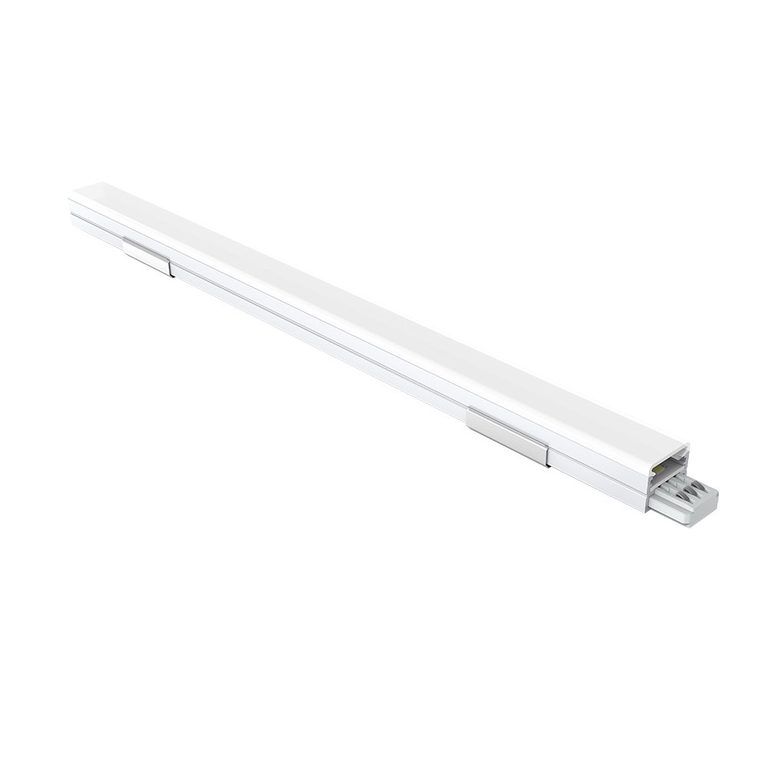
A linear light fixture can be useful where the architecture or layout favors continuous lines of illumination. Long aisles, organized workstations, and open commercial interiors can sometimes benefit from a linear form that follows the space more naturally.
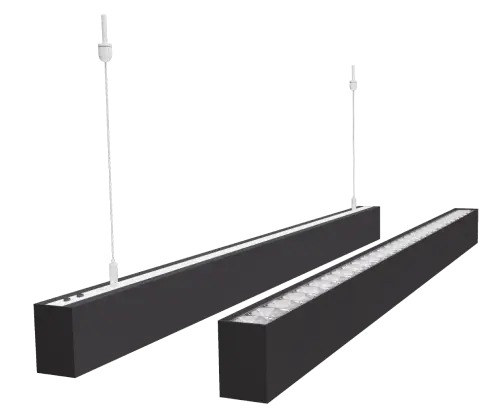
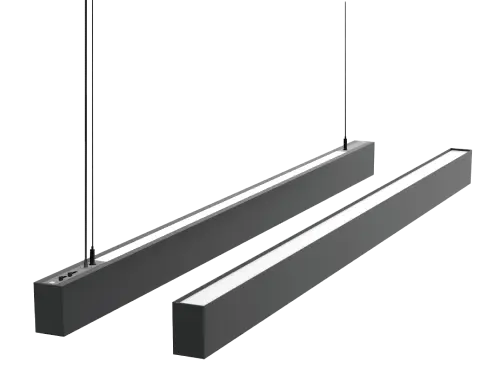
Our Glory Series office linear light is designed for offices and related public scenarios rather than as a conventional industrial high-bay. It comes in four sizes and wattages from 30W to 60W, with PC diffuser or PMMA-Microprism optics. Surface-mounted and suspended installation options support different layouts, while Up & Down light helps create a comfortable environment.
Do We Need Recessed Installation or Exposed Mounting?
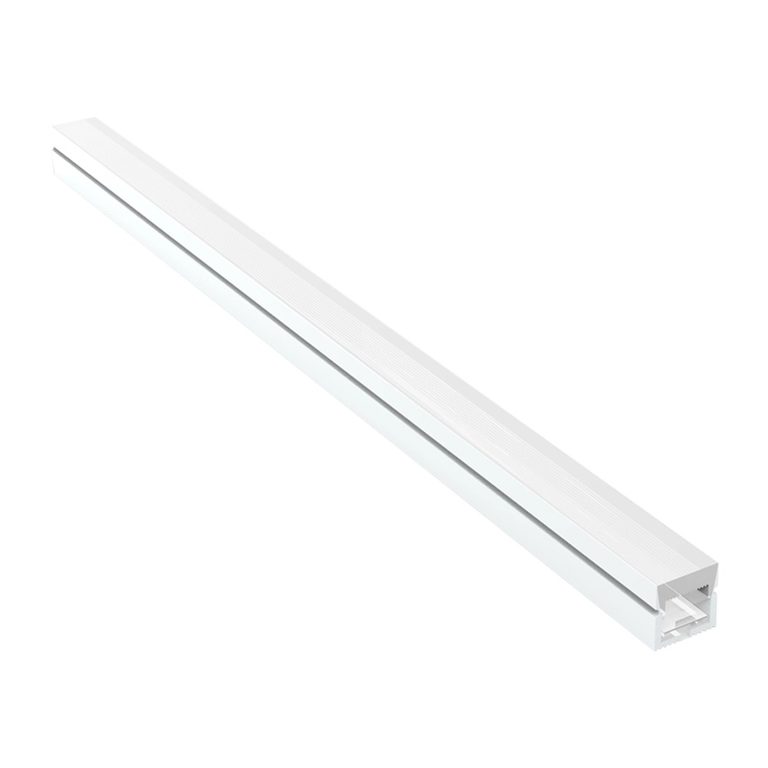
A recessed linear light fixture may be considered when the architectural design calls for a cleaner ceiling appearance and the ceiling supports recessed installation. However, a recessed linear light fixture should not be selected simply for aesthetics. The ceiling construction, available depth, access for installation, heat management, and maintenance requirements must all be reviewed.
Where recessed integration is unsuitable, suspended or surface-mounted solutions may offer a more practical route. Our Glory Series supports surface-mounted and suspension installation, giving project teams greater flexibility when the ceiling structure or design intent changes.
What Controls and Operating Modes Are Required?
Controls should be considered at the specification stage, not added after installation. Different spaces may require on/off operation, dimming, scheduling, occupancy response, or integration with a broader building control system.
At LEDIA Lighting, our Glory Series supports On/Off, 0–10V dimming, and DALI dimming power supply options. It also offers a changeable CCT, with a slider switch that can change the CCT and separately adjust the Up or Down light. These options allow project teams to align the lighting system with different operating and visual requirements.
How Will Fixtures Connect and How Will the System Be Maintained?
Installation planning should include connection methods, replacement access, and future layout changes. A product that works well electrically but creates difficult installation conditions can increase project labor.
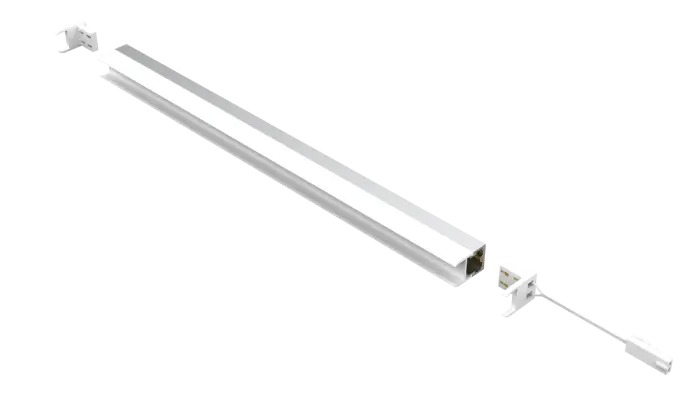
Our Glory Series uses different connectors so linear lights can be linked freely. For offices, galleries, libraries, classrooms, and public spaces, this can create coordinated lighting arrangements.
Have the Design Assumptions Been Verified?
Before approval, project teams should review photometric files, mounting heights, target illuminance, uniformity, controls, and installation details. IES emphasizes the value of manufacturer photometric data and lighting simulation for understanding how luminaires interact with a space.
Our approach combines product development with testing and quality control so that specifications can be evaluated before they reach the project. This is useful when a linear system is being considered for a demanding commercial environment.
A Clearer Specification Starts With Better Questions
High-bay lighting decisions become easier when the project team defines the space, mounting height, task requirements, distribution, controls, installation method, and maintenance plan first. A linear light fixture can suit some high-ceiling layouts, while a recessed linear light fixture may better suit architectural ceilings.
We use the same application-focused thinking across our lighting development work. The Glory Series provides four sizes, 30W–60W options, two optics, multiple mounting methods, flexible connections, CCT adjustment, and several control-compatible power supplies. With the right project questions answered early, lighting selection becomes more predictable, practical, and aligned with the building’s long-term needs.