A successful pendant lighting scheme depends on more than selecting a fixture with an attractive profile. For offices, dining areas, galleries, libraries, and other commercial spaces, project teams need to coordinate illumination, glare control, mounting, controls, and visual design from the planning stage. When specifying a linear light fixture, we recommend looking at how the complete system will perform within the architecture. This makes it easier to balance practical lighting requirements with the appearance of the finished space.
1. Define the Lighting Tasks First
The first consideration is the activity taking place beneath the luminaires. A workplace, dining area, classroom, and gallery can have different visual requirements, so the lighting arrangement should reflect the tasks performed in each zone. Office lighting, for example, needs to support activities such as screen work, reading, writing, and keyboard use while limiting problematic reflections and glare.
For this reason, LED linear light fixtures should be selected according to the required light distribution rather than simply their overall brightness. Direct light can support task illumination, while indirect output can contribute to ceiling brightness and a more balanced visual environment. Understanding these needs early also helps designers determine fixture spacing, mounting height, and optical requirements.
2. Compare Optics and Glare Performance
Optical design deserves close attention when planning a linear pendant installation. A long fixture can distribute light efficiently, but unsuitable optics may create excessive brightness at certain viewing angles or produce reflections on computer screens. Office lighting guidance emphasizes selecting and positioning luminaires to reduce reflections and physiological or psychological glare.
We therefore recommend comparing beam distribution, diffuser or reflector design, direct-indirect output, and available photometric data. Our Edge Series offers 16 different reflector options, giving project teams more flexibility when matching light distribution to different spaces. This variety is useful when one project contains several areas with different ceiling heights, layouts, or visual requirements.
3. Consider Color and Visual Adaptability
Color temperature can significantly influence the character of an interior. Cooler or neutral white light may suit focused workplace environments, while warmer settings can create a different atmosphere for hospitality or dining applications. Rather than treating CCT as a fixed specification, project teams should consider whether the selected system needs to accommodate different operating conditions.
Our Edge Series supports changeable CCT, allowing users to adjust the lighting according to different requirements. A slider switch can change the CCT and separately adjust the upper or lower light. Hand-waving control is also available, providing another operating option. These features make the linear light fixture adaptable across spaces where lighting preferences may vary.
4. Plan Direct and Indirect Light Together
Pendant luminaires can influence both the working plane and the surrounding architecture. A direct component can provide useful illumination for desks, tables, or other task areas, while upward light can brighten the ceiling and contribute to a more comfortable overall environment. The appropriate balance depends on room proportions, surface finishes, furniture arrangement, and the intended atmosphere.
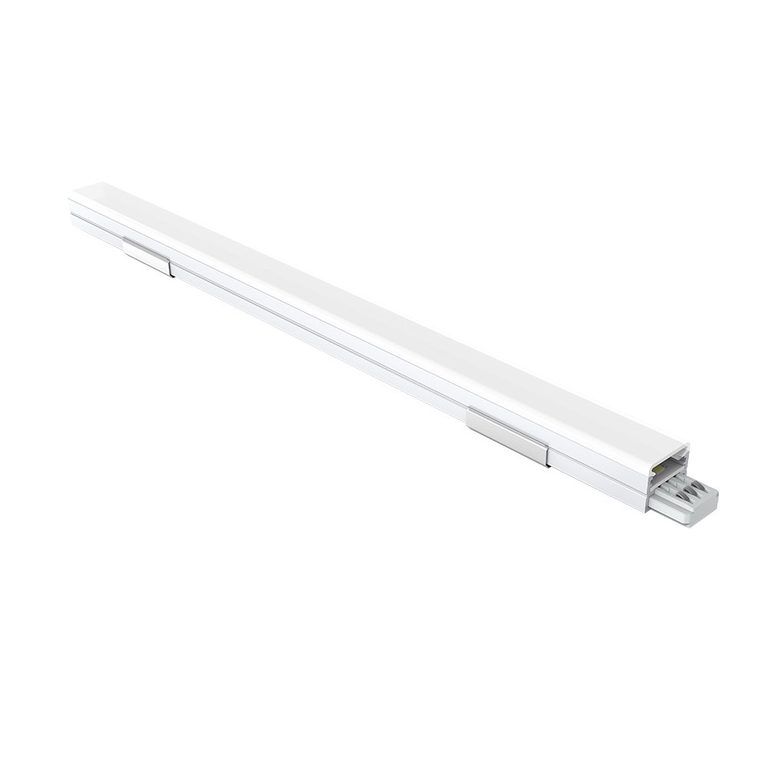
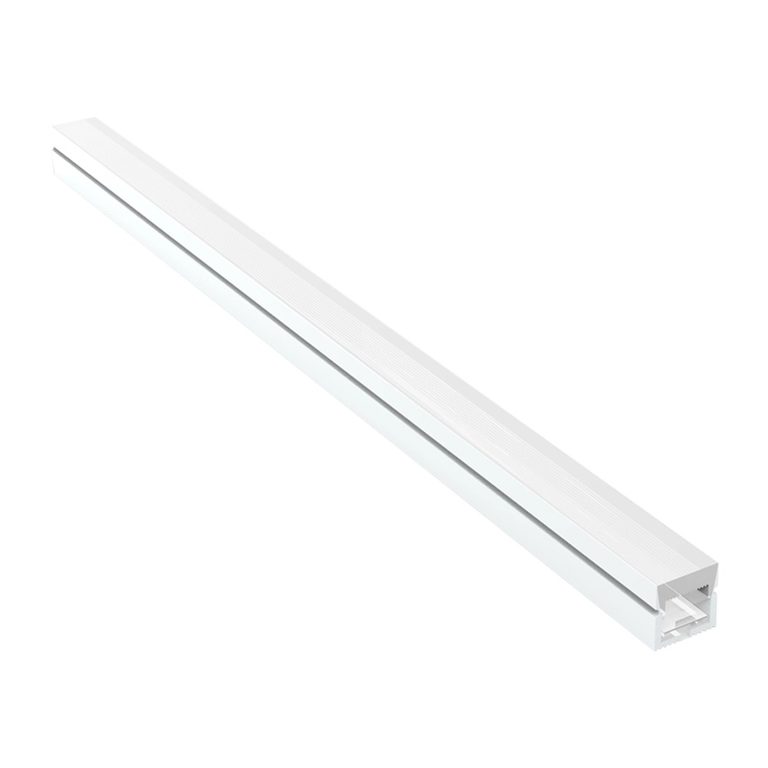
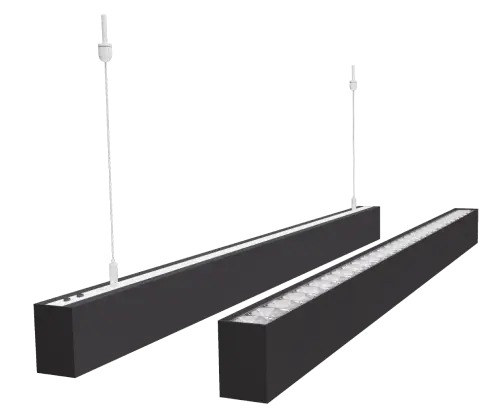
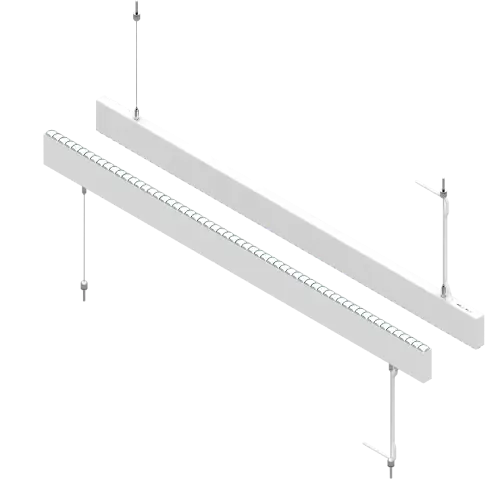
When comparing LED linear light fixtures, we suggest checking whether the product supports the project’s preferred direct-indirect configuration. Our Edge Series uses both up and down light to create a balanced lighting environment. Its 24 mm width also gives us a particularly narrow profile, helping maintain a clean appearance where the luminaire itself is intended to remain visually discreet.
5. Check Controls and System Compatibility
Control compatibility should be confirmed before a lighting specification is finalized. A project may require simple switching, 0–10V dimming, DALI control, or another building-level lighting strategy. Selecting fixtures without considering the control infrastructure can create additional coordination work between designers, electrical contractors, and facility teams.
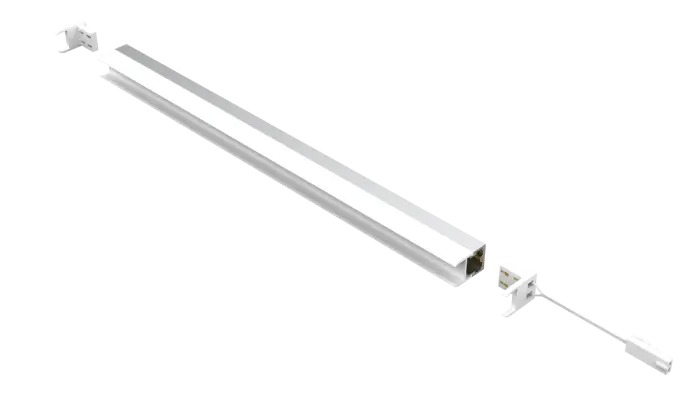
Our Edge Series can be configured with On/Off, 0–10V dimming, or DALI dimming power supplies. This range allows us to support different control requirements rather than forcing every project into one operating approach. When evaluating a linear light fixture, teams should also confirm wiring, drivers, control interfaces, and installation accessories as part of the complete specification.
Match the Fixture to the Architecture
Dimensions and proportions should be evaluated alongside technical performance. A large luminaire may dominate a compact room, while an excessively narrow product may not provide the desired visual presence in a large open area. Suspension height and fixture arrangement also affect how the lighting relates to desks, dining tables, circulation paths, and architectural features.
Our Edge Series uses a super-narrow 24 mm width designed for offices, dining rooms, galleries, libraries, classrooms, and other commercial or residential applications. The slim profile can support minimalist interiors while the available optical configurations provide flexibility behind the simple exterior. This combination allows LED linear light fixtures to contribute to the architecture without becoming unnecessarily dominant.
Build the Specification Around the Whole Project
For professional lighting procurement, product selection should connect design intent with installation and operation. A useful comparison should cover optical performance, direct-indirect distribution, CCT flexibility, control method, dimensions, suspension requirements, and compatibility with the project’s electrical system. Photometric files and applicable performance information should also be reviewed before final placement.
At LEDIA Lighting, we approach LED linear light fixtures as part of a complete project requirement rather than an isolated product. Our Edge Series combines a 24 mm-wide profile, 16 reflector choices, up-and-down lighting, changeable CCT, multiple control options, and optional hand-waving control. These features give designers and contractors several parameters to coordinate when developing a project specification.
A More Practical Path to Better Planning
Choosing the right pendant system becomes easier when the evaluation starts with the space rather than the product catalogue. First define the visual tasks, then assess optics and glare, color requirements, direct and indirect distribution, controls, and architectural proportions. This process can reduce specification changes later and help ensure that the selected system supports both functional and aesthetic goals.
For projects requiring adaptable commercial lighting, we can support the selection process with our Edge Series and its range of optical, CCT, and control configurations. By comparing the complete requirements before ordering, teams can select a linear light fixture that fits the application, installation conditions, and intended user experience while maintaining a consistent design language throughout the project.