Choosing flexible LED lighting is easier when technical terms are translated into practical decisions. For commercial buyers, the real questions are straightforward: Can the light be cut to fit? Will illumination look continuous? What protection level is needed? And how should voltage, brightness, and color quality match the application? Understanding these points makes it easier to compare standard LED strip lights, higher-voltage systems, and COB solutions.
What “Cuttable” Really Means
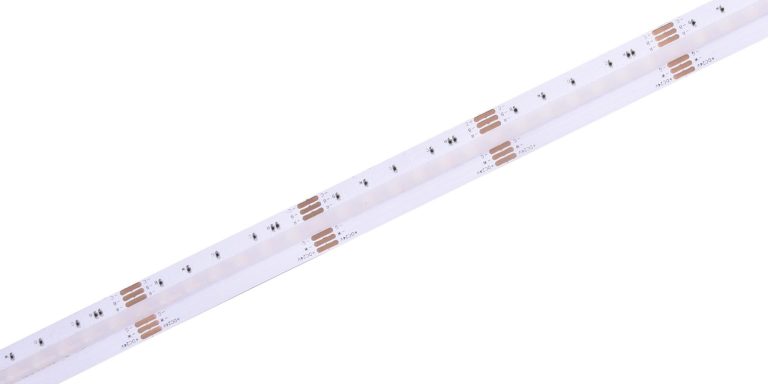
A cuttable LED light is not meant to be shortened at any random point. Manufacturers define specific cut points along the circuit, and cutting outside them can interrupt the electrical path. Buyers should check the smallest cuttable unit before ordering rather than assuming every few centimeters can be removed. Commercial LED strip products commonly specify this dimension; some COB products, for example, use a 62.5 mm cuttable unit.
This matters when lighting must follow shelves, counters, coves, signage, or architectural details. A smaller cutting interval gives installers more freedom to match the required length with less waste. It also simplifies replacement planning.
Why COB Creates a Smoother Light Line
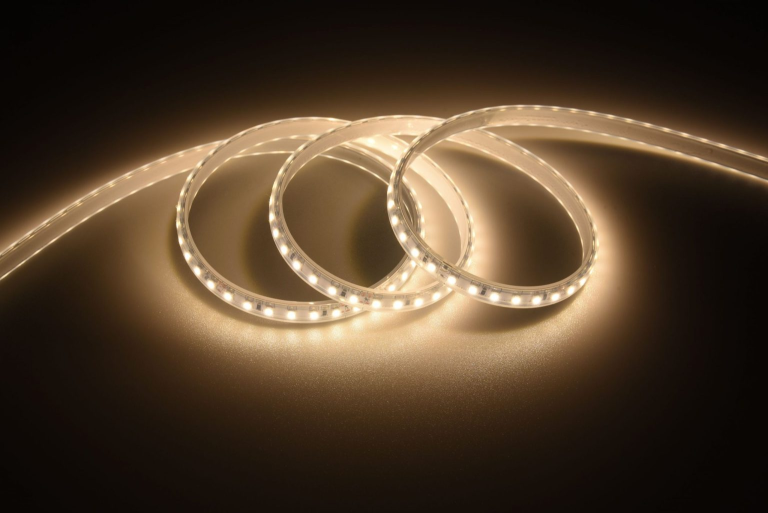
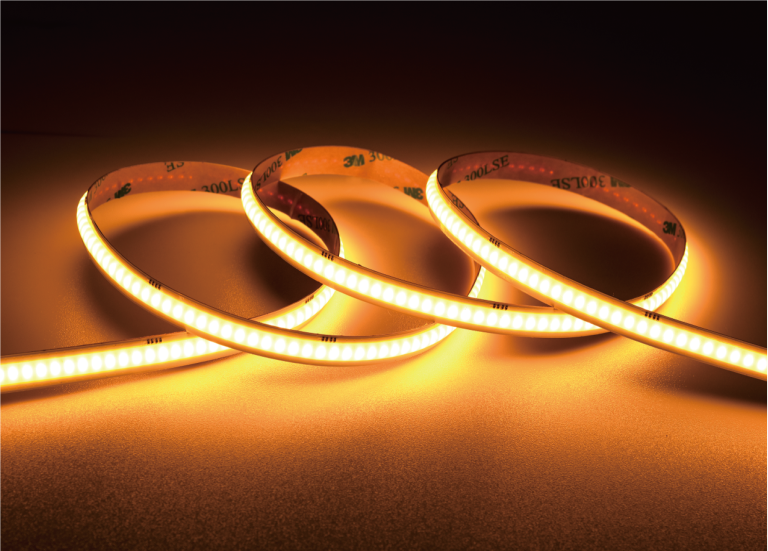
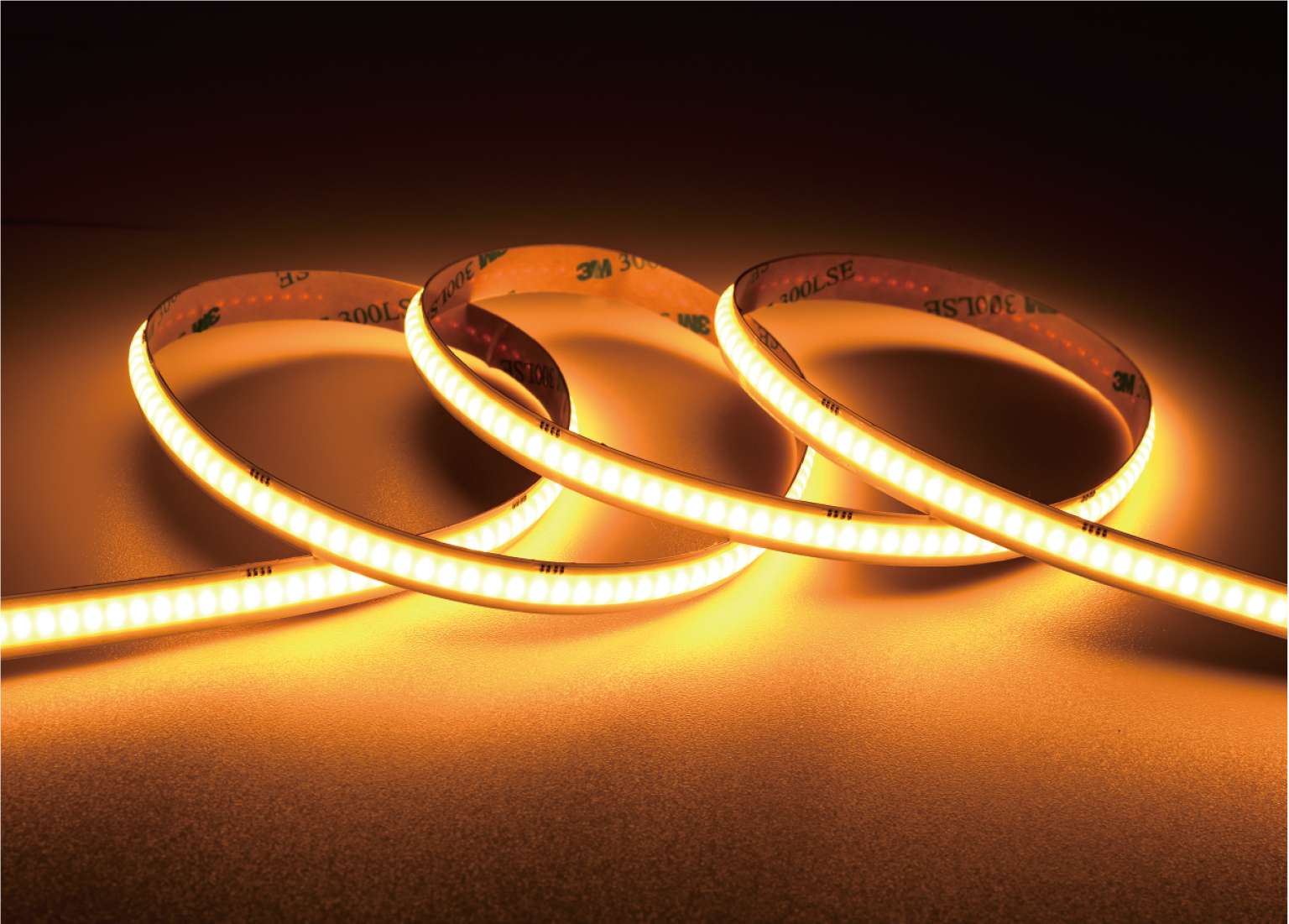
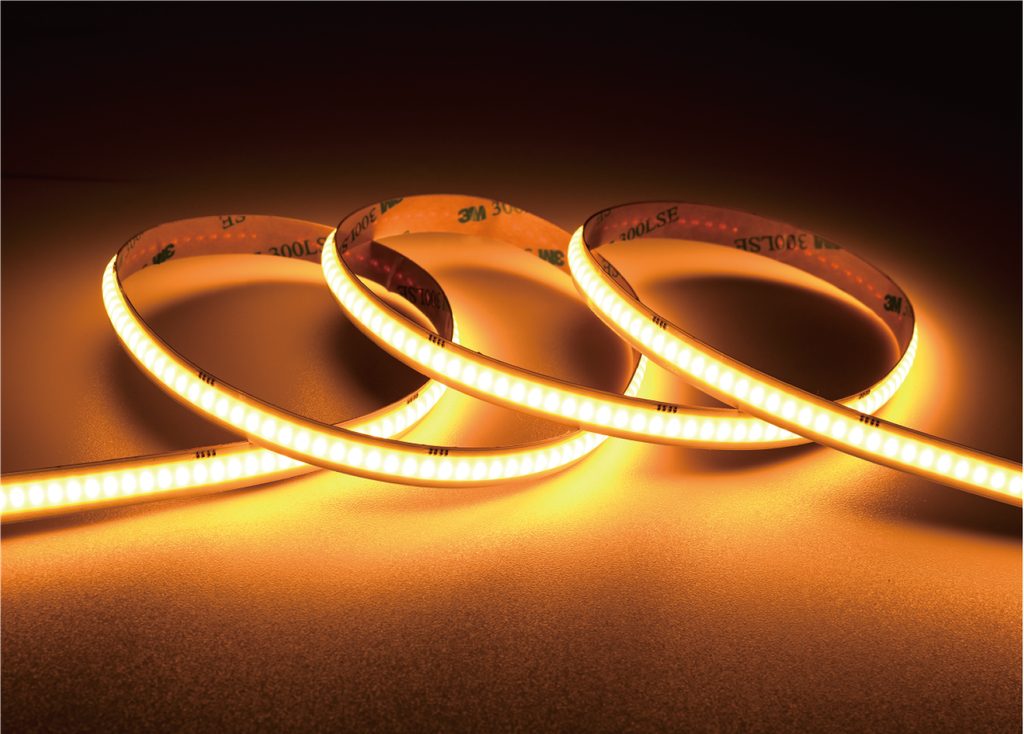
Traditional LED strips can show visible points when individual LEDs are spaced along the board, particularly when the strip is installed close to a surface or viewed directly. COB, or chip-on-board, places many LED chips closely together and uses a phosphor layer to create a more continuous appearance. Major lighting manufacturers describe this effect as homogeneous or dot-free illumination.
For buyers, this is less about technical terminology and more about the finished appearance. A continuous line can suit retail displays, reception areas, offices, residential interiors, and decorative installations where visible dots would distract from the design. It can also reduce reliance on deep channels or diffusers when the application calls for a clean linear effect.
Voltage: Where 48V Fits
Voltage describes the electrical supply required by the lighting system. A 48 Volt LED strip lights solution can be attractive for longer commercial runs because higher-voltage systems can reduce current for a given power level. However, voltage alone does not determine suitability. The strip, driver, connectors, controls, wiring, and installation method must be compatible.
This is why buyers comparing 48 Volt LED strip lights with lower-voltage options should evaluate the complete system instead of looking only at the number printed on a product page. The correct driver must match the strip’s rated voltage, while installation should account for total load and run length. Standard LED strip lights should likewise be evaluated as complete systems rather than by voltage alone. System compatibility matters more than choosing the highest voltage.
Brightness Is Not the Same as Efficiency
Two lighting products can consume similar power while delivering different amounts of light. Luminous flux, measured in lumens, indicates visible light produced, while efficacy, expressed in lumens per watt, shows how efficiently electrical power is converted into light. These figures are more useful for comparison than wattage alone.
Our COB Series is specified at up to 120 lm/W with CRI90+ performance. We also offer CRI80+, CRI90+, and CRI95+ options, allowing project teams to balance efficiency and color quality according to the application. Where materials, merchandise, or finishes need to appear natural, CRI can be an important purchasing criterion alongside lumen output.
Choosing Protection for the Installation
IP ratings indicate the protection an electrical product provides against solids and water under defined test conditions. The correct rating depends on the installation environment rather than whether a product is simply marketed as “outdoor” or “waterproof.” Buyers should match the specified IP level to actual exposure and follow installation instructions.
Our COB Series offers IP20, IP65, IP67, and IP68 options. This range supports dry indoor applications and more demanding environments. Standard LED strip lights with lower protection may suit protected interiors, while higher IP options can be considered where moisture exposure is expected. Exact installation conditions should always guide selection.
A Practical Checklist Before Ordering
For project procurement, a short checklist can prevent avoidable mistakes. First, confirm the required length and product’s cuttable unit. Second, verify operating voltage and select a compatible driver. Third, calculate required light output rather than comparing wattage alone. Fourth, check CRI when color appearance matters. Finally, confirm IP rating, mounting method, and control requirements.
It is also useful to distinguish appearance requirements from performance requirements. A dot-free specification may point toward COB technology, while a long run may make 48 Volt LED strip lights worth evaluating. Neither choice is automatically better for every project. The right solution depends on installation length, environment, visual expectations, electrical design, and budget.
Making the Selection Simpler
Flexible-lighting terminology can seem complicated, but most purchasing decisions come down to manageable questions. Cut points determine installation flexibility, COB technology affects visual uniformity, voltage affects system design, efficacy helps compare energy performance, CRI addresses color quality, and IP rating addresses environmental protection.
At LEDIA Lighting, our COB Series is designed for projects where a smooth, uninterrupted line of light is essential to the finished appearance. Its super-narrow form factor helps integrate lighting into compact profiles and architectural details, while dot-free illumination creates a more uniform visual effect than individually visible LED points. With efficacy of up to 120 lm/W at CRI90+, the series combines energy performance with high color-rendering quality.
Buyers can also choose CRI80+, CRI90+, or CRI95+ versions to suit different requirements, from general ambient lighting to applications where accurate color presentation matters. IP20, IP65, IP67, and IP68 options further allow specifications to be matched to the intended installation environment, whether the project involves indoor decorative features or lighting that requires greater protection against dust and moisture.
For buyers comparing standard LED strip lights and 48 Volt LED strip lights, the best approach is to start with the project rather than the product label. Define the required length, environment, visual effect, light quality, electrical system, and installation details first. We can then align the COB Series configuration with those requirements, helping project teams specify flexible lighting with fewer surprises during installation.