Showcase lighting should support the merchandise without becoming the main visual feature. For retail designers, fixture size, light direction, glare, color quality, and installation details all influence how products are perceived. LED sources are well suited to display applications because their compact form allows integration into casework, while directional output can target merchandise precisely. The U.S. Department of Energy and IES both highlight these advantages for retail and display lighting.
Start with a Minimal Lighting Structure
A clean showcase does not need many visible fixtures. One practical approach is to conceal linear lighting along the upper, lower, or side edges of a cabinet. This creates a continuous visual line while keeping attention on the products.
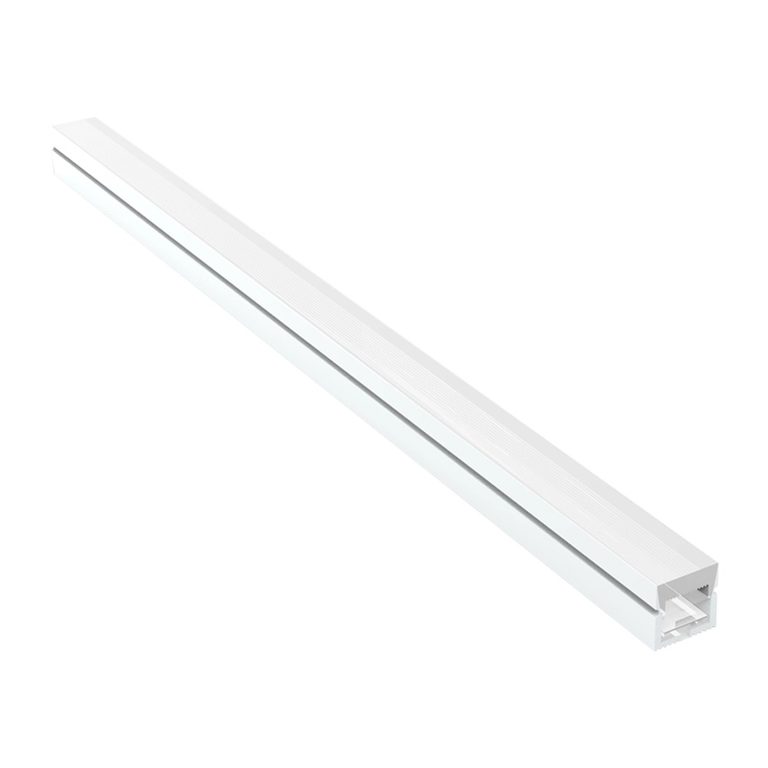
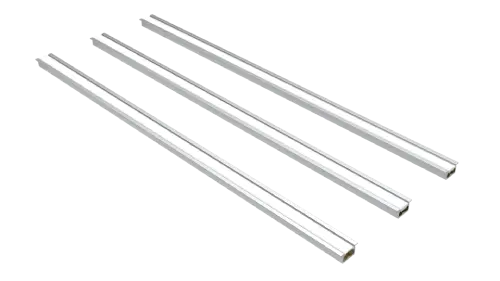
A recessed LED profile can help achieve this effect by placing the light source inside an aluminum channel or integrated opening. The profile becomes part of the furniture rather than looking like an additional fixture attached afterward. For luxury retail, jewelry, cosmetics, electronics, and other presentation-focused displays, this restrained approach can make the casework look more refined.
The position of the light should follow the merchandise. Top-mounted illumination can provide broad downward coverage, while side-mounted strips can add vertical emphasis. For shelves, concealed linear lighting beneath each level can separate product tiers without creating a collection of visible lamps.
Use Light to Create Visual Layers
Showcase lighting works best when it creates hierarchy rather than uniform brightness everywhere. A brighter focal area can draw attention to a featured product, while softer illumination supports surrounding merchandise.
IES retail guidance emphasizes balancing merchandise highlighting with brand image and energy efficiency. Real-world display projects also commonly combine ambient illumination with localized accent lighting. This layered strategy allows designers to establish a focal point without filling every surface with the same intensity.
A store decoration light can therefore serve a broader design role. Instead of treating it only as a functional source, designers can use linear illumination to outline shelves, emphasize cabinet geometry, or create a subtle glow behind merchandise. The result can connect the display fixture with the store’s wider interior language.
Keep the Light Integrated into the Furniture
The clean showcase details are often the ones customers barely notice. A slim aluminum housing can sit within a routed channel or recessed section of cabinetry, leaving only the illuminated surface visible.
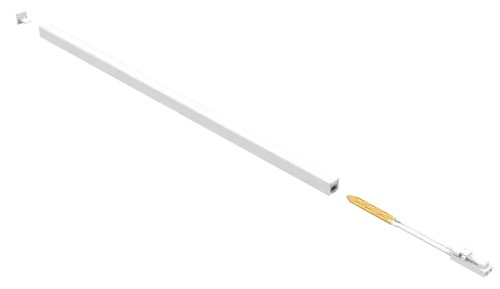
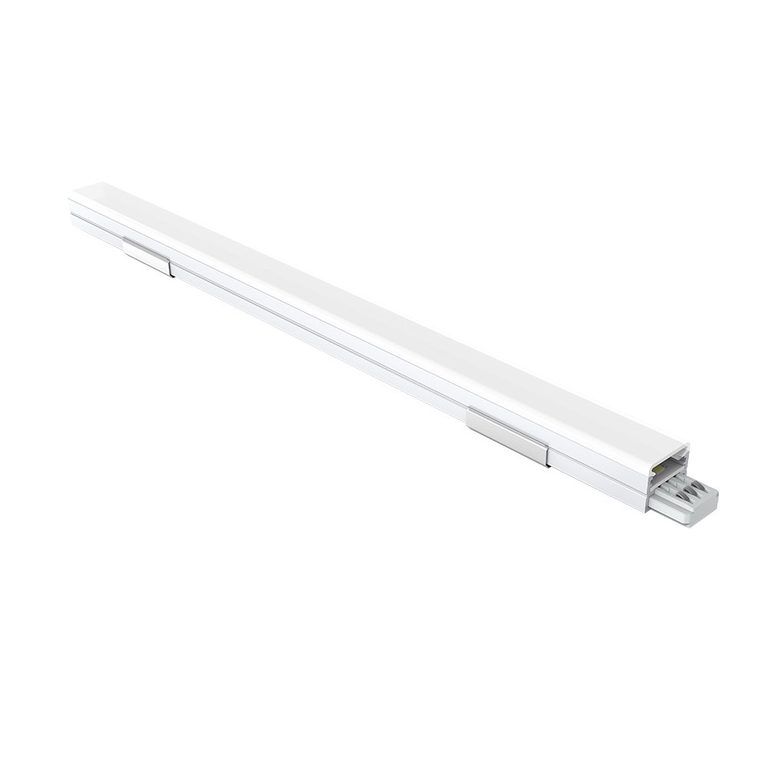
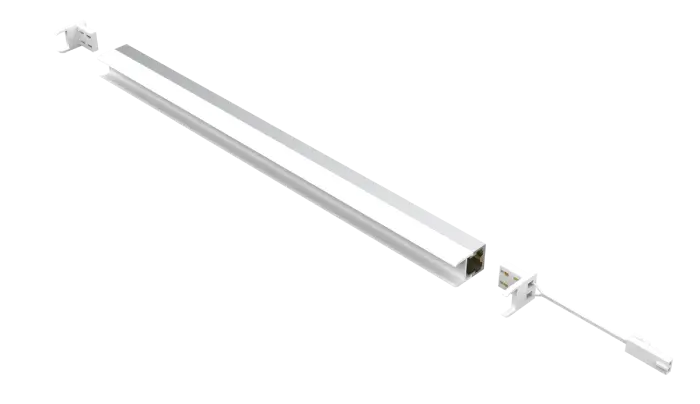
Our F02 is a built-in aluminum strip light developed for furniture and retail applications. It is suitable for under-cabinet strip lighting, closet and wardrobe lighting, and showcase LED lighting. Its slim housing supports integrated applications where the lighting needs to remain visually discreet.
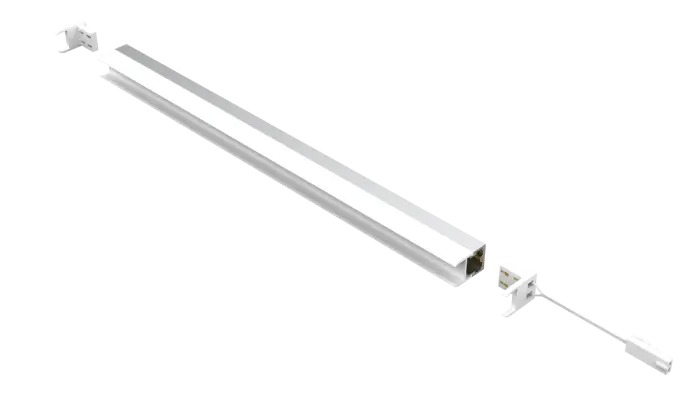
For project teams, installation flexibility is also important. Our F02 uses a patented quick plug-in design that supports free cutting and solder-free installation. This can make it easier to adapt linear lighting to customized showcase dimensions without introducing unnecessary connection work.
Plan Lengths Around the Display Geometry
Retail furniture rarely follows one universal dimension. Different shelves, cabinets, niches, and counters can require different lighting lengths. A fixed-length product may therefore create awkward gaps or force installers to conceal excess material.
A recessed LED profile with a free-cutting approach can offer greater flexibility during fabrication and installation. Designers can establish the desired line first, then adapt the lighting length to the actual furniture dimensions.
This is particularly useful for modular displays or projects involving several showcase sizes. Rather than developing a separate lighting solution for every cabinet, a configurable linear system can help maintain a consistent visual language across the store.
Consider Color and Glare Before Installation
Lighting quality matters as much as fixture appearance. Merchandise can look different under different light sources, so buyers should review color-rendering performance and color consistency when selecting display lighting. IES case studies show high-CRI LED sources being used where accurate product and artwork appearance is an important design objective.
Glare also deserves attention. Reflections from glass, polished metal, jewelry, and glossy packaging can distract from merchandise. The lighting position, lens or diffuser, beam distribution, and viewing angles should therefore be reviewed together. A mock-up can reveal reflections and unwanted bright spots before the full showcase is fabricated. Recent IES project examples similarly emphasize controlling glare and reflections in display environments.
Connect the Lighting Concept to Store Design
Linear illumination can do more than brighten merchandise. It can repeat architectural lines, emphasize material transitions, or establish rhythm between adjacent displays. When the same lighting language appears in shelving, cabinets, counters, and niches, the store can feel more cohesive.
Our F02 can also function as a store decoration light where clean linear illumination and customized lengths are required. Its built-in format is suited to applications where the lighting needs to merge with furniture instead of competing with it.
For designers working across multiple retail zones, this consistency can simplify the visual specification. The same basic lighting concept can be adapted to cabinets, wardrobes, counters, and showcase interiors while retaining a recognizable appearance.
Make Installation Part of the Design
A strong showcase concept should account for installation from the beginning. Define the profile location, cutting points, wiring route, access for maintenance, and relationship between the aluminum housing and surrounding materials before fabrication starts.
Our F02 is designed around this project-oriented approach. The quick plug-in connection and solder-free installation can help streamline customized layouts, while the aluminum profile provides a structured housing for integrated strip lighting.
The objective is not simply to hide the fixture. It is to make the lighting feel intentionally built into the furniture. When installation details are coordinated with cabinet construction, the final result can appear cleaner and require fewer visible compromises.
Turn Simple Details into a Strong Display
Effective showcase lighting does not necessarily require complicated fixtures or elaborate visual effects. A carefully positioned linear source, appropriate light quality, controlled glare, and integrated installation can create a focused environment where products remain the priority.
At LEDIA Lighting, we use the F02 to support this design philosophy with a slim built-in aluminum housing, free-cutting capability, and solder-free installation. As a store decoration light, it can support customized retail layouts while maintaining a discreet appearance. For projects requiring integrated linear illumination, we can use the F02 as a practical recessed LED profile solution for furniture and showcase applications.