Lighting decisions for offices, classrooms, dining areas, and industrial spaces influence how people work, move, and use a building. For contractors, designers, and facility managers, selecting a suspended system involves more than choosing a shape or wattage. Ceiling conditions, visual comfort, light distribution, controls, and maintenance all affect the result. A clear selection process helps teams specify a suitable linear light fixture and coordinate installation with fewer surprises.
Begin with the Space and Its Purpose
Start by identifying the activities taking place beneath the lighting. Offices need balanced illumination for screens, desks, and circulation areas. Dining rooms and galleries may require a softer atmosphere, while classrooms and libraries need consistent light that supports reading and focused tasks.
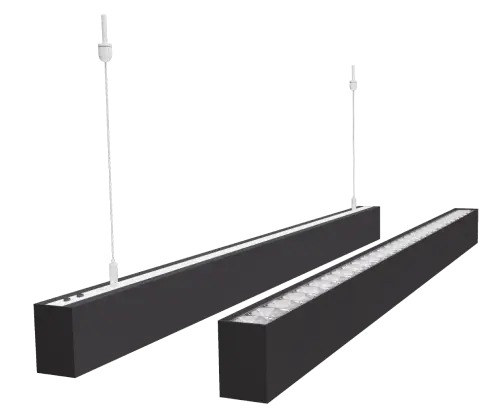
Suspended mounting is useful where ceilings are exposed, high, or unsuitable for recessed installation. It can also bring light closer to the working plane and create a clear architectural line. However, suspension height and spacing should be coordinated with the ceiling structure, HVAC equipment, sprinklers, and other services. A well-positioned linear light fixture should support the task without obstructing the space.
Compare Optics and Light Distribution
Do not compare fixtures by lumen output alone. Lens or reflector design, beam distribution, mounting height, and spacing determine how light reaches desks, tables, shelves, and walkways. Ask for photometric files and use a lighting calculation to assess illuminance and uniformity. Review glare as well, particularly in offices where occupants look at monitors or sit beneath the fixtures for extended periods.
Different applications may call for direct, indirect, or combined illumination. Up-and-down lighting can brighten both the work surface and ceiling, helping reduce the contrast between them. Downlight-only arrangements may be more appropriate where the ceiling is dark or the project requires focused task lighting.
Check Suspension, Power, and Controls
Check the permitted suspension length and whether the system can be installed in continuous rows or as individual pendants. The installer should verify ceiling load capacity and follow the manufacturer’s mounting instructions and local electrical requirements.
Controls should match the building’s operating pattern. On/off switching may be sufficient for small rooms, while 0–10V or DALI dimming can support zoning, scheduling, and integration with a building control system. Confirm driver compatibility, wiring requirements, commissioning responsibilities, and whether sensors are needed.
Match the Fixture to the Application
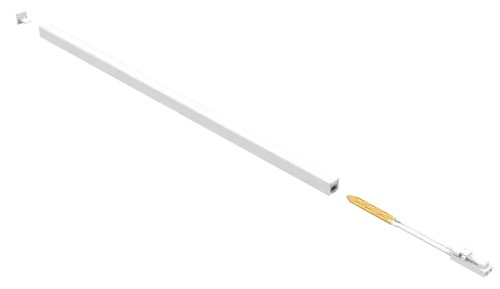
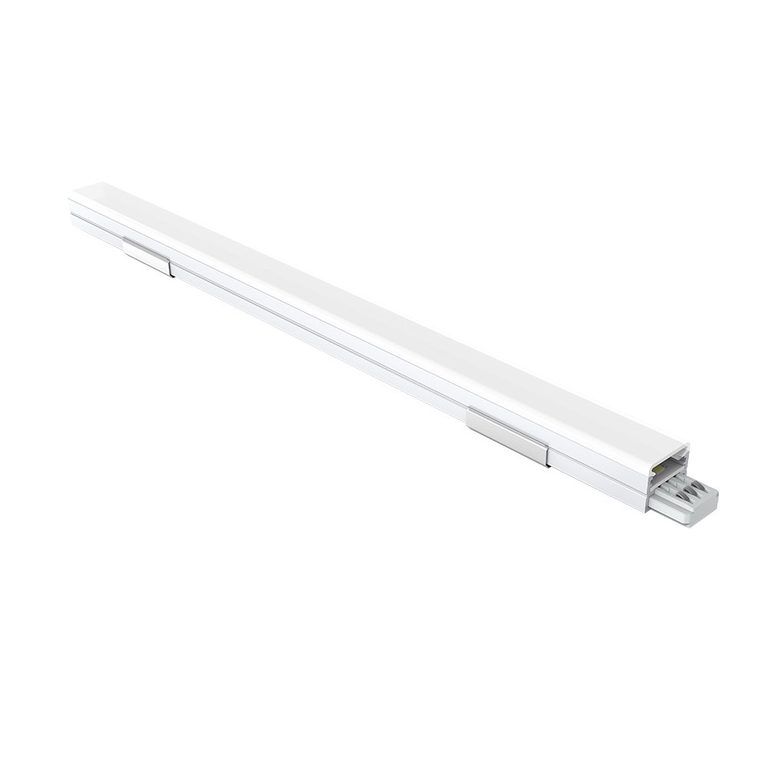
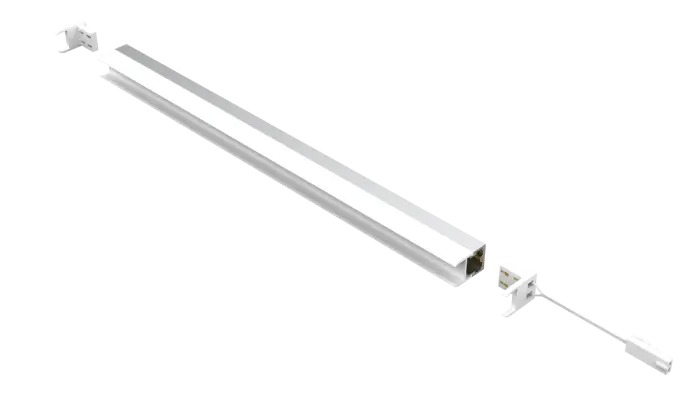
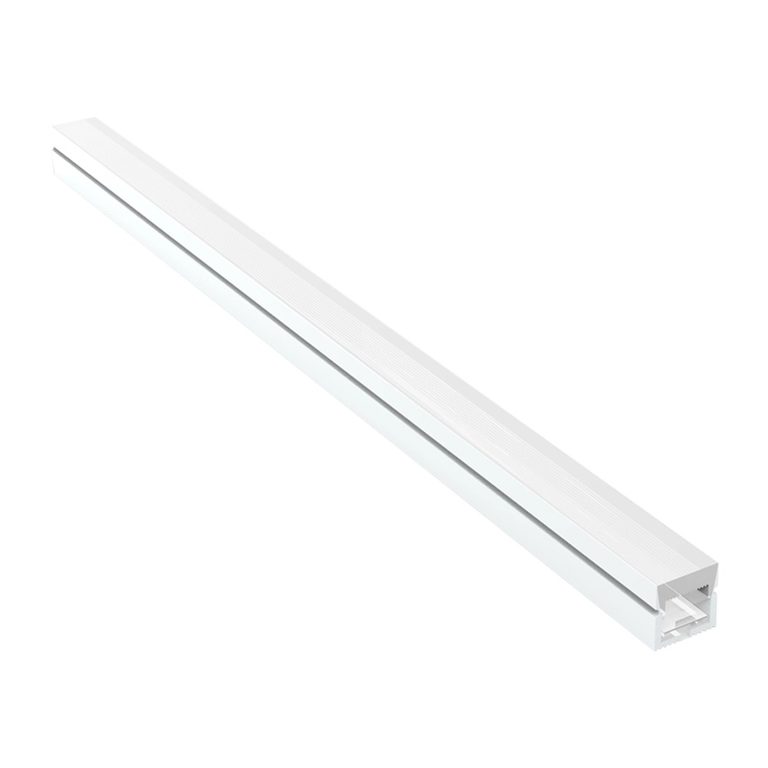
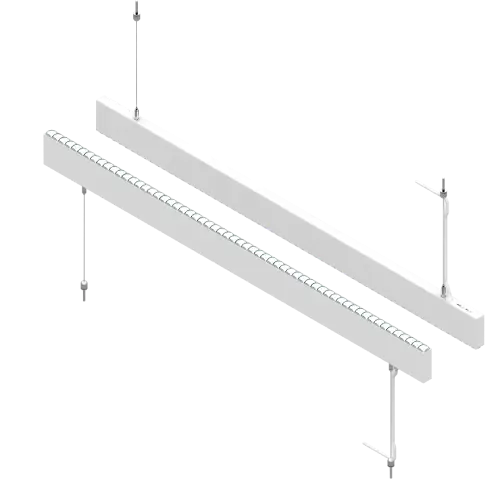
For offices, dining rooms, galleries, libraries, and classrooms, our LEDIA Edge Series offers a narrow linear design with a 24 mm width. Its range of 16 reflector options supports different distribution requirements, while up-and-down lighting can create a more balanced room environment. Selectable CCT and separate adjustment of the upward and downward light provide further flexibility for project teams.
The series also offers different control and power options, including on/off, 0–10V dimming, and DALI dimming. A slider switch allows CCT selection and separate adjustment of up or down light; hand-waving control is also available. When evaluating a linear light fixture for a fit-out, these options can help align the specification with user preferences and the building’s control strategy.
Not every high-ceiling space is best served by a suspended linear product. Warehouses, production areas, and distribution facilities often need concentrated illumination from high-mounted equipment. In these environments, high bay UFO lights may be more appropriate, depending on ceiling height, rack layout, task requirements, and the required beam distribution.
Our J Series LED UFO High Bay includes options for motion and daylight sensing. The 150W version described in our product information has an integrated motion sensor, while an advanced PIR sensor supports occupancy detection and a pluggable daylight sensor helps respond to available natural light. High bay UFO lights should still be selected using a lighting layout rather than wattage alone.
Review Maintenance and Whole-Life Value
A practical specification considers the cost of ownership, not only the initial fixture price. Compare expected operating hours, driver access, replacement procedures, warranty coverage, and the availability of compatible accessories. For suspended systems, consider how maintenance teams will reach the equipment and whether removing one section affects adjacent fixtures. In industrial spaces, sensor placement and settings should also be reviewed to avoid unwanted switching.
Check that product documents apply to the exact model and configuration being quoted. For high bay UFO lights, confirm sensor compatibility, mounting method, environmental rating, and beam angle. For suspended linear products, verify the suspension kit, driver, dimming protocol, and selected optical components.
Make the Specification Work on Site
The most effective lighting choice is the one that meets the visual and technical brief while remaining practical to install and maintain. We at LEDIA Lighting support project teams with linear fixtures and other LED lighting products for different indoor and outdoor applications. By reviewing room use, ceiling conditions, optics, controls, and service access together, buyers can compare options on consistent criteria.
Before placing an order, coordinate the lighting layout with the electrical contractor and other trades, and request a sample or mock-up when appearance is important. This final review can reveal glare, spacing, or control issues early. Whether a project calls for a suspended linear light fixture or high bay UFO lights, a specification grounded in actual site conditions gives the installation a stronger foundation.