Selecting linear lighting becomes easier when project teams focus on application requirements rather than getting lost in technical terminology. For commercial and architectural projects, the right system should balance light output, installation flexibility, environmental conditions, reliability, and compliance. We approach these decisions by combining product development with testing and quality control, helping buyers evaluate LED linear lighting strips according to what a project actually requires.
Start with the Lighting Application
The first step is to define what the lighting needs to accomplish. General illumination, task lighting, accent lighting, architectural detailing, and decorative effects can require different optical and mechanical characteristics. Commercial buyers should therefore avoid selecting a product simply because its specifications look impressive on paper.
Linear LED systems can be particularly useful where continuous illumination is required across long surfaces or where a project needs flexible placement. The U.S. Department of Energy identifies linear lighting among important commercial and industrial LED applications, particularly in buildings with high light-output requirements and long operating hours.
Match Light Output to Project Requirements
Brightness should be evaluated through measurable performance data rather than wattage alone. Luminous efficacy, expressed in lumens per watt, helps indicate how efficiently electrical power is converted into visible light. However, the required output still depends on the space, mounting position, surface reflectance, spacing, and intended visual effect.
When comparing LED linear lighting strips, buyers should examine lumen output, efficacy, color temperature, color rendering, and optical distribution together. A product with strong efficiency may not be the right choice if its light quality or distribution does not suit the application.
Controls can also influence overall performance. Dimming, occupancy sensing, and other control strategies can help reduce energy use when appropriate for the project.
Consider Installation Flexibility
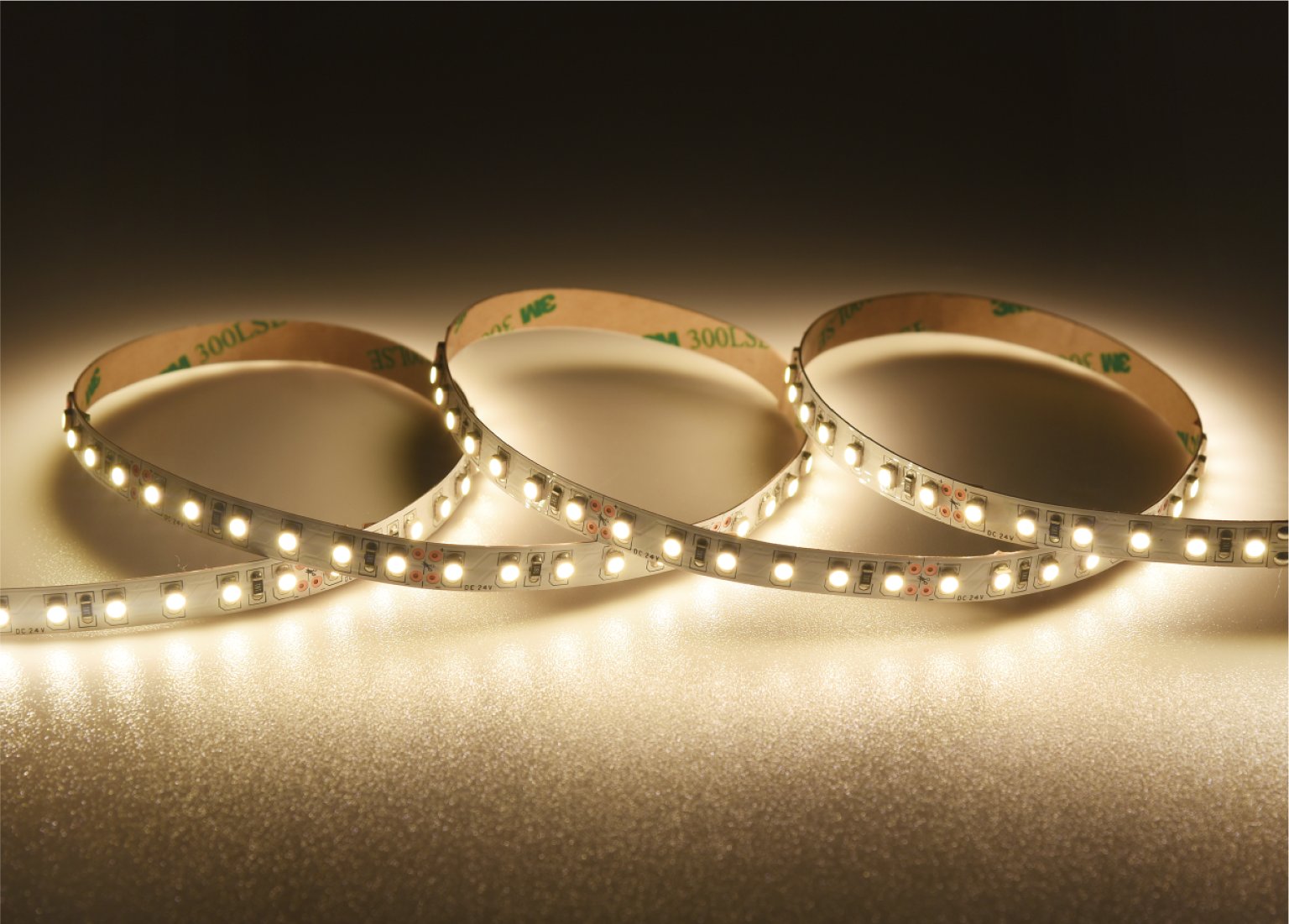
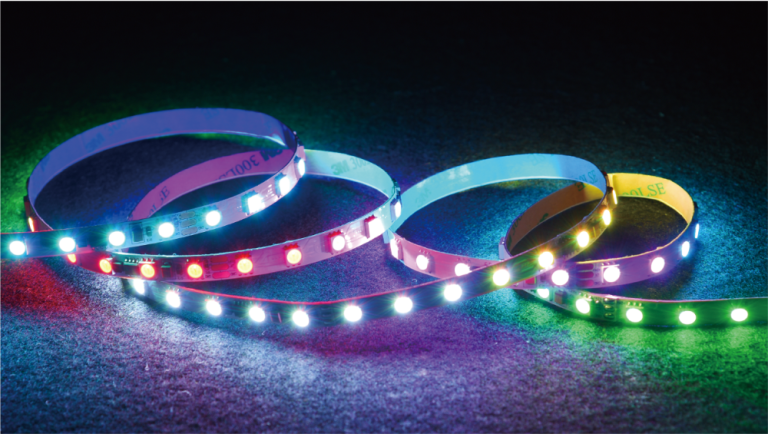
One advantage of linear lighting is the ability to work around architectural forms and project dimensions. Flexible products can be useful for coves, shelves, displays, cabinets, signage, curves, and other locations where rigid luminaires may be difficult to position.
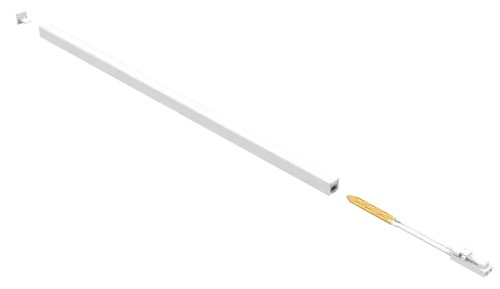
Before ordering, project teams should confirm dimensions, cutting requirements, connection methods, mounting accessories, power supply compatibility, and the planned installation route. These details can affect both material quantities and installation time.
For contractors and distributors, consistency also matters. A lighting system should be easy to specify repeatedly across similar projects, with clearly documented electrical and mechanical characteristics. This makes procurement and installation more predictable.
When Outdoor Conditions Change the Specification
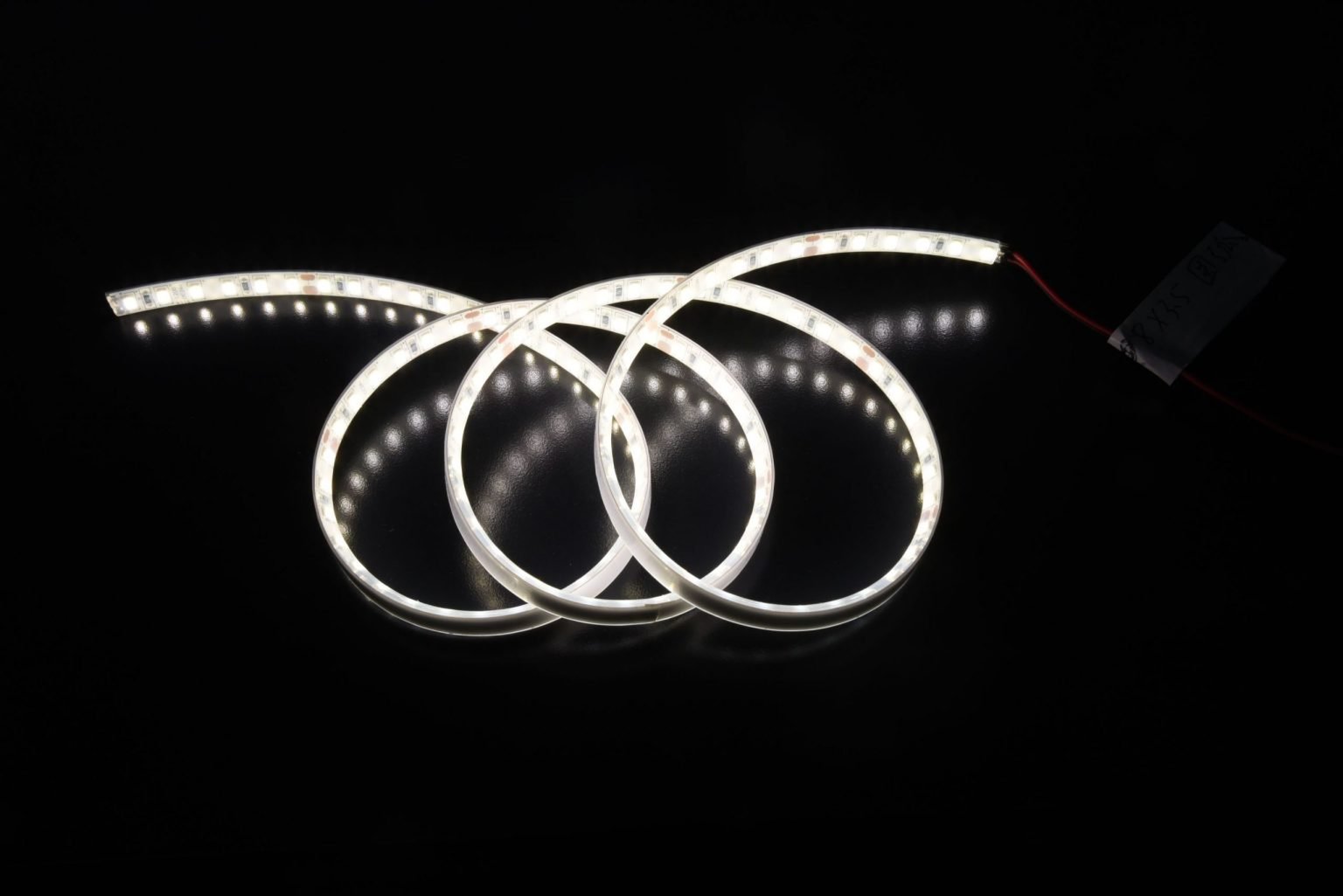
Indoor and exterior installations should not be treated as interchangeable. Outdoor environments can expose lighting to moisture, rain, dust, temperature changes, and other conditions that require appropriate product construction and testing. Buyers considering outdoor LED linear lighting should therefore verify the product’s stated environmental protection rather than relying on general descriptions such as “weatherproof.”
Testing organizations recognize environmental testing as an important part of lighting performance evaluation. UL Solutions, for example, lists testing for extreme temperatures, humidity, moisture, rain, corrosion, dust, and IP/IK performance among its lighting capabilities.
For outdoor LED linear lighting, the complete installation should also be considered. Connections, power supplies, mounting surfaces, cable routing, and sealing details can influence real-world reliability. The luminaire or strip should be selected together with the installation environment.
Quality Testing Matters to Project Buyers
Performance claims are more useful when supported by structured testing. Lighting evaluation can involve photometry, electrical and mechanical testing, environmental testing, lifetime assessment, and verification of product claims. Such testing gives buyers more objective information for specification and comparison.
We continue to invest in testing, product development, and quality-control systems to improve the performance and reliability of our LED linear lighting system and strip lighting products. Our laboratories cover key stages of product evaluation, including safety, performance, and electromagnetic compatibility.
Our technical capabilities are supported by UL WTDP, IECEE, and national CNAS recognition. LEDIA Lighting received UL WTDP and IECEE CTF Stage 2 qualification certificates following a qualification program for its newly developed plant light series.
Build the Specification Around the Project
A practical specification should bring the major requirements together. Buyers can begin with the installation location, required length, light output, color quality, operating voltage, control method, mounting approach, and environmental conditions. From there, product-level specifications can be compared more efficiently.
For LED linear lighting strips, it is also important to consider how the product will integrate with drivers, connectors, controls, profiles, and other system components. A technically suitable strip can still create installation problems if the supporting components are mismatched.
For outdoor LED linear lighting, environmental protection should be considered alongside electrical compatibility and installation details. This system-level approach helps reduce the risk of selecting a component that looks suitable individually but does not perform as expected once installed.
Making the Final Selection
The linear lighting choice is rarely determined by one specification. Project buyers need to balance visual performance, efficiency, flexibility, installation conditions, reliability, and compliance. This is especially important for business projects where replacement, maintenance, and inconsistent performance can affect both operating costs and project schedules.
We use the same principle in our product development. Our focus on laboratory evaluation, quality control, and flexible lighting development supports LEDIA Lighting‘s work with different project requirements. Whether a specification involves indoor architectural lighting or outdoor LED linear lighting, the objective is to provide a dependable foundation for project planning.
For buyers comparing LED linear lighting strips, starting with the application makes the process much clearer. Define the environment and desired lighting effect first, then evaluate performance, installation, and compliance requirements. This approach helps project teams select a system that fits the actual application instead of simply choosing the most impressive specification sheet.