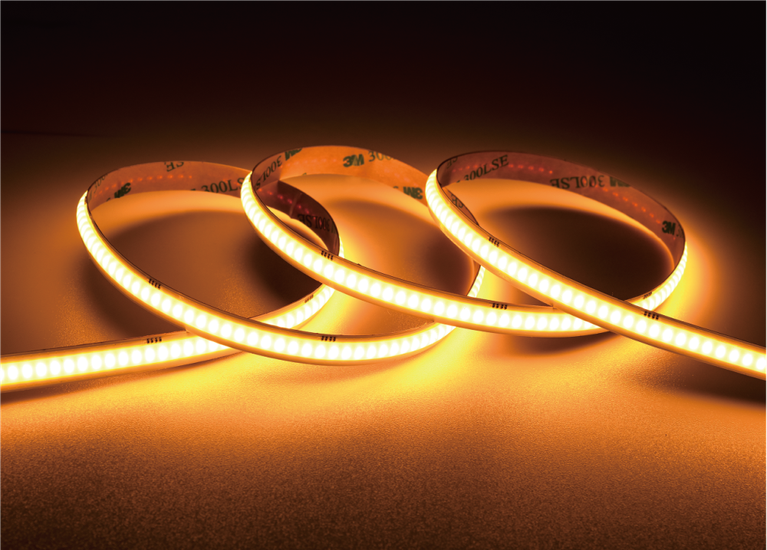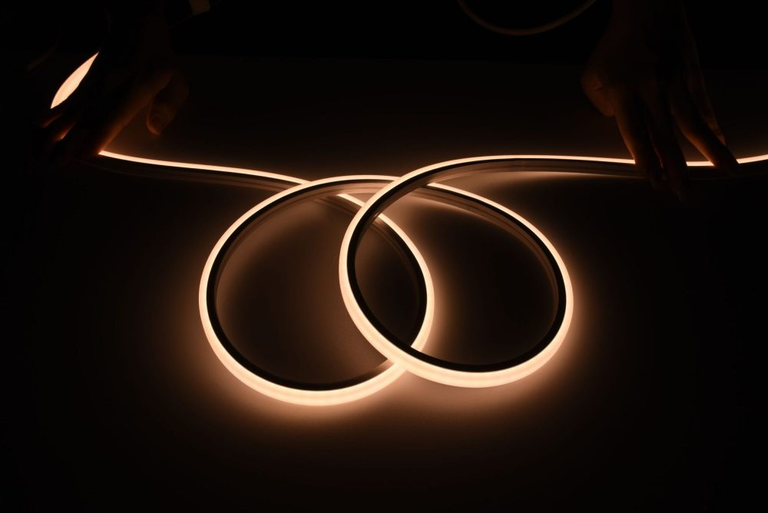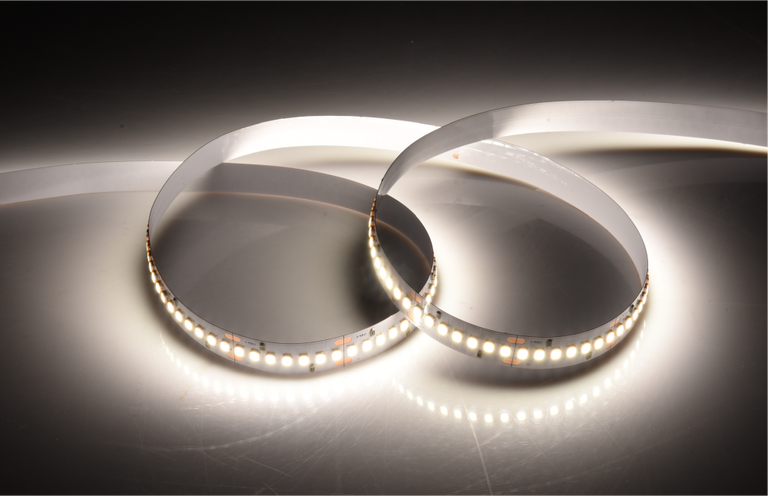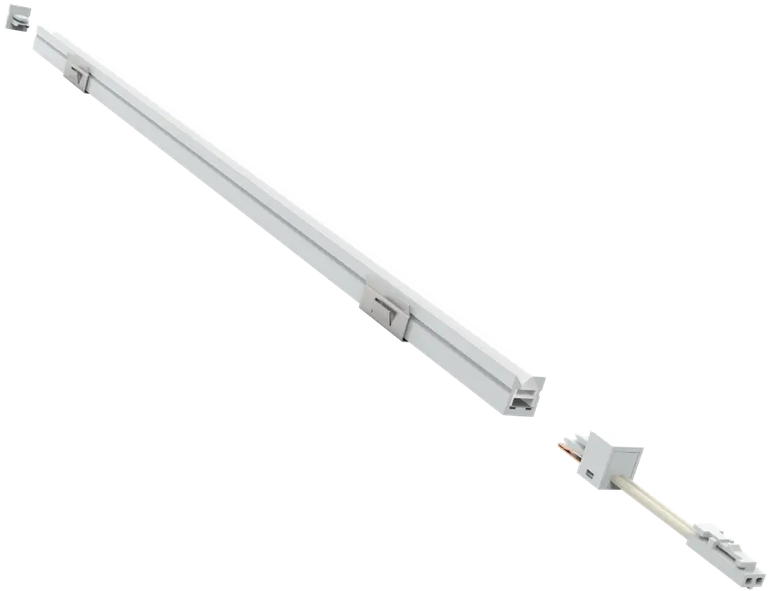
For project buyers, an LED linear lighting system is more than a long light source. It must fit the architecture, electrical design, installation method, and procurement plan. A catalog product can still create problems after approval.
By starting with the final installation—fixture placement, desired visual impact, power supply, and on-site assembly—we cut straight through the noise. Those practical details narrow choices far quicker than looking at wattage or price alone.
What Belongs in a Linear Lighting System?
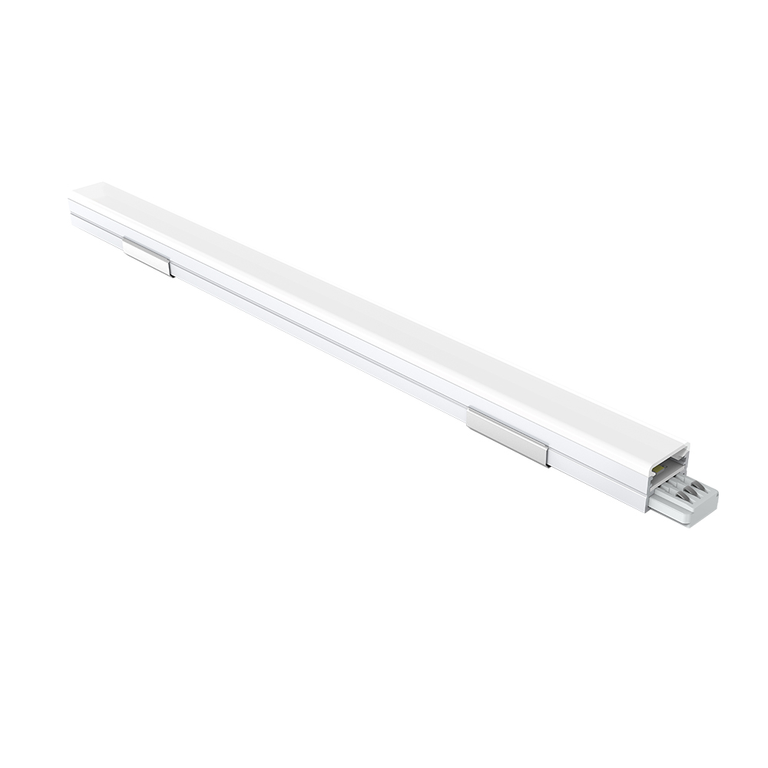
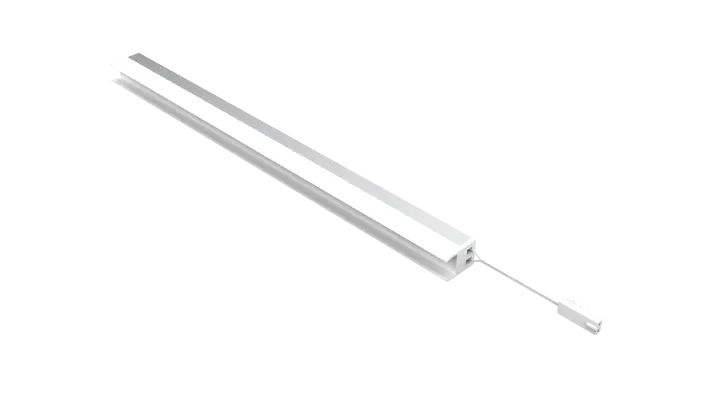
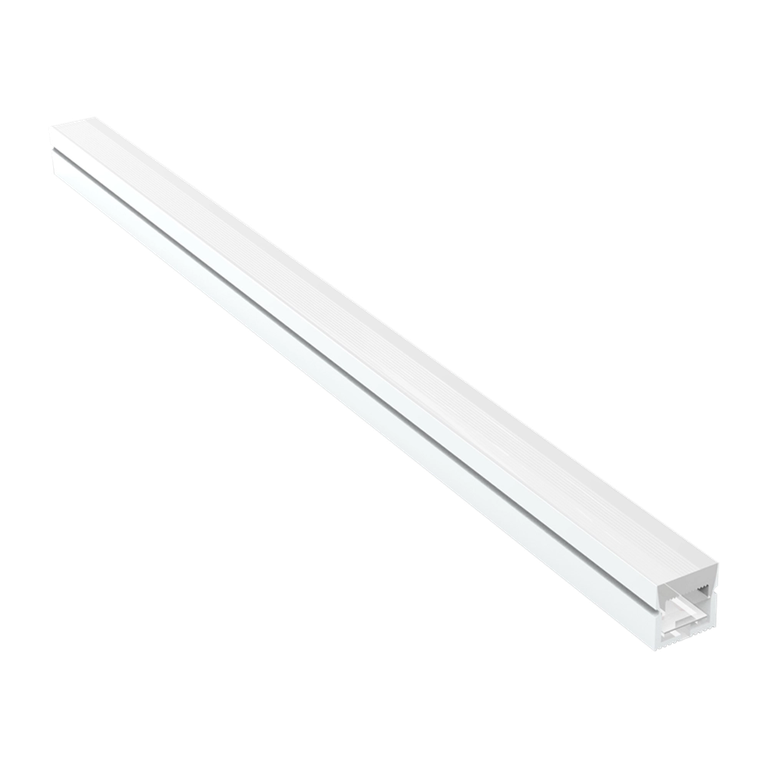
A linear lighting system may use a flexible strip inside an aluminum profile, a complete linear fixture, or a customized assembly. The light source is only one part of the installation.
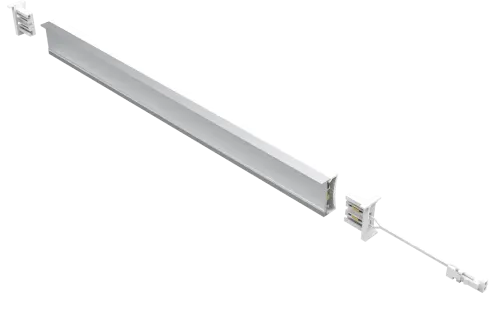
Before requesting a quotation, identify the light source, profile or housing, power supply, connectors, mounting accessories, controls, and customized parts. Missing one element can create additional site procurement.
LED linear lighting strips suit continuous lines, concealed illumination, or flexible routing around architectural details. They should still be evaluated as part of the installation rather than as an isolated reel, especially on projects with defined mounting details.
Let the Installation Detail Set the Product Requirements
Protection is one concrete example. LEDIA Lighting’s published COB range includes IP20, IP65, IP67, and IP68 versions. The project should therefore identify the required protection level before procurement rather than assuming one version suits every environment. LEDIA Lighting publishes these variants as part of its COB range.
Measure the channel or cavity, check bending direction, and confirm cutting intervals before approving a length. A capable source is still unsuitable if installers cannot fit or route it as designed.
Electrical requirements should be fixed at the same stage. Input voltage, power per meter, current, total run length, and power-supply arrangement need to work together. LEDIA’s published COB information includes a DC24V version with a typical 10 W/m rating, showing why voltage and power data should be treated as project parameters.
Read the Datasheet for the Actual Installation
Read physical dimensions and cutting information first, then electrical loading, optical characteristics, protection, and controls. This connects the datasheet with the construction plan.
CRI and CCT affect how materials, finishes, merchandise, and interior surfaces appear. A specified visual result should not be substituted solely because wattage and dimensions are similar.
Light distribution also needs to match the detail. Continuous appearance may matter more than raw lumen output when the source is visible through a diffuser or installed close to a surface. LEDIA’s published COB information describes uniform, dot-free illumination and lists CRI options above 90, along with multiple CCT choices.
For larger commercial orders, documentation should extend beyond the basic datasheet. Confirm product drawings, installation information, applicable certificates, and test documentation required by the project.
Judge the Manufacturer Behind the Part Number
Supplier capability becomes part of the buying decision once the technical requirement is clear. Buyers need consistent reproduction of the approved specification and reliable quantities.
Customized work makes this especially important. A supplier may need to adjust dimensions, construction, color temperature, or power configuration while maintaining the agreed requirements. For COB LED strip manufacturers, manufacturing infrastructure and customization workflow can therefore matter as much as the initial sample. Buyers comparing COB LED strip manufacturers should also examine whether that capability can support repeat project orders.
LEDIA reports more than 20 production lines for its LED strip manufacturing process and approximately 1.5 million meters of monthly strip production capacity. It also describes a customization workflow covering consultation, design, sample confirmation, mass production, and project execution.
Ask which tests are performed, what documentation is supplied, and how production is checked against the approved sample.
Turn the Drawing Into a Purchase Specification
Instead of sending only a product name and quantity, convert the lighting design into measurable requirements. Record installation location, dimensions, voltage, power per meter, CCT, CRI, protection rating, cutting or connection requirements, control method, total lengths, accessories, and applicable compliance documents.
Separate mandatory requirements from preferences. A required voltage or protection rating should not be traded against a lower quotation. Where appearance or customization is critical, request a sample before mass production and compare it with the approved specification.
Keeping that approved sample and technical file as the reference also helps future orders.
Make “System Fit” the Final Buying Test
A straightforward purchasing decision asks whether the proposed system fits the project without creating downstream compromises. Price remains relevant, but it should be evaluated after the technical baseline is fixed.
We suggest five checks before approval: physical fit, electrical match, intended optical appearance, required documentation, and manufacturing capacity at project scale. If one answer is uncertain, the quotation is not yet a complete basis for approval.
LEDIA Lighting uses a project-oriented workflow covering consultation, design, sampling, production, and testing. For buyers requiring customized linear lighting, that sequence provides defined points at which the specification can be reviewed before it reaches the job site.
For us, a successful purchase means alignment. For buyers, LED linear lighting strips should be treated as a system: product, supporting components, documents, and manufacturing all address the same project requirement. Once aligned, quotations become easier to compare and control.