Choosing lighting for a commercial project involves more than comparing prices and lumen output. Procurement teams need to consider optical performance, installation requirements, controls, construction, and long-term suitability for the space. When evaluating wholesale lighting fixtures, buyers should first establish the project’s lighting objectives and then compare products against measurable requirements rather than relying on appearance or cost alone.
1. Compare Light Quality With the Application
The first comparison should focus on whether the fixture can deliver the required illumination for its intended task. Office work involving reading, writing, typing, and data processing commonly requires 500 lux under EN 12464-1, while uniformity and glare also influence visual comfort. The appropriate targets should therefore be confirmed through the project’s lighting design rather than selected from a product catalog alone.
Optical design deserves particular attention when comparing wholesale lighting fixtures. Two products with similar wattage may produce very different results because their optics distribute light differently. A PC diffuser, microprism, grille, or honeycomb optic can affect the appearance, distribution, and visual comfort of the completed installation.
2. Examine Glare and Optical Options
Glare is especially important in offices because occupants frequently work with computer screens and other reflective surfaces. The Department of Energy’s research identifies UGR as a metric used to characterize discomfort glare, while EN 12464-1 commonly specifies a maximum UGR of 19 for office work.
For project buyers, this means a specification should not stop at lumen output. Optical configuration, fixture positioning, ceiling height, workstation arrangement, and room geometry all influence the final result. Different optics can also help designers adapt one product family to open offices, meeting rooms, circulation areas, or other public spaces.
Our Juno Series provides several optical choices, including PC diffuser, PMMA-Microprism, Grille, and Honeycomb options. This allows project teams to select an optical configuration according to the desired lighting effect and application instead of using one distribution for every area.
3. Review Size, Wattage, and Mounting
Physical dimensions and installation methods are practical procurement considerations. A fixture that performs well photometrically may still be unsuitable if its dimensions conflict with the ceiling structure or if the proposed mounting method does not fit the project.
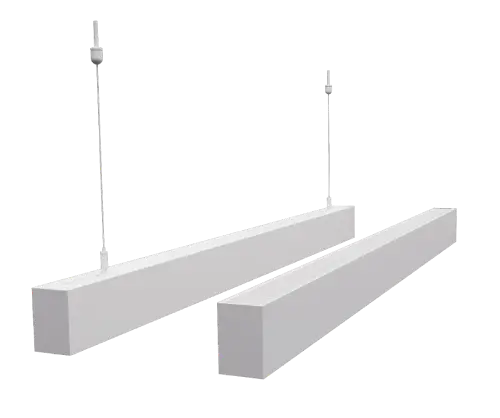
The Juno Series is available in four sizes and wattages ranging from 30W to 60W. It supports both surface-mounted and suspended installation, giving designers greater flexibility when coordinating lighting with different ceiling conditions and interior concepts.
When comparing wholesale lighting fixtures, buyers should also check whether the available sizes and wattages provide enough variation for the project. A broader configuration range can reduce the need to mix unrelated fixture families across one building, which can help maintain a consistent visual language.
4. Consider Control and CCT Requirements
Modern commercial projects may require lighting that can respond to different activities or user preferences. Meeting rooms, collaborative areas, workstations, and public spaces do not necessarily need identical lighting conditions throughout the day.
The Juno Series incorporates changeable CCT and a slider switch for adjusting the CCT. It also provides separate controls for the up-light and down-light components. This arrangement allows the direct and indirect portions of the fixture to be managed separately, giving designers additional control over the character of the illuminated space.
Buyers should confirm the control strategy before ordering. If a project uses a centralized lighting-control system, compatibility should be verified during specification rather than left until installation. Control zoning can also be important for office projects where areas with different activities or daylight conditions may require separate control.
5. Assess Housing and Long-Term Practicality
Construction materials should be considered alongside optical and electrical specifications. Aluminum housing, for example, can support heat dissipation, but the overall thermal performance still depends on the complete luminaire design and operating conditions.
Our Juno Series uses an aluminum housing designed for good heat dissipation and a long fixture lifespan. For commercial buyers, this construction detail is relevant because office lighting is typically expected to operate reliably over extended periods.
The procurement review should also include warranty terms, installation instructions, replacement procedures, and documentation. These details can affect the total project workload even when they do not appear in the initial unit price.
Make the Comparison Relevant to the Project
The good way to compare wholesale lighting fixtures is to create a project-specific checklist covering illumination, glare, optics, dimensions, wattage, mounting, CCT, controls, construction, and documentation. This makes supplier quotations easier to evaluate and reduces the risk of selecting a product based only on headline specifications.
We developed the Juno Series as a professional linear lighting solution for offices and relevant public spaces. Its four size options, 30W–60W wattage range, multiple optics, surface or suspended installation, changeable CCT, and separate up/down-light controls provide practical flexibility for different project requirements.
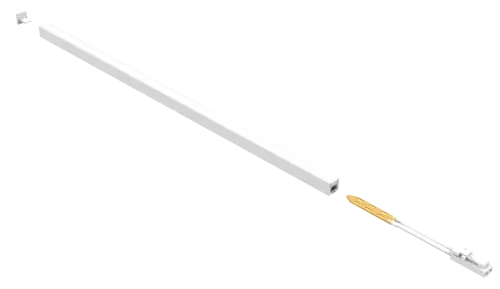
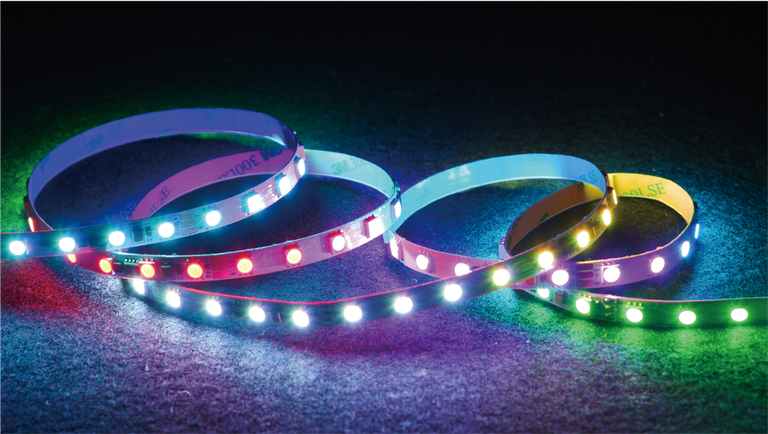
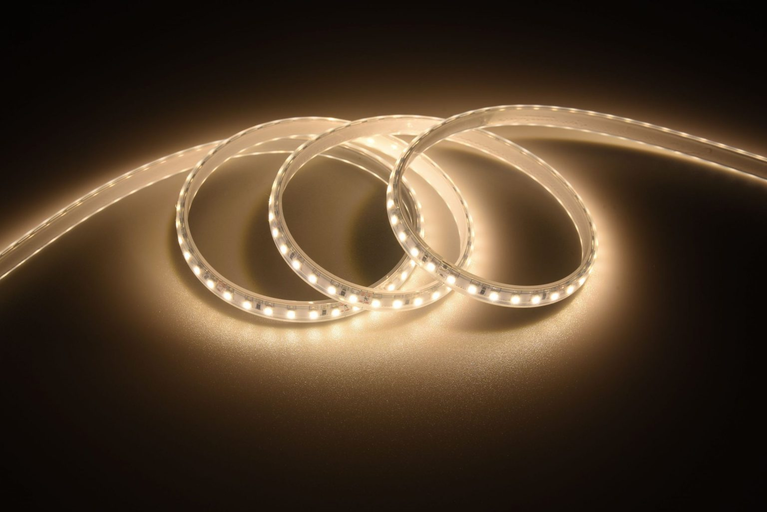
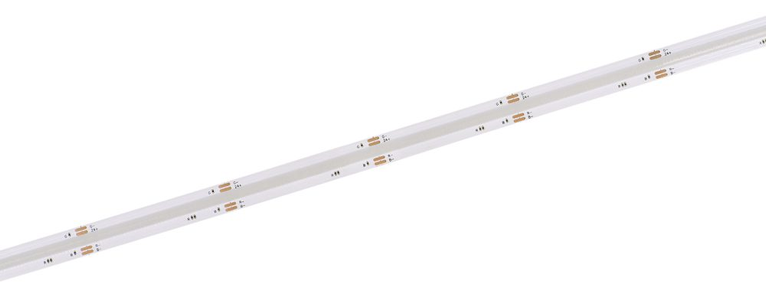
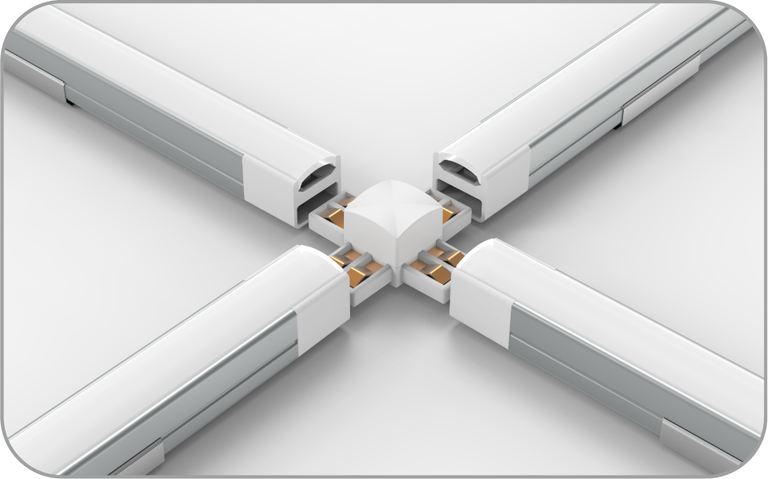
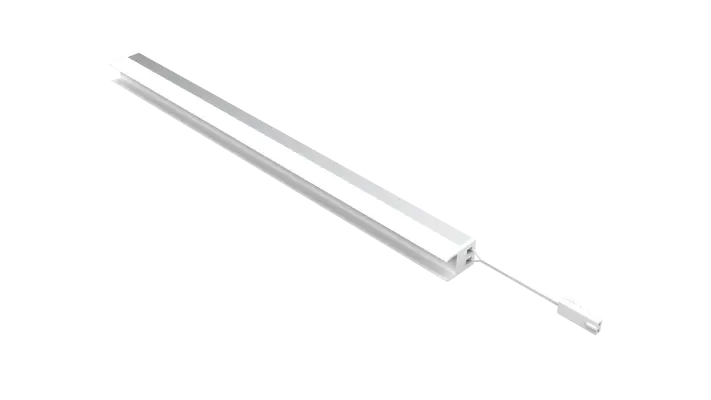
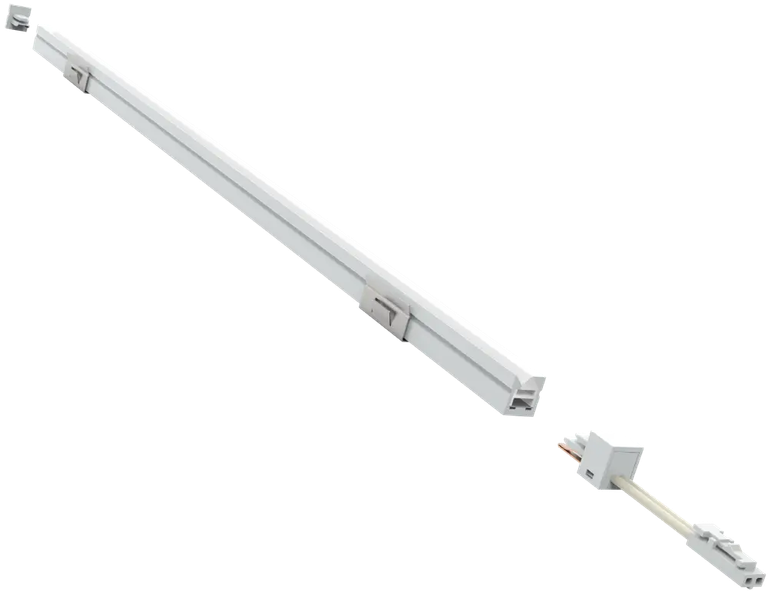
For buyers also evaluating complementary products such as an aluminum profile LED strip, the same principle applies: specifications should be matched to the installation environment and intended lighting effect. A project succeeds when each lighting product is selected for its actual role rather than simply chosen because its price or appearance seems attractive.
A More Structured Approach to Lighting Procurement
A successful commercial lighting purchase starts with clear technical criteria. By comparing optical performance, glare control, physical configuration, mounting options, controls, housing, and long-term requirements, project buyers can make more informed decisions and avoid costly changes later.
At LEDIA Lighting, we use this project-oriented approach when developing and specifying our lighting solutions. Alongside the Juno Series, an aluminum profile LED strip can serve applications where integrated or linear accent lighting is required. The right combination depends on the architecture, task requirements, and installation details of each project.
For procurement teams, the objective is not to identify the cheapest fixture in a wholesale catalog. It is to select a dependable combination of performance, flexibility, installation practicality, and long-term suitability that can meet the project’s requirements consistently.