



-
Recessed Lighting Spacing for Kitchens and Living Rooms
Master the perfect recessed lighting layout. Learn how to space ceiling lights in your kitchen and living room to eliminate shadows and create the ideal ambiance.Read more -
4-Inch vs. 6-Inch Recessed Lighting: How to Choose the Right Size for Your Ceiling
Deciding between 4-inch and 6-inch recessed lights? Discover the best size for your ceiling height, room style, and lighting goals in this comprehensive guide.Read more -
2026 Lighting Power Density: Energy Code Compliance Path, Energy Codes (with LPD Calculator & 2026 Section 179 Calculator)
The latest 2026 Lighting Power Density (LPD) requirements. A comprehensive guide to energy codes for sustainable commercial lighting.Read more
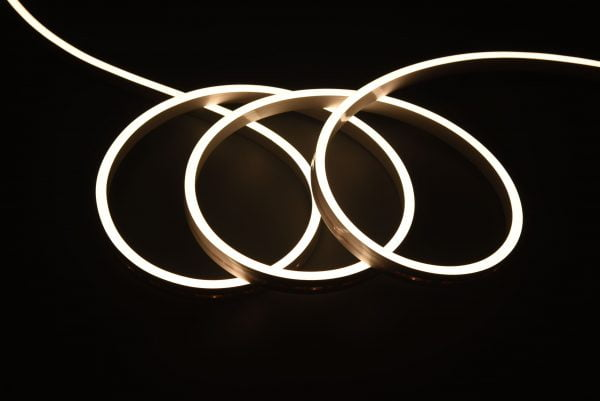
Industrial LED Lighting Solutions: Key Considerations for Project Buyers
- 21 Apr 2024
In industrial environments, lighting is more than simple illumination—it directly affects safety, efficiency, and maintenance planning. As LEDIA Lighting, we understand how LED strip lighting and intelligent LED strip lights are increasingly adopted across factories, warehouses, and large-scale commercial facilities. With over 20 years in the lighting industry, we approach industrial applications with a focus on stable performance, compliance, and adaptability rather than short-term specifications.
Understanding Industrial Lighting Requirements
Industrial projects often require lighting systems that can operate continuously under demanding conditions. When we design LED strip lighting solutions, we consider factors such as heat resistance, waterproof performance, and long-term light stability. Our production environment includes a 15,000 sqm workshop and a 1,000 sqm laboratory, where testing is conducted under controlled standards.
In addition, our two R&D teams, composed of experienced engineers, focus on adapting smart LED strip lights to real project needs, such as compatibility with control systems and flexible installation structures. This is particularly relevant for contractors and engineering companies managing complex layouts across indoor and outdoor environments.
Product Features That Support Industrial Applications
For industrial use, product structure and material selection are critical. Our strip lighting products are developed with integrated wire design, which improves installation safety and reduces connection risks. The silicone extrusion technology used in our LED strip lighting provides durability and consistent light output, even in outdoor or humid conditions.
We also pay attention to long-term usage factors such as UV resistance and reduced light decay. These characteristics make smart LED strip lights suitable for projects where maintenance access may be limited. In many cases, compatibility with common smart control systems allows users to manage lighting more efficiently, especially in large facilities or multi-zone environments.
Compliance, Certification, and Project Adaptability
Industrial buyers often prioritize compliance and certification when selecting suppliers. Our lighting products have obtained certifications including CCC, UL, ETL, CE, RoHS, TUV, SAA, DLC, and ENEC, supporting use in multiple global markets. This ensures that LED strip lighting can be applied across different regulatory environments without additional modification.
From a project perspective, we focus on flexibility in production and delivery. Whether the requirement involves standard configurations or customized smart LED strip lights, our manufacturing system is structured to support consistent quality and timely shipment under FOB terms. This is particularly important for engineering contractors working with fixed timelines.
Conclusion
Industrial lighting decisions require careful evaluation of durability, compliance, and system compatibility. Through our experience, we see that LED strip lighting and smart LED strip lights are becoming practical solutions for a wide range of industrial scenarios. By combining engineering-focused design, certified production, and adaptable manufacturing, we aim to support project-based clients with reliable lighting solutions that align with real operational needs.