



-
Recessed Lighting Spacing for Kitchens and Living Rooms
Master the perfect recessed lighting layout. Learn how to space ceiling lights in your kitchen and living room to eliminate shadows and create the ideal ambiance.Read more -
4-Inch vs. 6-Inch Recessed Lighting: How to Choose the Right Size for Your Ceiling
Deciding between 4-inch and 6-inch recessed lights? Discover the best size for your ceiling height, room style, and lighting goals in this comprehensive guide.Read more -
2026 Lighting Power Density: Energy Code Compliance Path, Energy Codes (with LPD Calculator & 2026 Section 179 Calculator)
The latest 2026 Lighting Power Density (LPD) requirements. A comprehensive guide to energy codes for sustainable commercial lighting.Read more
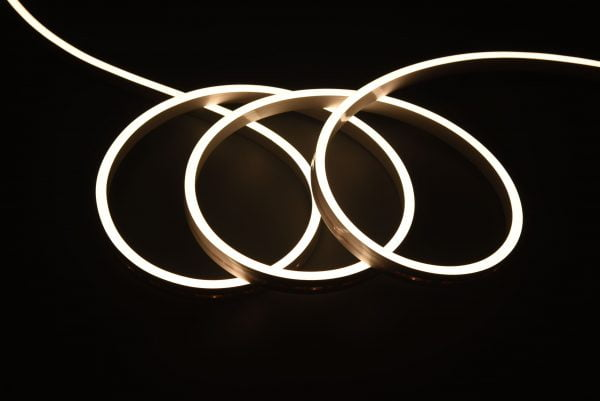
How to Verify Submersible Performance in Waterproof LED Strip Solutions for Projects
- 21 Apr 2024
When working on outdoor or landscape projects, many clients ask how to confirm whether a waterproof strip can truly operate under water. As LEDIA Lighting, we often support contractors and commercial buyers who need reliable LED strip lighting for demanding environments. From our experience as a long-term LED strip light supplier, testing submersibility is not only about checking an IP rating, but also about validating sealing structure, material stability, and long-term performance in real applications.
Understanding IP Ratings and Structural Sealing
In most project discussions, the first step is to review the IP rating. For LED strip lighting, IP68 is generally associated with submersible capability, but this alone does not guarantee performance in every condition. As an LED strip light supplier, we explain that true submersibility depends on how the product is manufactured. Our silicone extrusion technology forms a solid, seamless structure, which helps reduce water ingress risks compared to traditional glue-filled designs. Within LEDIA Lighting, we focus on integrated wire design and full encapsulation, allowing the product to maintain stability when used in pools, fountains, or other outdoor scenarios.
Practical Testing Methods for Submersible Use
Beyond specifications, practical testing is essential. In our internal process at LEDIA Lighting, submersible LED strip lighting is evaluated through controlled immersion tests. The product is placed under water for a defined period, followed by power-on checks to observe brightness stability and electrical safety. As an LED strip light supplier, we also recommend checking for bubbles, which may indicate sealing gaps. In addition, temperature variation tests help simulate real outdoor conditions, ensuring that the silicone material maintains flexibility and does not crack over time.
Application Considerations for B2B Projects
From a project perspective, selecting submersible LED strip lighting should align with the actual application environment. For engineering contractors and commercial users, factors such as installation depth, exposure duration, and control compatibility are all relevant. As LEDIA Lighting, we provide solutions designed for both indoor and outdoor use, including systems that work with common smart controls. With over 20 years in the lighting industry, supported by two R&D teams and CNAS-accredited testing facilities, we aim to offer consistent quality that meets certification requirements such as UL, CE, and RoHS. This allows our partners to manage project risks more effectively when sourcing from a qualified LED strip light supplier.
Conclusion: From Rating to Real Performance
To determine whether a product is truly submersible, it is important to combine IP rating review with structural analysis and real testing. At LEDIA Lighting, we approach LED strip lighting development with a focus on durability, safety, and application fit, rather than relying on a single parameter. For buyers working with a dependable LED strip light supplier, understanding these verification steps can help ensure that the selected solution performs as expected in underwater and outdoor environments.