



-
Recessed Lighting Spacing for Kitchens and Living Rooms
Master the perfect recessed lighting layout. Learn how to space ceiling lights in your kitchen and living room to eliminate shadows and create the ideal ambiance.Read more -
4-Inch vs. 6-Inch Recessed Lighting: How to Choose the Right Size for Your Ceiling
Deciding between 4-inch and 6-inch recessed lights? Discover the best size for your ceiling height, room style, and lighting goals in this comprehensive guide.Read more -
2026 Lighting Power Density: Energy Code Compliance Path, Energy Codes (with LPD Calculator & 2026 Section 179 Calculator)
The latest 2026 Lighting Power Density (LPD) requirements. A comprehensive guide to energy codes for sustainable commercial lighting.Read more
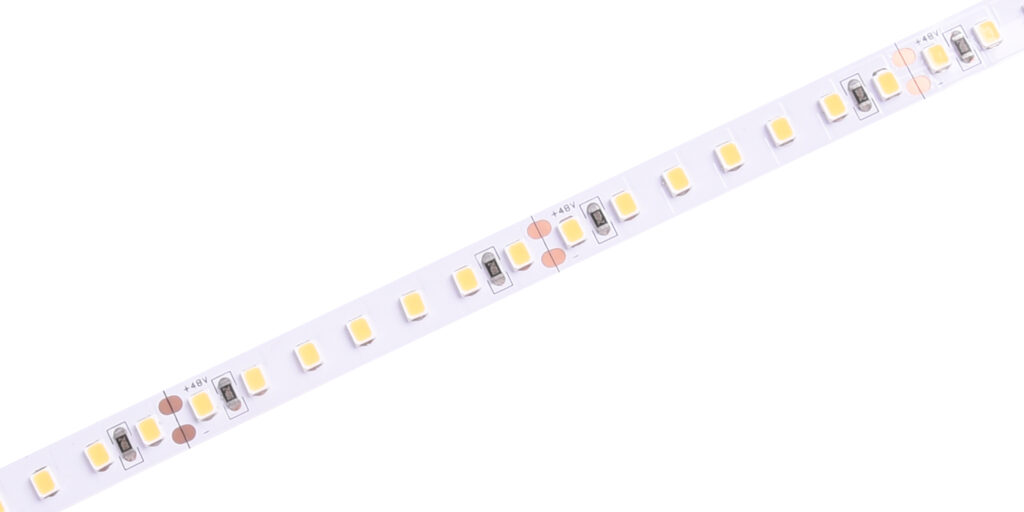
How Silicone Coating Protects Outdoor LED Strips from Water and Physical Stress
- 24 Jan 2025
Our work with professional lighting projects often leads us to explain how an LED light strip remains stable outdoors under moisture and physical pressure. When we develop solutions for engineering contractors and commercial spaces, we focus on practical protection methods that ensure long-term performance in demanding environments. The silicone coating used in outdoor LED strip lights plays a direct role in shielding circuits from water and mechanical stress. Within this context, LEDIA Lighting integrates silicone engineering into its systems to build reliability from the inside out.
Moisture Protection Through a Continuous Silicone Barrier
In our product development process, we design a silicone layer that forms a sealed surface around each LED light strip, creating a path that blocks water intrusion. The material keeps humidity, rainwater, and condensation from reaching sensitive components, which is critical for installations in parks, building façades, and outdoor retail zones. Because silicone maintains flexibility during temperature shifts, it supports stable performance for outdoor LED strip lights exposed to varying climates. The design is further strengthened by our 48V Series options—IP20, IP65, IP67, and IP68—combined with LM80-certified 2835 SMDs and a structure suitable for office, residential, and decorative applications. This approach is integral to how LEDIA Lighting builds moisture-resistant systems for commercial projects.
Physical Protection and Stress Absorption
Physical impact is another factor we consider when engineering each LED light strip. The silicone coating works as a protective cushion, absorbing friction or bending forces that occur when installers adjust the strip to different surfaces. This protection ensures that the circuit remains intact when outdoor LED strip lights are used in busy environments where occasional contact or movement may take place. Our 48V Series offers ultra-long runs and short cuttable intervals, allowing installers to shape and position the strip accurately without exposing the inner components. This combination of structure and coating is part of the way LEDIA Lighting supports reliable field installation in real project environments.
Stability in Long-Term Outdoor Conditions
Different outdoor settings introduce UV exposure, heat, cold, and changes in surface materials. Silicone’s resistance to yellowing and deformation helps the LED light strip maintain optical consistency throughout its service life. This characteristic supports stable output for outdoor LED strip lights, especially when CRI 80+ or 90+ options are required in architectural or landscape lighting. Backed by our three-year warranty and supported by certifications such as CE, ROHS, UL/ETL, SAA, and others, the system structure reflects the capabilities we have developed at LEDIA Lighting through our long-term focus in the industry.
Conclusion: The Role of Silicone in Outdoor Protection
The protective features provided by silicone coating allow each LED light strip to operate reliably under moisture and mechanical pressure. This technology supports the performance expectations placed on outdoor LED strip lights, especially in engineering and commercial applications. With the design strengths of our 48V Series, LEDIA Lighting continues to provide solutions that maintain durability, adaptability, and long-term functionality across outdoor and indoor environments.