



-
Recessed Lighting Spacing for Kitchens and Living Rooms
Master the perfect recessed lighting layout. Learn how to space ceiling lights in your kitchen and living room to eliminate shadows and create the ideal ambiance.Read more -
4-Inch vs. 6-Inch Recessed Lighting: How to Choose the Right Size for Your Ceiling
Deciding between 4-inch and 6-inch recessed lights? Discover the best size for your ceiling height, room style, and lighting goals in this comprehensive guide.Read more -
2026 Lighting Power Density: Energy Code Compliance Path, Energy Codes (with LPD Calculator & 2026 Section 179 Calculator)
The latest 2026 Lighting Power Density (LPD) requirements. A comprehensive guide to energy codes for sustainable commercial lighting.Read more
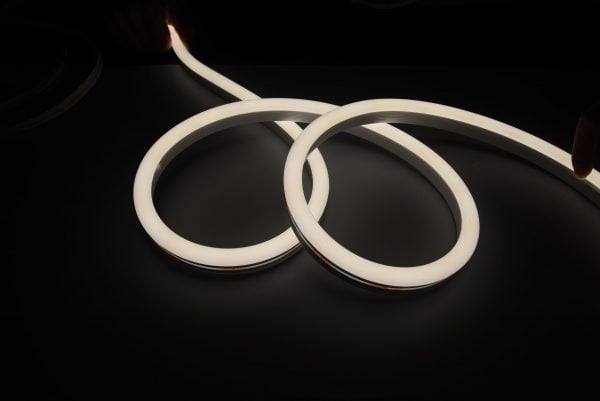
Reliable Methods for Routing Low-Voltage Cables in Outdoor Waterproof Strip Installations
- 9 Sep 2024
When we start an exterior lighting project that involves an LED light strip, our team focuses first on defining a stable pathway for the low-voltage cable. We review the surroundings, examine soil or wall conditions, and plan for the distance between the strip and the protected power supply. In the middle of this preparation, LEDIA Lighting evaluates the specific characteristics of the LD-FR-SJS-DC24V-XXXX-120-10X22X14, a model designed with UV resistance, flame resistance, and an IP67 structure that performs reliably in exposed environments. The dome-shaped 10×22×14 profile and its 270-degree beam angle help us confirm that the lighting effect remains smooth and continuous, so cable placement must never interfere with the uniform output. By completing a detailed layout before installation, we avoid pressure points or sharp turns that could weaken the cable over time.
Protective Measures for Stable Exterior Performance
During installation of a LED strip light outdoor waterproof system, we reinforce the low-voltage cable with protective channels or flexible sleeves. Outdoor areas often feature gravel paths, metal edges, wooden beams, or concrete surfaces that may wear the cable if not shielded properly. At this stage, we attach the cable securely to firm structures to prevent vibration from wind or unintentional movement. Inside our workflow, LEDIA Lighting also considers how the LD-FR-SJS-DC24V-XXXX-120-10X22X14 maintains its continuous, dot-free effect, produced through pure silicone extrusion and automated production. The strip’s flexibility and bendability give us room to adapt to architectural features, but we still ensure that all cable segments remain protected from direct sunlight or pooling water. This method supports steady performance whether the installation is near a pool, a façade, yacht railings, or landscape borders.
Proper Power Supply Placement and Connection Details
Stable performance of our LED light strip depends on safely routing the cable to a protected power supply placed inside a sheltered and ventilated location. We select a dry enclosure that prevents moisture accumulation and allows heat to dissipate naturally. From that point, our technicians choose the safest cable path and use connectors suitable for outdoor applications. In these tasks, LEDIA Lighting integrates the LD-FR-SJS-DC24V-XXXX-120-10X22X14’s IP67 protection level, ensuring the strip remains suitable for architectural outlines, signage guidance, interior coves, and outdoor borders. Every joint is sealed with appropriate waterproof materials so the entire system stays reliable even during heavy rain. The ability to cut and join the strip freely allows us to match different structural shapes without compromising the cable route.
Conclusion: Consistent Practices for Long-Term Outdoor Reliability
Every installation involving a LED strip light outdoor waterproof system requires careful planning, protective cable routing, and proper power-supply placement. Through these practices, LEDIA Lighting ensures that the low-voltage cable always returns safely to a protected power source, supporting long-term reliability. With the LD-FR-SJS-DC24V-XXXX-120-10X22X14’s durable structure, continuous lighting output, and broad application range, we maintain dependable performance across pools, façades, yachts, and decorative architectural elements. These consistent methods help us deliver stable results in varied outdoor conditions.