



-
Recessed Lighting Spacing for Kitchens and Living Rooms
Master the perfect recessed lighting layout. Learn how to space ceiling lights in your kitchen and living room to eliminate shadows and create the ideal ambiance.Read more -
4-Inch vs. 6-Inch Recessed Lighting: How to Choose the Right Size for Your Ceiling
Deciding between 4-inch and 6-inch recessed lights? Discover the best size for your ceiling height, room style, and lighting goals in this comprehensive guide.Read more -
2026 Lighting Power Density: Energy Code Compliance Path, Energy Codes (with LPD Calculator & 2026 Section 179 Calculator)
The latest 2026 Lighting Power Density (LPD) requirements. A comprehensive guide to energy codes for sustainable commercial lighting.Read more
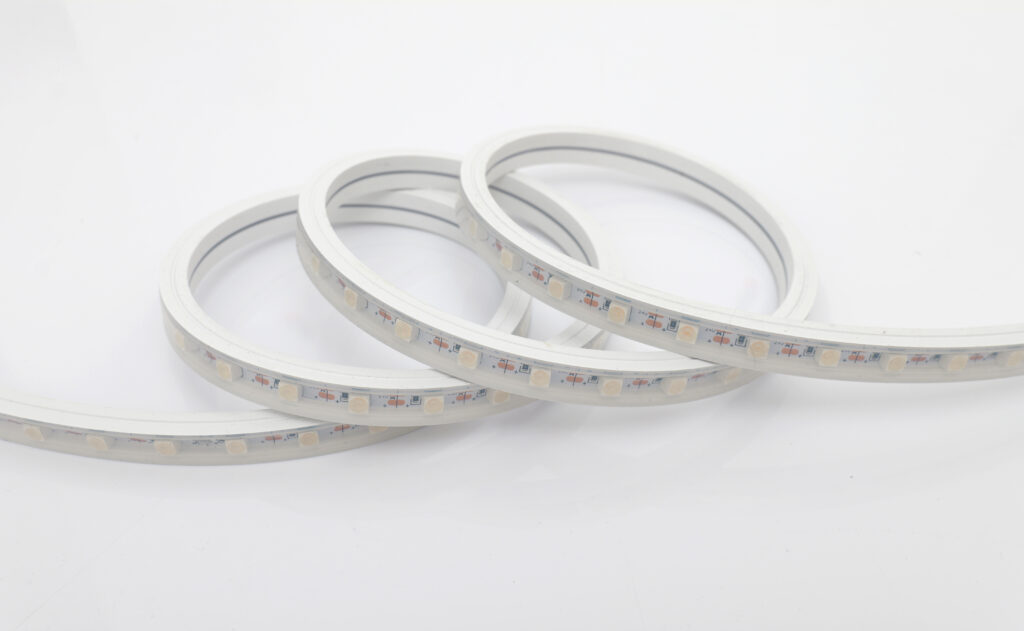
Practical Ways to Improve Moisture Protection for Non-Waterproof LED Strips
- 7 Sep 2024
We at LEDIA Lighting often communicate with clients who need flexible installation options, and many wonder whether a non-LED light strip can be adapted for environments that require waterproof LED strip lights. This question usually arises when users face unexpected humidity or outdoor usage after purchasing standard indoor strips. From our manufacturing experience, we understand the motivation behind this idea and provide guidance based on real production principles rather than assumptions.
Before Adding Aftermarket Tubing or Coating
When we consider whether an ordinary LED light strip can be upgraded into functional waterproof LED strip lights, we first examine the internal structure of the strip. A non-waterproof model normally exposes copper pads, chips, and resistors directly to air. These elements rely on open ventilation, and once sealed inside a silicone tube or covered with a coating, the heat distribution changes. Extra heat can cause gradual brightness instability or color shift.
Our company evaluates the intended environment before any modification. Light moisture, kitchen vapor, or controlled indoor humidity may support limited protection. However, outdoor installations with rainfall or constant condensation require a strip engineered with sealed components from the beginning. Aftermarket coatings sometimes offer partial protection, yet they rarely achieve the durability standards of industrial waterproofing.
How We Build Waterproof Capability in Our Own Products
When we design our professional waterproof LED strip lights, we rely on strict optical structuring, material testing, and controlled sealing procedures. These steps ensure consistent long-term performance in commercial, architectural, and landscape applications. Such processes cannot be fully recreated through general after-sales silicone tubing.
In our product range, our new arrival — the Integrated lens and chips light strip — demonstrates how structural engineering affects final performance. Its integrated lens-and-chip construction reduces production steps and strengthens stability. It delivers excellent wall-washer results at a 30–42° angle and supports 3V/6V/9V/18V/36V single-light cutting options. Each chip reaches up to 0.5W, and with dual high-CRI chips, the irradiation distance extends beyond 8 meters. The model also provides a wider lighting coverage, all enabled by tightly controlled internal assembly—something aftermarket methods cannot replicate.
Conclusion: Selecting the Most Reliable Path to Waterproofing
A non-waterproof LED light strip can sometimes be fitted with silicone tubing or a coating, but these methods do not consistently transform it into dependable waterproof LED strip lights. As a manufacturer, we believe the right product should be chosen based on the installation’s long-term moisture conditions rather than relying on uncertain modifications. At LEDIA Lighting, we continue to develop solutions that offer stable performance and dependable protection for varied environments.