



-
Recessed Lighting Spacing for Kitchens and Living Rooms
Master the perfect recessed lighting layout. Learn how to space ceiling lights in your kitchen and living room to eliminate shadows and create the ideal ambiance.Read more -
4-Inch vs. 6-Inch Recessed Lighting: How to Choose the Right Size for Your Ceiling
Deciding between 4-inch and 6-inch recessed lights? Discover the best size for your ceiling height, room style, and lighting goals in this comprehensive guide.Read more -
2026 Lighting Power Density: Energy Code Compliance Path, Energy Codes (with LPD Calculator & 2026 Section 179 Calculator)
The latest 2026 Lighting Power Density (LPD) requirements. A comprehensive guide to energy codes for sustainable commercial lighting.Read more
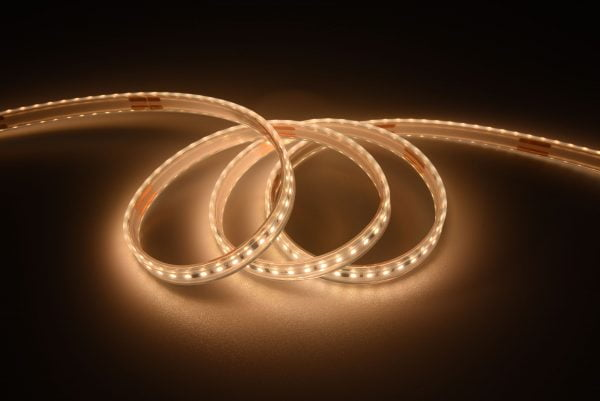
How Material and Shape Choices Influence Diffused Lighting Results in B2B Projects
- 10 Apr 2024
In our daily engineering work, we often start with the selection of suitable materials when designing lighting effects. With LEDIA Lighting, we focus on how LED strip LED lights behave once they are combined with different diffuser materials. Soft silicone and rigid PVC are commonly used options, and each one influences how evenly the light spreads across a surface. In our experience, diffusing LED solutions require a balance between transparency and density to avoid visible hotspots while maintaining brightness consistency. When we develop diffusing LED light strips, we usually evaluate how the material performs under long operating hours in commercial environments such as retail or architectural installations. The goal is always to maintain a stable visual output while keeping the structure remains practical for installation in different project conditions.
Shape Design and Light Distribution Performance
Beyond material choice, shape design plays a direct role in how light is perceived in real applications. With LEDIA Lighting, we consider linear, curved, and fully enclosed profiles depending on project requirements. For LED strip LED lights, a flat profile may deliver a wider spread, while a round or neon-style structure can create a more continuous and soft glow effect. In many engineering projects, diffusing LED light strips are selected not only for brightness but also for how the shape controls glare and shadow. We also observe that enclosed designs help reduce external interference, which is important for outdoor or semi-outdoor installations. When we integrate diffusing LED light strips into project systems, shape optimization becomes a key step in achieving predictable lighting behavior across long installation runs.
Engineering Integration in Real Applications
When we apply LEDIA Lighting products in B2B projects, we focus on how material and shape work together within the full lighting system. In commercial installations using LED strip LED lights, consistency across long distances is often a priority, especially in retail or architectural contour lighting. Our engineering approach considers how diffusing LED light strips interact with power systems, mounting structures, and environmental conditions. This ensures that the final lighting output remains uniform even when installed in complex layouts. In some cases, we adjust diffuser density or structural thickness to match project requirements. Through this process, diffusing LED light strips can better adapt to different design intentions without compromising installation efficiency or long-term stability.
Conclusion: Balancing Design Intent and Practical Performance
In conclusion, selecting the right material and shape is not an isolated decision but part of a complete lighting design process. At LEDIA Lighting, we continue to refine how LED strip LED lights and diffusing LED light strips are developed for engineering-focused applications. Material choice affects softness and clarity, while shape determines direction and visual flow. When both factors are aligned, diffusing LED light strips can deliver predictable and controlled lighting effects suitable for commercial and architectural environments. This approach helps us support B2B clients who require both functional reliability and design flexibility in their lighting projects.