



-
Recessed Lighting Spacing for Kitchens and Living Rooms
Master the perfect recessed lighting layout. Learn how to space ceiling lights in your kitchen and living room to eliminate shadows and create the ideal ambiance.Read more -
4-Inch vs. 6-Inch Recessed Lighting: How to Choose the Right Size for Your Ceiling
Deciding between 4-inch and 6-inch recessed lights? Discover the best size for your ceiling height, room style, and lighting goals in this comprehensive guide.Read more -
2026 Lighting Power Density: Energy Code Compliance Path, Energy Codes (with LPD Calculator & 2026 Section 179 Calculator)
The latest 2026 Lighting Power Density (LPD) requirements. A comprehensive guide to energy codes for sustainable commercial lighting.Read more
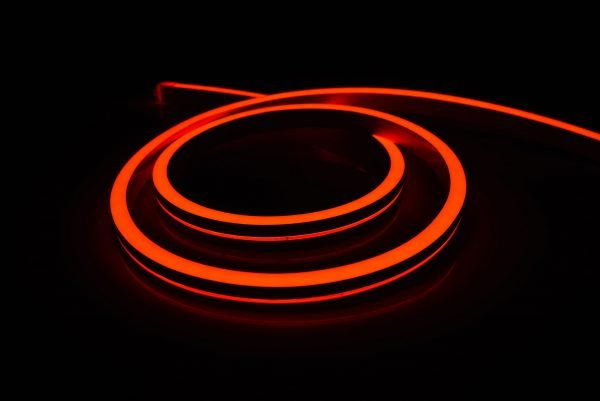
How Flicker Happens in LED Systems and How Stable Power Supply Improves LED Strip Performance
- 1 Apr 2024
We at LEDIA Lighting receive questions about flicker in LED light strip installations used in commercial and architectural projects. The flicker phenomenon refers to visible or invisible light intensity fluctuations that can affect visual comfort and system stability. In many cases, a neon LED strip may appear unstable when the driving current is not properly regulated or when incompatible components are used. In our experience, both product design and power supply selection play important roles in preventing this issue in an LED light strip system.
We also observe that a neon LED strip designed for flexible applications is more sensitive to voltage variation compared with rigid lighting systems. Therefore, understanding flicker at the early design stage helps us reduce risks in later engineering deployment of a LED light strip.
Our engineering approach to stable lighting performance
We have built our production and R&D system with 20 years of specialization in lighting, supported by two engineering teams of experienced professionals. Our 15,000sqm facility and CNAS-certified laboratory allow us to test the stability of every LED light strip under different electrical conditions. When we design a neon LED strip, we also evaluate current consistency and circuit compatibility to reduce flicker risks.
In many project cases, flicker is not only related to the product itself but also to system integration. That is why we ensure each LED light strip is tested with different power input scenarios before delivery. For a neon LED strip, we also simulate long-distance installation conditions to confirm stable operation. LEDIA Lighting focuses on system-level reliability rather than isolated component performance.
Power supply design and flicker elimination methods
At LEDIA Lighting, in practical installations, flicker is effectively mitigated by selecting a stable constant-voltage power supply matched with the load requirements of a LED light strip. We design our neon LED strip solutions to work within defined voltage tolerance, ensuring compatibility with commonly used drivers in commercial projects. When the power supply delivers inconsistent output, even a well-designed LED light strip may still show flicker symptoms.
To address this, we recommend proper load calculation and avoiding overextension of a neon LED strip in a single circuit line. LEDIA Lighting also considers electromagnetic compatibility during product development, which helps reduce interference in a LED light strip system. Stable power architecture is essential for long-term performance.
Conclusion for reliable project applications
We believe that flicker control is not a single-component issue but a system-level consideration involving both design and power supply coordination. A properly engineered LED light strip can achieve stable performance when integrated with compatible drivers and installation practices. Our neon LED strip solutions are developed to support consistent output in both indoor and outdoor engineering environments.
For B2B clients such as contractors and system integrators, selecting a stable LED light strip is essential for reducing maintenance risks. LEDIA Lighting focuses on improving compatibility between lighting systems and power infrastructure. By optimizing both product design and application guidance, we help ensure that each neon LED strip performs reliably in real-world projects.