



-
Recessed Lighting Spacing for Kitchens and Living Rooms
Master the perfect recessed lighting layout. Learn how to space ceiling lights in your kitchen and living room to eliminate shadows and create the ideal ambiance.Read more -
4-Inch vs. 6-Inch Recessed Lighting: How to Choose the Right Size for Your Ceiling
Deciding between 4-inch and 6-inch recessed lights? Discover the best size for your ceiling height, room style, and lighting goals in this comprehensive guide.Read more -
2026 Lighting Power Density: Energy Code Compliance Path, Energy Codes (with LPD Calculator & 2026 Section 179 Calculator)
The latest 2026 Lighting Power Density (LPD) requirements. A comprehensive guide to energy codes for sustainable commercial lighting.Read more
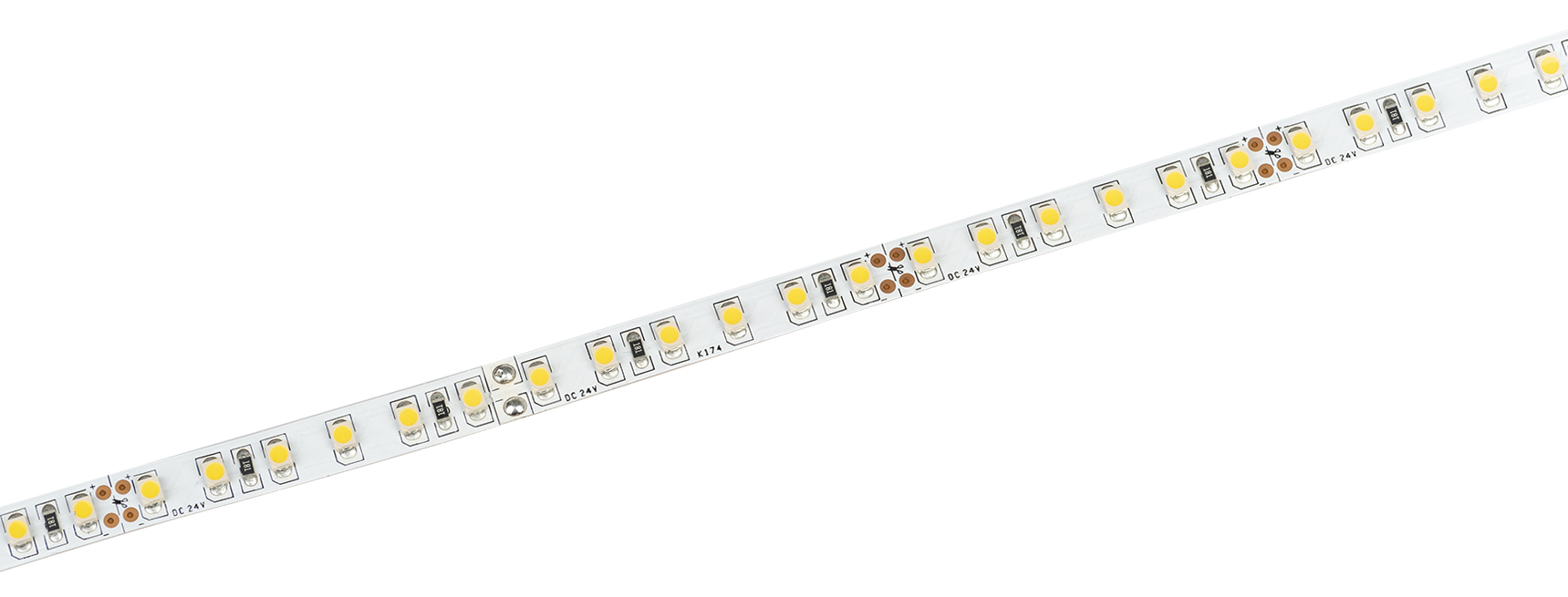
Flexible LED Strip Options for Tight-Curve Lighting Designs
- 4 Sep 2024
In many of our project discussions, we encounter designers and installers who must integrate lighting into curved recesses, narrow frames, and architectural outlines where a small bend radius is required. In such scenarios, selecting an LED light strip with stable performance under bending is essential. At this stage of the evaluation, our experience allows us to offer guidance while ensuring that every installation maintains consistent illumination and material stability. It is at this point in the process that LEDIA Lighting becomes involved, helping teams assess flexibility, uniformity, and real-world adaptability so they can identify the best LED strip lights for demanding layouts.

Product Characteristics That Support High Flexibility
In our daily development work, we refine the balance between optical performance and mechanical flexibility to ensure our solutions remain practical for curved applications. Our Classic Series uses high-quality 2835 and 5050 SMD components, delivering CRI80+ up to 110 lm/w and CRI90+ up to 90 lm/w, allowing the strip to maintain visual consistency even when shaped along tight curves. With IP20, IP65, IP67, and IP68 options, customers can choose protection levels suitable for office, residential, retail, or decorative environments. When professionals select an LED light strip for small-radius paths, they often consider PCB softness, coating elasticity, and solder-point durability. These characteristics help many users determine the best LED strip lights for applications where flexibility is a priority.
Fitting Practical Installation Conditions
Our work frequently includes supporting engineering teams who must integrate lighting into curved coves, signage outlines, furniture contours, and rounded structures. These scenarios require a product that permits repeated repositioning during installation without losing structural integrity. For this reason, our company focuses on controlled copper-foil thickness, adhesive reliability, and PCB layouts that enable smooth bending. When projects require an LED light strip that fits narrow aluminum channels or tight corner transitions, our Classic Series becomes a practical choice due to its bend-friendly construction and stable output. This adaptability allows professionals to define the best LED strip lights for a wide range of curved design environments, from residential features to retail displays.
Conclusion: Selecting Strips for High-Flex Applications
Through our ongoing development work, we continue to address the challenges faced by designers and installers working with small-radius lighting paths. By combining flexibility, optical consistency, and material reliability, our Classic Series provides solutions that adapt smoothly to complex layouts. With dependable efficiency, multiple CRI options, and varied waterproof ratings, our products support teams seeking an LED light strip that performs steadily under demanding conditions. This approach allows many professionals to consider our solutions among the best LED strip lights for projects that require high flexibility and tight-curve installation compatibility.