



-
Recessed Lighting Spacing for Kitchens and Living Rooms
Master the perfect recessed lighting layout. Learn how to space ceiling lights in your kitchen and living room to eliminate shadows and create the ideal ambiance.Read more -
4-Inch vs. 6-Inch Recessed Lighting: How to Choose the Right Size for Your Ceiling
Deciding between 4-inch and 6-inch recessed lights? Discover the best size for your ceiling height, room style, and lighting goals in this comprehensive guide.Read more -
2026 Lighting Power Density: Energy Code Compliance Path, Energy Codes (with LPD Calculator & 2026 Section 179 Calculator)
The latest 2026 Lighting Power Density (LPD) requirements. A comprehensive guide to energy codes for sustainable commercial lighting.Read more
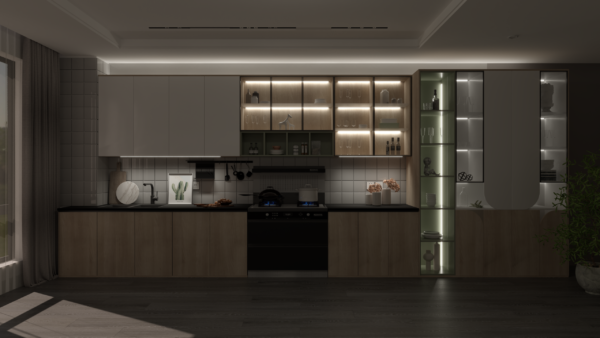
Avoiding Key Mistakes in Smart LED Strip Lighting Design for B2B Projects
- 18 Apr 2024
When we design smart lighting systems under LEDIA Lighting, we often find that early-stage planning directly affects overall project stability. In many commercial applications, LED strip lighting and smart LED strip lights are selected due to their flexibility in architectural integration and system control. However, a common mistake is focusing only on visual output without evaluating electrical structure and installation conditions.
As an LED strip light supplier, we work closely with engineering clients to ensure the lighting layout is aligned with real project requirements. In large-scale B2B projects such as retail chains or engineering contractors, improper circuit planning or ignoring voltage distribution can lead to uneven brightness and system inefficiency. A structured design process is always necessary before implementation of smart LED strip lights, especially in complex commercial environments.
Control System Matching and Environmental Factors
Another issue we often encounter in LEDIA Lighting projects is the mismatch between control systems and lighting products. Smart LED strip lights are frequently connected with dimming systems, sensors, or centralized control platforms. If protocol compatibility is not considered in the design phase, system expansion may become limited and integration efficiency reduced.
From our experience as an LED strip light supplier, environmental selection is also critical. Outdoor or semi-outdoor applications require careful evaluation of protection level and material structure for LED strip lighting systems. In some cases, indoor-grade solutions are mistakenly applied to outdoor projects, which affects long-term performance stability. We recommend evaluating application conditions and system requirements in detail before final configuration of smart LED strip lights.
Installation Design and Maintenance Planning
In many LEDIA Lighting installations, maintenance accessibility is often underestimated during the design stage. When LED strip lighting is deployed in commercial or industrial environments, lack of maintenance planning can increase downtime during repair or replacement processes, especially for smart LED strip lights integrated into control systems.
As an LED strip light supplier, we design products with practical installation scenarios in mind. With more than 20 years of experience in the lighting industry, we understand the importance of structural planning in real engineering applications. Our production system includes large-scale manufacturing capacity and an accredited testing laboratory, which helps ensure product consistency in long-term projects involving LED strip lighting and smart LED strip lights. Proper connection layout and installation segmentation are key to reducing future operational complexity.
Conclusion: System Thinking for Stable Lighting Performance
In conclusion, when working with LEDIA Lighting solutions, avoiding mistakes in planning, system compatibility, and installation design is essential for reliable project performance. LED strip lighting and smart LED strip lights should always be treated as part of a complete system rather than standalone products. As an LED strip light supplier, we emphasize engineering-oriented design thinking that supports B2B clients in achieving stable, scalable, and efficient lighting systems across different application environments.