

LEDIA-Smart Linear Lighting Provider LEDIA-Smart Linear Lighting Provider
4-Inch vs. 6-Inch Recessed Lighting: How to Choose the Right Size for Your Ceiling

4-Inch vs. 6-Inch Recessed Lighting: How to Choose the Right Size for Your Ceiling

  • 9 May 2026

Key Takeaways:

  • Modern 4-inch LEDs produce the same brightness as older 6-inch cans, fundamentally changing ceiling design.
  • Choose 4-inch fixtures for task lighting, modern aesthetics, and standard 8-to-10-foot ceilings.
  • Choose 6-inch fixtures for ambient lighting in large spaces, ceilings over 10 feet, or retrofitting older homes.
  • A reliable spacing rule is to place 4-inch lights 4 feet apart and 6-inch lights 6 feet apart.
  • Always verify dimmer compatibility to prevent LED flicker during your recessed lighting installation.

The main difference between 4 inch vs 6 inch recessed lighting is the visual footprint and beam spread, not the brightness. Modern 4-inch led recessed can lights output the same lumens as traditional 6-inch fixtures.

You should choose 4-inch lights for a minimalist look, task lighting, and standard ceilings. Choose 6-inch lights for broad ambient lighting, high ceilings, or filling existing large holes during a retrofit.

Below, we break down exactly how to select the right pot light sizes for your specific room dimensions and design goals.

4-Inch vs. 6-Inch Recessed Lights

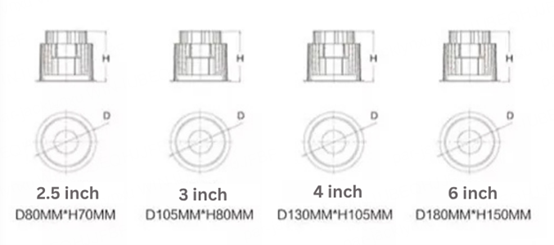
4-inch fixtures have a smaller aperture designed for modern, targeted lighting on standard ceilings. In contrast, 6-inch fixtures provide a wider beam spread best suited for traditional, general lighting in large or high-ceiling rooms.

When evaluating these two options side by side, the physical diameter impacts how light is distributed across your space. Here is a direct comparison of the specifications:

Specification 4-Inch Recessed Lights 6-Inch Recessed Lights
Aperture Size 4 inches 6 inches
Best For Accent lighting and task lighting. General and ambient lighting.
Ceiling Height Standard ceilings (8 to 10 feet). High ceilings (10 feet and above).
Visual Style Contemporary, minimalist, and "quiet." Traditional, standard, and functional.

When Should You Choose 4-Inch Can Lights?

4-inch can lights are excellent adaptor to the modern interior designs where you want a clean, uncluttered ceiling. They offer precise beam angles that are perfect for task lighting over kitchen islands or highlighting architectural artwork.

Designers prefer 4-inch pot light sizes because they minimize visual clutter. A smaller aperture draws less attention to the light source itself. Instead, the focus remains on the illuminated space. This diameter boasts a tighter beam angle, and thus are highly effective for focused tasks.

LEDIA lighting provides residential solution that fit into minimal clearance spaces while delivering precise beam control and high color rendering without the harsh glare associated with cheap flat wafers.

When Should You Choose 6-Inch Recessed Lighting?

You should choose 6-inch recessed lights for large living rooms, open-concept spaces, and ceilings higher than 10 feet. They are also the most practical choice for retrofitting older homes that already have 6-inch holes cut into the drywall.

6-inch lens throws a wider pool of light, allowing fewer fixtures overall to achieve consistent ambient illumination. Therefore, they are highly efficient for vast rooms.

Furthermore, if you are upgrading an older property, trying to patch 6-inch holes to fit 4-inch lights is expensive and time-consuming. Using a 6-inch LED retrofit is the logical solution.

For demanding applications, we utilize LEDIA lighting high-lumen selectable LED downlights. We build these with advanced heat dissipation technology. This superior thermal management ensures the fixtures meet strict L70 ratings, providing commercial-grade reliability and a lifespan that outlasts standard consumer options.

Best Practices for Recessed Lighting Installation?

A reliable rule of thumb is to space your fixtures based on their size: place 4-inch lights 4 feet apart and 6-inch lights 6 feet apart. Always pair your fixtures with tested, compatible dimmer switches to avoid flickering.

The "Spacing by Size" Rule

Proper layout is the most critical step of any recessed lighting installation. Spacing fixtures too far apart creates dark shadows, while spacing them too close wastes energy.

  • 4-Inch Spacing: Aim for roughly 4 feet of distance between each light.
  • 6-Inch Spacing: Aim for roughly 6 feet of distance between each light.
  • Wall Distance: Keep fixtures at least 2 to 3 feet away from the walls to prevent harsh shadow lines, unless you are specifically doing wall-wash lighting.

Preventing LED Flicker

You must also consider dimming compatibility. Many users experience severe LED flicker when mixing new lights with older, incompatible switches.

Frequently Asked Questions About Pot Light Sizes

While modern residential design heavily favors smaller 4-inch or 3-inch fixtures for a minimalist look, 6-inch lights are not obsolete. They remain the highly practical, standard choice for vast commercial spaces, open-concept living rooms with high ceilings (10+ feet), and cost-effective retrofits.

Yes. Brightness is measured in lumens, not by the physical diameter of the fixture trim. A modern 4-inch LED downlight can easily output 800 to 1,200 lumens, which matches or exceeds the light output of an older 6-inch incandescent bulb. The LED board inside dictates the power, not the housing.

Yes, mixing sizes is a standard and highly effective lighting design strategy. The industry best practice is to assign specific roles to each size. Use 6-inch fixtures for broad, ambient lighting in your main living areas, and transition to 4-inch fixtures for targeted task lighting over kitchen islands, bathroom vanities, or narrow hallways.

You can, but it is labor-intensive. Retrofitting an existing 6-inch ceiling hole with a 4-inch fixture requires patching the drywall, re-texturing, and repainting the ceiling. To avoid these expensive labor costs, most contractors recommend using a 6-inch LED retrofit trim that snaps directly into your existing housing.

You should use 4-inch fixtures for low ceilings. Large 6-inch trims on an 8-foot ceiling can make the room feel cluttered and visually lower the ceiling height. A 4-inch fixture draws less attention to the light source, keeping the visual focus on the room itself and making the space feel taller.


Leave a Reply

Your email address will not be published. Required fields are marked *

Get In Touch

Get In Touch