



-
Recessed Lighting Spacing for Kitchens and Living Rooms
Master the perfect recessed lighting layout. Learn how to space ceiling lights in your kitchen and living room to eliminate shadows and create the ideal ambiance.Read more -
4-Inch vs. 6-Inch Recessed Lighting: How to Choose the Right Size for Your Ceiling
Deciding between 4-inch and 6-inch recessed lights? Discover the best size for your ceiling height, room style, and lighting goals in this comprehensive guide.Read more -
2026 Lighting Power Density: Energy Code Compliance Path, Energy Codes (with LPD Calculator & 2026 Section 179 Calculator)
The latest 2026 Lighting Power Density (LPD) requirements. A comprehensive guide to energy codes for sustainable commercial lighting.Read more
Using LED Strips to Create an Evenly Lit Translucent Ceiling Panel
- 13 Sep 2024
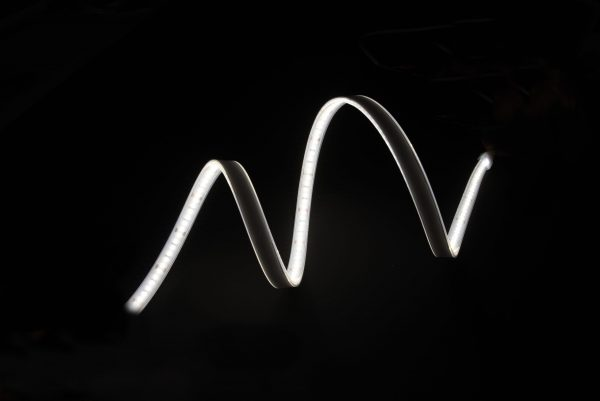
As we work on more architectural projects, we often receive questions about how an LED light strip can illuminate a translucent ceiling panel with consistent and gentle brightness. At LEDIA Lighting, we have long focused on offering practical solutions for indoor and outdoor applications, and back-lighting is one of the areas where we apply our experience. When we design a system behind a ceiling panel, we pay attention to uniformity, heat control, and installation flexibility. Our silicone-based LD-FR-SJT-DC24V-XXXX-120-10*3.8mm (Hollow) — LED Linear Lighting Strip helps us achieve these goals while keeping the workflow straightforward for project teams. This approach also allows us to use an LED ceiling lights strip in spaces that require controlled, diffuse illumination.
Designing a Balanced Back-Lighting Layout
When we prepare a back-lighting plan for a ceiling, our first priority is spacing. An LED light strip must be placed at a distance where individual LEDs do not form visible hotspots on the panel. Because the LD-FR-SJT-DC24V-XXXX-120-10*3.8mm strip delivers a flat lighting surface with a wide beam angle, we can distribute the light more evenly without adding complex diffusers. The silicone structure also gives us the freedom to curve or reposition the strip during installation, which is helpful when we work with custom-shaped ceiling cavities. By allowing cuts every six LEDs, the strip lets us fine-tune the layout and maintain a stable lighting field. In many project rooms, this flexibility is essential for using an LED ceiling lights strip as a consistent, low-glare lighting source.
Achieving Long-Term Reliability Behind a Ceiling Panel
Back-lighting requires stability because once the ceiling panel is installed, access is limited. We rely on the material advantages of the silicone neon strip to manage heat, weatherability, and long-term clarity. When we apply an LED light strip in an enclosed ceiling space, we are confident in its anti-UV performance, fire resistance, and protection level of IP67. These characteristics reduce concerns about yellowing or degradation over time. Our production capacity and thorough processes support quick delivery while maintaining quality. This matters in engineering-oriented projects where schedules are tight and performance must remain dependable. With these traits, the LD-FR-SJT-DC24V-XXXX-120-10*3.8mm model fits well when we apply an LED ceiling lights strip for stable architectural illumination.
Conclusion: A Practical Way to Back-Light Translucent Ceilings
When we use an LED light strip to back-light a translucent ceiling panel, our aim is always to achieve balanced brightness, easy installation, and long-term consistency. The LD-FR-SJT-DC24V-XXXX-120-10*3.8mm model supports these goals through its smooth optical surface, flexible structure, smart-control compatibility, and material reliability. These features make it suitable for both indoor and outdoor lighting layouts where an LED ceiling lights strip needs to perform with steady, gentle illumination. As we continue to refine our solutions at LEDIA Lighting, we focus on offering practical systems that match the needs of engineering projects and commercial spaces.