



-
Recessed Lighting Spacing for Kitchens and Living Rooms
Master the perfect recessed lighting layout. Learn how to space ceiling lights in your kitchen and living room to eliminate shadows and create the ideal ambiance.Read more -
4-Inch vs. 6-Inch Recessed Lighting: How to Choose the Right Size for Your Ceiling
Deciding between 4-inch and 6-inch recessed lights? Discover the best size for your ceiling height, room style, and lighting goals in this comprehensive guide.Read more -
2026 Lighting Power Density: Energy Code Compliance Path, Energy Codes (with LPD Calculator & 2026 Section 179 Calculator)
The latest 2026 Lighting Power Density (LPD) requirements. A comprehensive guide to energy codes for sustainable commercial lighting.Read more
Understanding the Position of Cut Lines on Modern LED Strip Lights
- 27 Aug 2024
As we continue improving our solutions at LEDIA Lighting, we often communicate with clients who want clear guidance on where the cut line is located on LED strip lights and how this detail supports accurate installation. At the beginning of our planning process for projects involving fixture LED lighting or flexible strips, we explain that each LED strip includes printed copper markers indicating safe cutting positions. These markers allow us to adjust strip length cleanly without damaging the circuit, which is especially important for engineering contractors and commercial environments requiring precise layout control.

How We Identify and Use Cut Lines in Project Work
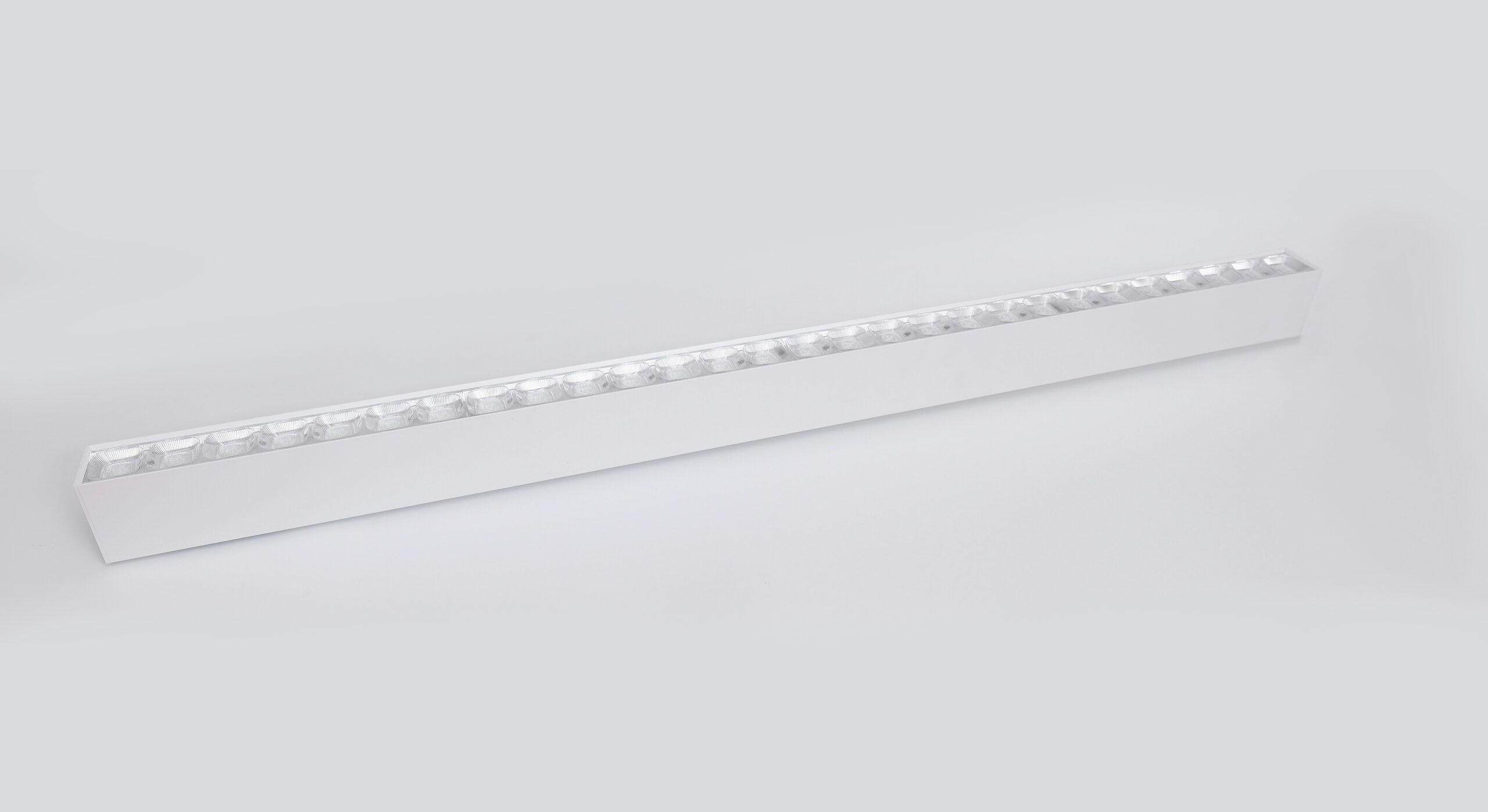
In our workflow, we always trace the copper pads along the strip surface because they show the exact cut positions designed by the manufacturer. The spacing of these cut points varies according to the strip’s voltage and chip density, so we evaluate each project’s layout based on these parameters. While the strip itself differs from rigid systems, the adjustable nature of a LED linear strip light helps us coordinate custom applications efficiently. Drawing from the same idea of modular adaptability, we integrate our Kyros Series LED Linear Light when clients require structured architectural lines. This series provides 3CCT options, enabling users to adapt office ambience through our smart lighting approach.
Applying Cut-Line Logic to Linear Office Systems
Although a strip light remains the primary product featuring physical cut lines, we have found that many planning habits developed through strip-light installation also apply to linear systems. When we use the Kyros Series in office environments, we build continuous light runs with PC/PMMA diffusers, grilles, or reflectors to meet task and general lighting needs. The system supports on/off control, 0–10 V dimming, and DALI dimming, allowing it to integrate with different office control requirements. With an efficacy over 110 lm/W, the linear fixtures help reduce operational energy consumption, while the up- and down-light capability supports comfortable visibility. The CRI over Ra90 also strengthens user comfort by ensuring accurate color rendering.
Conclusion: Why Cut-Line Awareness Supports Better Lighting Planning
As we conclude this explanation, we return to the practical value of understanding where the cut line appears on a strip. This knowledge helps us plan installations with more precision and allows our team to align strip lighting with fixed systems such as the Kyros Series. Even though the Kyros Series serves a different purpose from a flexible strip or a fixture LED lighting setup, both benefit from thoughtful preparation based on cut-line logic. By combining safe cutting practices with adaptable linear solutions, we continue supporting commercial and engineering projects with accurate, reliable configurations that maintain consistent performance.