



-
Recessed Lighting Spacing for Kitchens and Living Rooms
Master the perfect recessed lighting layout. Learn how to space ceiling lights in your kitchen and living room to eliminate shadows and create the ideal ambiance.Read more -
4-Inch vs. 6-Inch Recessed Lighting: How to Choose the Right Size for Your Ceiling
Deciding between 4-inch and 6-inch recessed lights? Discover the best size for your ceiling height, room style, and lighting goals in this comprehensive guide.Read more -
2026 Lighting Power Density: Energy Code Compliance Path, Energy Codes (with LPD Calculator & 2026 Section 179 Calculator)
The latest 2026 Lighting Power Density (LPD) requirements. A comprehensive guide to energy codes for sustainable commercial lighting.Read more
The Pursuit of Seamless Illumination
- 30 Jun 2024
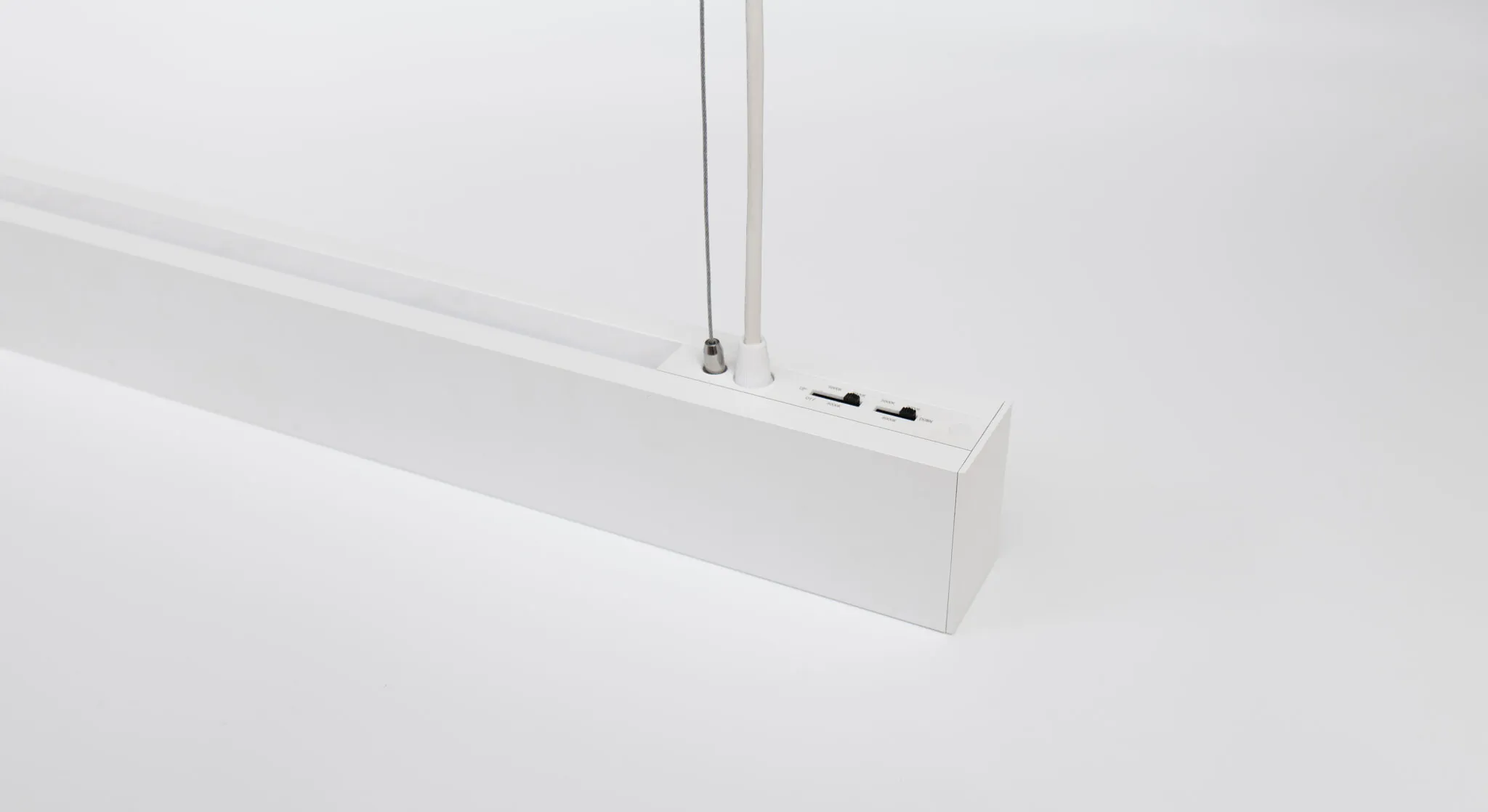
Achieving a smooth, continuous line of light with no visible dots or harsh glare is a common objective in architectural lighting. A bare LED linear strip light, while efficient, often produces a string of distinct bright spots that can be visually disruptive. The transformation into a perfectly uniform glow relies on a systematic approach that integrates the light source with purpose-built components. This process involves selecting the right density of LEDs, employing specialized channels, and specifying the correct diffuser to create a fixture LED lighting element that is both elegant and functional.
The Critical Role of LED Density and Placement
The foundation of a seamless appearance begins with the strip itself. A low-density LED linear strip light, with significant gaps between individual diodes, will always struggle to achieve a continuous effect. For a smooth output, a high-density strip is essential. This configuration places the LEDs close together, allowing their individual light cones to overlap before the light even reaches the diffuser. This overlap blends the light sources at the origin, minimizing the potential for dark spots and creating a solid baseline of illumination for the subsequent components to refine.
Integrating an Aluminum Channel System
A structural channel is more than just a mounting track; it is a critical component for thermal management and optical control. Mounting an LED linear strip light directly to a surface can lead to overheating and premature failure. An aluminum channel acts as a heatsink, drawing heat away from the diodes to maintain performance and longevity. From an optical standpoint, the channel provides a standardized platform for securing a diffuser. Its designed shape, whether corner, pendant, or surface-mounted, ensures the LED linear strip light is positioned correctly to achieve the intended visual effect.
Selecting the Correct Diffuser Profile
The diffuser is the final element that completes the system, and its selection is paramount for glare control. A clear or opal lens alone is often insufficient. For a truly soft and uniform result, a prismatic or frosted diffuser is typically used. These materials work by scattering the light as it passes through, breaking up the direct view of the intense LED chips. For the ultimate seamless appearance, an LED linear strip light is often paired with an “opal” or “milky” diffuser of a specific thickness. This material thoroughly blends the light emissions, eliminating hotspots and creating a consistent, glare-free luminous line that enhances the architectural space.
The journey from a visible strip of dots to a smooth bar of light is a matter of precise component selection and integration. Each part—from the strip density to the channel and the final diffuser—works in concert to manage output and perception. This holistic method ensures the final installation meets aesthetic goals without compromising on the technical performance of the light source. Our approach at LEDIA Lighting is to provide these integrated systems. We supply not just the LED linear strip light, but the supporting components that transform it into a refined fixture LED lighting solution, delivering the flawless visual quality that designers seek.