



-
Recessed Lighting Spacing for Kitchens and Living Rooms
Master the perfect recessed lighting layout. Learn how to space ceiling lights in your kitchen and living room to eliminate shadows and create the ideal ambiance.Read more -
4-Inch vs. 6-Inch Recessed Lighting: How to Choose the Right Size for Your Ceiling
Deciding between 4-inch and 6-inch recessed lights? Discover the best size for your ceiling height, room style, and lighting goals in this comprehensive guide.Read more -
2026 Lighting Power Density: Energy Code Compliance Path, Energy Codes (with LPD Calculator & 2026 Section 179 Calculator)
The latest 2026 Lighting Power Density (LPD) requirements. A comprehensive guide to energy codes for sustainable commercial lighting.Read more
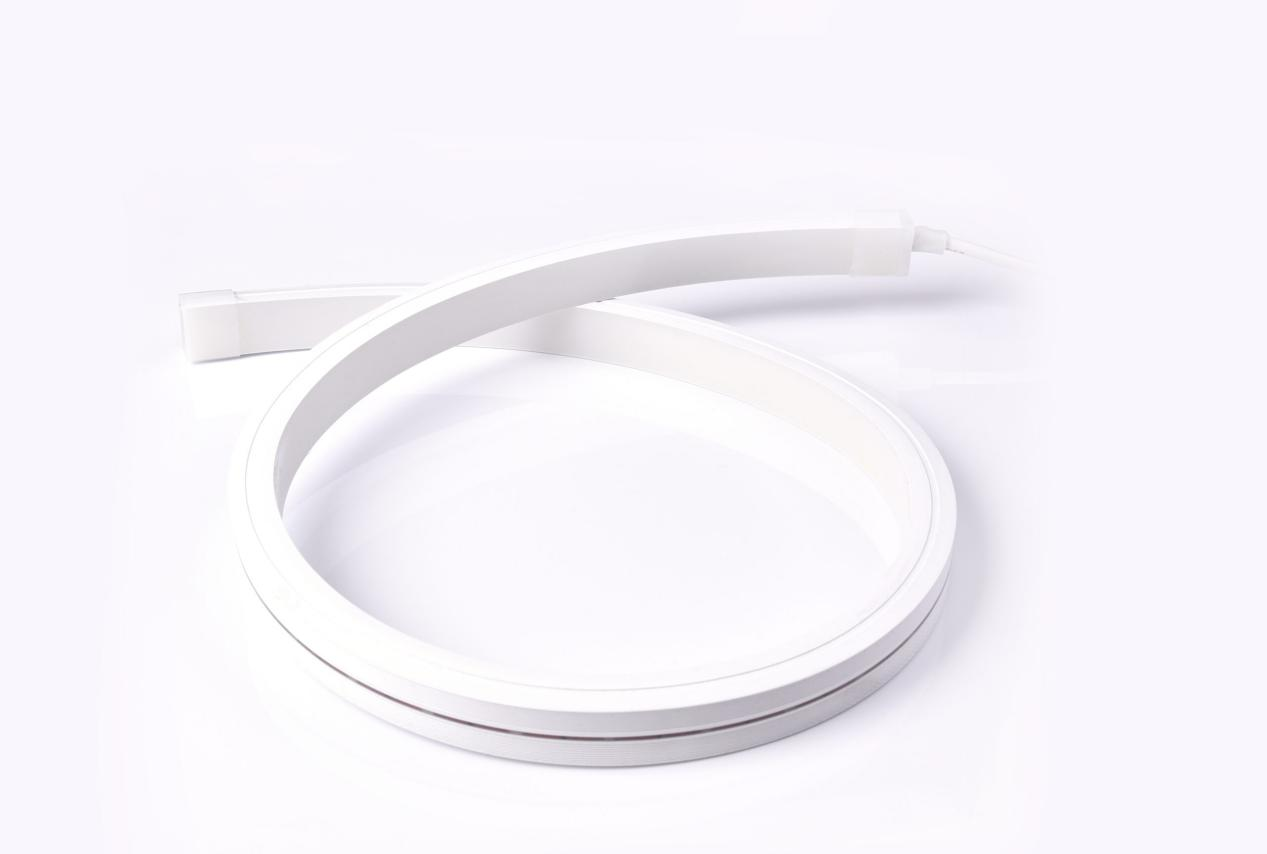
Impact of Repeated Flexing on Long-Term Reliability of LED Strips
- 4 Feb 2025
As we continue to develop lighting solutions at LEDIA Lighting, we work closely with projects where constant adjustments, installation handling, and environmental movement may introduce mechanical stress to a LED light strip. In many engineering and commercial settings, repeated bending is unavoidable, especially when the strip needs to follow architectural contours. Mechanical stress affects both the outer silicone body and the internal copper circuitry, so we maintain strict material and structural standards to safeguard long-term function. Our flexible LED strip lights are engineered to manage these real-world movements without compromising illumination stability or electrical continuity.

How Repeated Bending Influences Electrical Connections
From our experience supporting engineering customers and large commercial chains, we understand that each flexing cycle applied to a LED light strip gradually influences solder points, conductor pathways, and joint stability. Constant bending increases the likelihood of micro-cracks on conductors, which may lead to inconsistent current delivery. This is why our LD-FR-SJS-DC24V-XXXX-120-20*14mm Neon Flex uses a pure silicone extrusion and optimized internal structure to maintain uniform performance even under frequent manipulation. When our team designed this product, we focused on ensuring that core electrical components stay stable so our flexible LED strip lights can maintain continuous illumination across complex installations.
Product Characteristics Supporting Long-Term Reliability
With the soft body design of our 20×14mm neon flex, we created a structure that tolerates controlled bending while supporting strong electrical connections. The full silicone body protects inner circuits from stress concentration, allowing the strip to maintain seamless continuous illumination without dark spots. As part of our engineering approach at LEDIA Lighting, our automated production and silicone extrusion enhance durability, making the strip suitable for curves, corners, and irregular geometries. The ability to cut and rejoin sections gives project teams flexibility while still preserving reliability. In addition, the wide surface lighting design ensures even output, and the IP67 waterproof rating supports both indoor and outdoor use. By combining mechanical adaptability with electrical stability, our LED light strip maintains consistent performance through long-term applications.
Conclusion: Ensuring Steady Performance Under Continuous Flexing
Through our research and field feedback, we recognize that repeated bending can gradually influence electrical stability in any lighting product. For this reason, we engineered our flexible LED strip lights with durable materials, reinforced internal paths, and a silicone structure that minimizes stress on conductors. At LEDIA Lighting, our goal is to offer project teams lighting solutions that remain dependable even when frequent flexing is part of the installation environment. By understanding the impact of mechanical movement, we continue improving our strip designs to ensure long-term reliability, stable electrical connections, and performance that aligns with real-world project demands.