



-
Recessed Lighting Spacing for Kitchens and Living Rooms
Master the perfect recessed lighting layout. Learn how to space ceiling lights in your kitchen and living room to eliminate shadows and create the ideal ambiance.Read more -
4-Inch vs. 6-Inch Recessed Lighting: How to Choose the Right Size for Your Ceiling
Deciding between 4-inch and 6-inch recessed lights? Discover the best size for your ceiling height, room style, and lighting goals in this comprehensive guide.Read more -
2026 Lighting Power Density: Energy Code Compliance Path, Energy Codes (with LPD Calculator & 2026 Section 179 Calculator)
The latest 2026 Lighting Power Density (LPD) requirements. A comprehensive guide to energy codes for sustainable commercial lighting.Read more
Challenges in Maintaining LED Fixtures Across Public Lighting Networks
- 18 Feb 2025
As we support large-scale projects at LEDIA Lighting, we often encounter the complex realities behind citywide illumination systems. When we provide LED lighting solutions for broad municipal settings, the primary challenge usually comes from managing fixture accessibility. Public areas vary widely—from highways to waterfront walkways—so reaching elevated poles or remote installations is not always straightforward. These logistical constraints directly influence maintenance planning for public lighting LED, especially when technicians must work around traffic control schedules, weather conditions, and public safety requirements.
Another operational concern is system consistency. Different districts may have been upgraded at different times, resulting in various fixture generations coexisting within the same network. We frequently address compatibility issues within controllers, drivers, or wiring structures. To maintain stable output levels across these networks, we rely on structured documentation and routine inspection schedules to keep each zone aligned with our long-term service approach.
Technical Factors Affecting Service and Sustainability
During regular field service, one recurring challenge is diagnosing performance variations caused by environmental exposure. Even though LED systems are generally durable, public lighting LED installations often face wind, humidity, or airborne contaminants. These conditions affect connectors and housings over time. Our engineers focus on preventive strategies, ensuring that the components we choose meet the performance requirements of each location. When implementing LED lighting solutions, we also consider how voltage fluctuations and grid transitions may impact fixture behavior, especially in older districts where infrastructures vary.
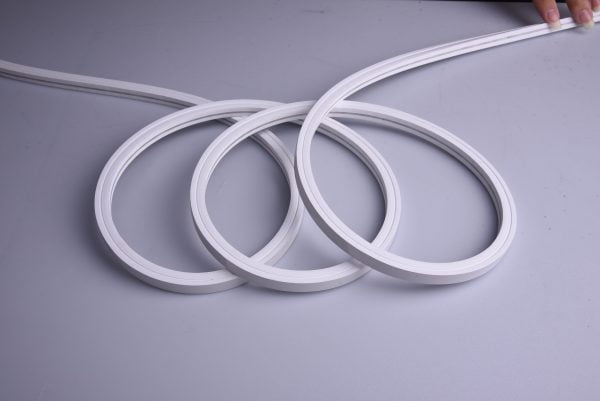
In this context, our flexible LD-FR-SJS-DC24V-XXXX-120-1010mm Neon Flex (Hollow Extrusion) helps us mitigate several risk points. Its IP67 water-resistant structure and uniform surface illumination allow us to use it in outdoor linear installations without frequent service interruptions. The slim 1010 mm profile offers strong bendability, and its pure silicone extrusion supports long-term stability in diverse environments. Because it can be cut and joined freely, we can adjust its length precisely to fit project layouts, which reduces future service complexity. The UV- and flame-resistant design adds reliability, while smart control capability gives project owners flexible management options.
Coordination Across Multiple Stakeholders
A large public network involves departments, contractors, and facility teams working in parallel. Coordinating maintenance cycles, reporting methods, and inspection procedures becomes a major operational challenge. We communicate closely with partners to ensure that each fixture, from linear accents to roadway fittings, receives timely evaluation. This alignment is fundamental to protecting the long-term integrity of solutions deployed by LEDIA Lighting.
Conclusion
From accessibility restrictions to environmental effects and coordination demands, maintaining LED fixtures across extensive municipal networks requires structured planning. As we continue implementing LED lighting solutions, our goal is to make each installation easier to service throughout its life cycle. With dependable materials and thoughtful engineering, we support stable and efficient public lighting LED systems for our project clients.