



-
Recessed Lighting Spacing for Kitchens and Living Rooms
Master the perfect recessed lighting layout. Learn how to space ceiling lights in your kitchen and living room to eliminate shadows and create the ideal ambiance.Read more -
4-Inch vs. 6-Inch Recessed Lighting: How to Choose the Right Size for Your Ceiling
Deciding between 4-inch and 6-inch recessed lights? Discover the best size for your ceiling height, room style, and lighting goals in this comprehensive guide.Read more -
2026 Lighting Power Density: Energy Code Compliance Path, Energy Codes (with LPD Calculator & 2026 Section 179 Calculator)
The latest 2026 Lighting Power Density (LPD) requirements. A comprehensive guide to energy codes for sustainable commercial lighting.Read more
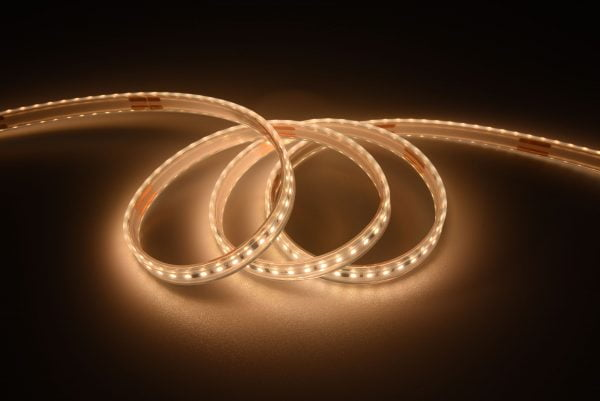
Understanding Flickering in Commercial Lighting Systems
- 1 Apr 2024
In commercial and industrial projects, lighting stability is a key requirement for contractors and facility managers. As an LED Lighting manufacturer, we often receive questions about why LED lights flicker in real applications. At LEDIA Lighting, we focus on providing consistent performance lighting systems for engineering projects, including warehouse and high-ceiling environments where reliability is critical. Flickering is not always a product defect; it is usually related to installation conditions, electrical compatibility, or system configuration. Understanding these factors helps project teams reduce operational issues and improve lighting stability across different applications.
Electrical and System-Related Causes
One of the most common reasons for flickering is unstable power supply or incompatible dimming systems. As an experienced LED Lighting manufacturer, we have observed that voltage fluctuation, improper drivers, or mismatched control systems can easily affect lighting performance. In some industrial environments, especially where a LED high bay light manufacturer solution is used, long cable runs and high-load circuits may also introduce instability. At LEDIA Lighting, we design our lighting systems to work with standardized drivers and verified electrical components, helping reduce compatibility risks in engineering projects. Proper system matching is often more important than replacing the light source itself.
Installation and Environmental Factors
Beyond electrical issues, installation quality and environmental conditions also play an important role. As a LED high bay light manufacturer, we understand that large-scale facilities such as warehouses or production areas require careful wiring design and load balancing. Poor connections, loose terminals, or incorrect grounding can cause intermittent flickering. At LEDIA Lighting, our engineering-focused products are developed to support stable installation in complex environments, especially for contractors managing multiple lighting zones. We also consider heat dissipation and structural integration to support consistent operation in long-term industrial use.
System Compatibility and Practical Solutions
In many project cases, flickering can be reduced by improving system compatibility rather than changing fixtures directly. We recommend checking driver specifications, control systems, and load distribution before making adjustments. As a LED Lighting manufacturer, LEDIA Lighting works closely with project teams to ensure lighting systems are matched with suitable electrical components. For high-ceiling applications, selecting solutions from a LED high bay light manufacturer with verified system integration can significantly improve performance stability. Regular maintenance and proper commissioning also help maintain consistent lighting output over time.
Conclusion
Flickering in LED lighting systems is usually the result of system-level factors rather than a single product issue. From power supply stability to installation quality, each step in the lighting system affects performance. At LEDIA Lighting, we continue to support B2B customers with engineering-oriented lighting solutions as a LED Lighting manufacturer and LED high bay light manufacturer, focusing on system compatibility, installation reliability, and long-term operational stability for commercial and industrial projects.