



-
Recessed Lighting Spacing for Kitchens and Living Rooms
Master the perfect recessed lighting layout. Learn how to space ceiling lights in your kitchen and living room to eliminate shadows and create the ideal ambiance.Read more -
4-Inch vs. 6-Inch Recessed Lighting: How to Choose the Right Size for Your Ceiling
Deciding between 4-inch and 6-inch recessed lights? Discover the best size for your ceiling height, room style, and lighting goals in this comprehensive guide.Read more -
2026 Lighting Power Density: Energy Code Compliance Path, Energy Codes (with LPD Calculator & 2026 Section 179 Calculator)
The latest 2026 Lighting Power Density (LPD) requirements. A comprehensive guide to energy codes for sustainable commercial lighting.Read more
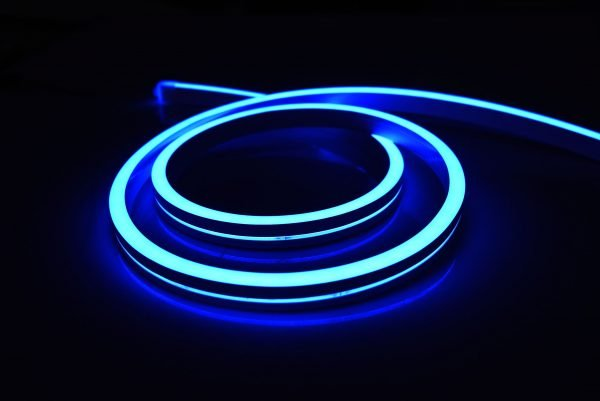
Can LED Strip Systems Run Continuously in Commercial Projects?
- 8 Apr 2024
At LEDIA Lighting, we often receive questions from project developers about whether lighting systems can operate continuously for long hours in real applications. In many commercial installations, LED light strip solutions are designed to support extended operation, but the actual usage depends on wiring safety, thermal management, and installation environment. In architectural lighting or retail environments, neon LED strip products are also selected for continuous visual effects where stable illumination is required throughout the day. From our engineering perspective, continuous operation is not only about product capability but also about how the system is integrated and maintained within the overall electrical design.
Electrical design, heat control and system stability
In our development process at LEDIA Lighting, we focus on verifying that wiring systems and circuit structures can support stable long-term operation under controlled conditions. LED light strip are typically designed with low-voltage input, which reduces electrical stress and allows safer continuous usage when properly installed. However, we always emphasize that thermal dissipation and installation environment play important roles in system reliability. For neon LED strip applications, especially in enclosed or outdoor architectural spaces, material selection and extrusion structure help maintain consistent performance during prolonged operation. Our 15,000 sqm manufacturing base and CNAS-accredited laboratory allow us to test electrical stability and insulation performance before products are delivered to B2B customers.
Engineering experience and application guidance
With more than 20 years of experience in the lighting industry, LEDIA Lighting works closely with engineering contractors and system integrators to ensure lighting solutions are applied correctly in real projects. Our two R&D teams, composed of engineers with strong industrial backgrounds, continuously refine wiring design and installation compatibility for LED light strip systems used in commercial environments such as shopping centers and public facilities. In large-scale projects, neon LED strip installations are often used for façade or contour lighting, where uninterrupted operation is expected. In these cases, we recommend proper load distribution and certified installation practices rather than relying solely on product specifications.
Conclusion: balancing usage time and system safety
In summary, LEDIA Lighting develops LED light strip and neon LED strip solutions that can support long operating hours when correctly designed and installed within a stable electrical system. Continuous operation is feasible in many B2B applications, but it must be aligned with wiring safety standards, thermal conditions, and project-level electrical planning. Our certified production system, combined with international compliance including CE, UL/ETL, and RoHS, helps ensure that lighting systems remain reliable in professional environments. Rather than focusing only on runtime, we encourage customers to evaluate overall system design for sustainable performance in commercial lighting projects.