



-
Recessed Lighting Spacing for Kitchens and Living Rooms
Master the perfect recessed lighting layout. Learn how to space ceiling lights in your kitchen and living room to eliminate shadows and create the ideal ambiance.Read more -
4-Inch vs. 6-Inch Recessed Lighting: How to Choose the Right Size for Your Ceiling
Deciding between 4-inch and 6-inch recessed lights? Discover the best size for your ceiling height, room style, and lighting goals in this comprehensive guide.Read more -
2026 Lighting Power Density: Energy Code Compliance Path, Energy Codes (with LPD Calculator & 2026 Section 179 Calculator)
The latest 2026 Lighting Power Density (LPD) requirements. A comprehensive guide to energy codes for sustainable commercial lighting.Read more
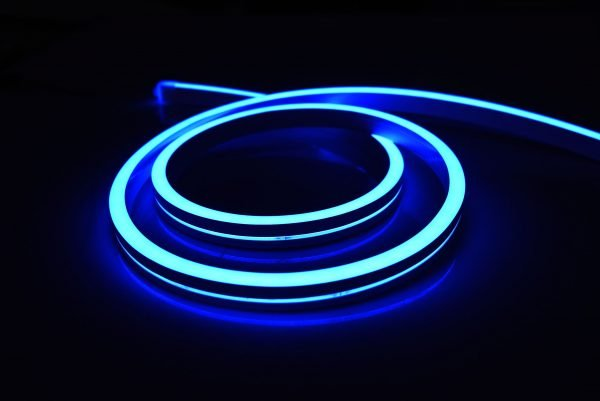
Safety Standards Behind Low-Voltage Wiring in LED Strip Systems
- 19 Apr 2024
At LEDIA Lighting, we understand that low-voltage wiring plays a critical role in the safety and stability of modern lighting systems. In commercial and architectural projects, solutions such as LED light strip systems are widely adopted because they reduce electrical risk while supporting flexible installation. In many engineering environments, neon LED strip products are also used for continuous linear lighting applications where both safety and visual consistency are required. From our perspective, wiring design is not treated as a secondary component but as an integrated part of the lighting system. We focus on conductor quality, insulation reliability, and voltage stability to maintain consistent connection performance under real project conditions.
Engineering structure, testing system and compliance
Our product development is supported by over 20 years of experience in the lighting industry, along with two dedicated R&D teams composed of engineers with strong industrial backgrounds. Our LED light strip systems are designed with integrated wiring paths that reduce exposed connection points during installation, which helps lower potential risks in complex project environments. For neon LED strip applications, especially those used in outdoor façades or semi-exposed architectural lighting, we apply reinforced extrusion structures to improve mechanical protection and electrical stability.
Our production base includes a 15,000 sqm manufacturing space and a 1,000 sqm laboratory equipped with CNAS-accredited testing capabilities. This allows us to verify electrical safety, insulation resistance, and long-term performance under controlled conditions. In addition, our products comply with international certification systems such as CE, RoHS, UL/ETL, TUV, SAA, and ENEC, which ensures that wiring standards meet global engineering expectations without compromising installation efficiency.
Application reliability in commercial and engineering projects
In real project applications, contractors and system integrators often evaluate wiring safety based on long-term operational stability. A LED light strip must maintain consistent conductivity across extended installation distances, particularly in retail environments, public infrastructure, or large-scale decorative lighting projects. Similarly, neon LED strip solutions are frequently selected for architectural contour lighting where uninterrupted operation is essential to visual design integrity.
At LEDIA Lighting, our engineering teams continuously optimize connection methods and wiring layouts based on feedback from global B2B projects. This includes improving interface stability, reducing installation errors, and enhancing compatibility with different control systems. Because many projects require scalable installation across multiple zones, maintaining uniform electrical behavior becomes a key requirement rather than an optional feature.
Conclusion: safety-focused engineering approach
Overall, LEDIA Lighting continues to develop LED light strip and neon LED strip solutions with a strong focus on low-voltage wiring safety, structural reliability, and international compliance. Our manufacturing capabilities, combined with certified testing systems and experienced engineering teams, allow us to support B2B customers in delivering stable and secure lighting installations across various commercial and architectural scenarios. By integrating safety standards directly into product design, we ensure that every lighting system maintains consistent performance throughout its lifecycle.