



-
Recessed Lighting Spacing for Kitchens and Living Rooms
Master the perfect recessed lighting layout. Learn how to space ceiling lights in your kitchen and living room to eliminate shadows and create the ideal ambiance.Read more -
4-Inch vs. 6-Inch Recessed Lighting: How to Choose the Right Size for Your Ceiling
Deciding between 4-inch and 6-inch recessed lights? Discover the best size for your ceiling height, room style, and lighting goals in this comprehensive guide.Read more -
2026 Lighting Power Density: Energy Code Compliance Path, Energy Codes (with LPD Calculator & 2026 Section 179 Calculator)
The latest 2026 Lighting Power Density (LPD) requirements. A comprehensive guide to energy codes for sustainable commercial lighting.Read more
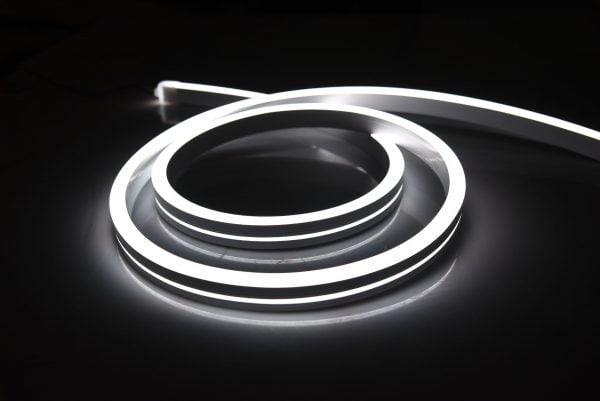
Energy Efficiency in Outdoor Lighting Projects: What We Observe with LEDIA Lighting Solutions
- 9 Apr 2024
At LEDIA Lighting, we often receive questions from project contractors and system integrators about energy consumption in outdoor lighting systems, especially when comparing modern solutions with conventional fixtures. In large-scale installations, LED strip lights are increasingly considered because they are designed to provide stable illumination while maintaining lower power demand. When used in landscape or architectural environments, LED strip lights typically consume significantly less electricity than traditional halogen or fluorescent outdoor lighting, while still maintaining consistent brightness across long installation runs. This balance between performance and efficiency is one reason many engineering clients evaluate them for long-term projects.
Practical Efficiency in Engineering and Commercial Use
From our experience working with engineering clients, exterior LED light strips are often selected for projects where continuous operation is required, such as building outlines, commercial facades, or public spaces. Compared with conventional outdoor lighting systems, exterior LED light strips generally operates with lower wattage requirements, which helps reduce overall energy load in system design. Instead of relying on high-energy bulbs, these solutions distribute light through flexible linear sources, allowing better energy allocation along the installation. At LEDIA Lighting, we design our systems to support stable electrical performance under different environmental conditions, which is particularly important for long-term infrastructure projects.
System Design and Material Considerations
In our engineering approach, we focus on integrating structural reliability with energy control. LED strip lights used in outdoor environments often adopt silicone-based protection and optimized circuit layouts to maintain efficiency under varying temperatures and humidity levels. Meanwhile, exterior LED light strips are commonly applied in modular installations where contractors need flexible configuration without increasing power complexity. Our production system, supported by over 20 years of industry experience and CNAS-accredited testing facilities, supports that each solution maintains consistent electrical characteristics across different project scales, supporting both performance stability and controlled energy usage.
Conclusion: Energy Efficiency in Real Project Conditions
In real engineering applications, LEDIA Lighting solutions demonstrate how modern lighting design can support energy-conscious construction without compromising functional requirements. Both LED strip lights and exterior LED light strips are widely evaluated by B2B clients because they offer predictable power consumption compared with traditional outdoor lighting systems, which often require higher energy input for similar coverage. As project demands continue to evolve, we focus on providing lighting systems that help contractors manage operational efficiency while maintaining visual performance across diverse outdoor environments.