Commercial lighting projects have different requirements. Retail displays need adjustable brightness to highlight merchandise, while hospitality spaces may call for softer illumination. Choosing a dimmable linear LED light involves more than comparing brightness; buyers must consider control compatibility, color temperature, installation structure and flexibility.
For designers, contractors and distributors, narrowing options early can simplify procurement. At LEDIA Lighting, we consider both the intended effect and practical installation requirements.
Start with the Project’s Lighting Requirements
Identify where the lighting will be installed. Display cabinets, retail shelving, counters and architectural details often benefit from slim fixtures that provide controlled illumination without occupying much space.
Consider brightness, dimensions, viewing angle and operating environment. Product displays may need more precise adjustment than general decorative lighting.
Also determine whether the project requires a fixed color temperature or tunable CCT. This distinction helps eliminate unsuitable products before comparing specifications. A dimmable linear LED light is most useful when its adjustment range supports a defined task, rather than being selected simply because dimming is available.
Separate Brightness Dimming from CCT Tuning
Dimming and color-temperature adjustment perform different functions. Dimming changes light intensity, allowing users to make a space brighter or softer. CCT tuning changes the perceived warmth or coolness of white light, often expressed in kelvins.
A retail team might lower brightness after business hours while retaining a neutral tone. A furniture showroom could choose warmer light for a relaxed atmosphere and cooler light for product presentation. Defining these needs separately prevents confusion between lighting effects and controls.
For projects requiring both functions, confirm whether brightness and CCT are adjusted independently, together, or through a specified controller. The arrangement should be clear to designers, electrical contractors and commissioning teams before orders are placed.
Check Dimming Method and Electrical Compatibility
The word “dimmable” does not identify a universal control method. TRIAC, 0–10V, DALI, PWM and other systems work differently. The driver or integrated control components must support the selected method, and the dimmer must be compatible with that equipment.
Our Needle G02 Series is a DC 24V CCT-tunable and dimmable linear lighting option with TRIAC dimming. Its product information describes compatibility with most wall dimmers. Teams should verify the dimmer model, driver, wiring and load rather than assuming every wall control performs identically.
Testing a sample at full, middle and low brightness can reveal flicker, uneven transitions, buzzing or an unsatisfactory minimum level. Evaluate the fixture as part of the complete electrical system, not in isolation.
Consider the Benefits of a Magnetic Linear Light
Installation method can narrow the shortlist as effectively as optical performance. Conventional fixtures may require fixed brackets, screws or more involved wiring connections. Where display structures or furniture need modular lighting sections, a magnetic linear light can offer a more adaptable arrangement.
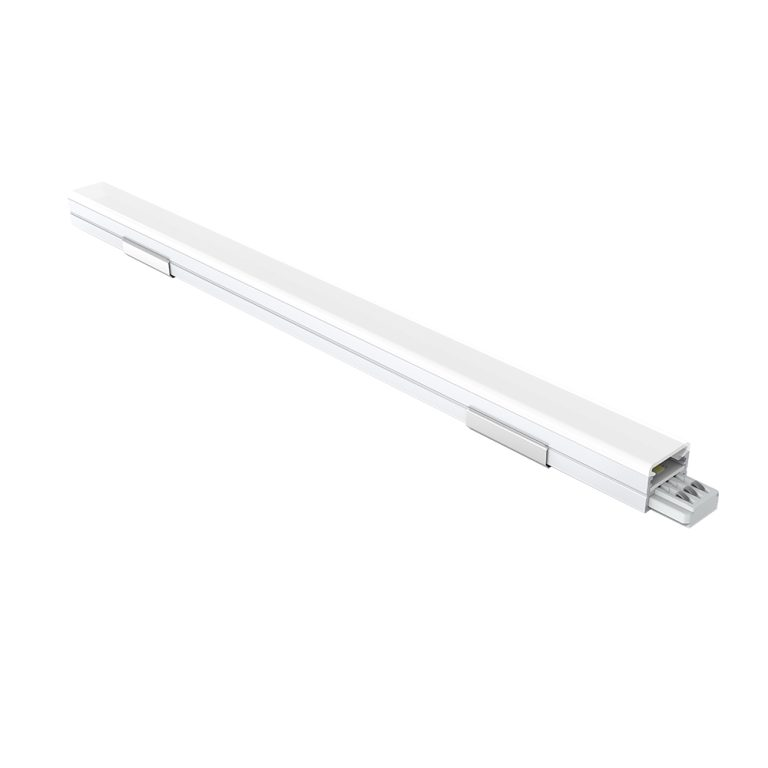
The Needle G02 Series uses magnetic mounting and connection systems, with power supplied through its designated input. This structure is intended to simplify installation and adjustment, while its ultra-slim profile supports discreet integration into retail displays, cabinets and other built-in applications.
Before specifying a magnetic linear light, check bar connections, power-entry points, available lengths and connector options against the drawings. Follow electrical and mounting instructions, and confirm surface suitability, connection capacity and maintenance access.
Review Size, Appearance and Light Quality
A fixture may meet control requirements but remain unsuitable if it is too visible or distributes light poorly. Compare its dimensions with the available space and consider the distance to the illuminated surface.
For retail displays, check color rendering and CCT against the materials being illuminated. Wood, fabric and merchandise can look different under different white-light settings, making sample review valuable.
A slim magnetic fixture may keep attention on the products rather than the light source. However, the final visual result depends on placement, spacing, surface reflectance and output.
Prepare a Clear Project Specification
Translate the design intent into a procurement checklist: DC voltage, dimming method, CCT adjustment, brightness range, dimensions, connections and installation location. Identify separately controlled sections and the suppliers of compatible drivers or dimmers. Include cable routes, access for servicing and any required scene settings in the drawings so installers can coordinate the system before site work begins.
At LEDIA Lighting, we consider the Needle G02 Series for retail, display and integrated lighting applications where DC 24V operation, TRIAC dimming, tunable CCT, magnetic connections and a discreet profile align with the project brief. These features provide a starting point for evaluation, not a substitute for checking the complete system.
Make the Shortlist Fit the Installation
Narrowing down dimmable linear lighting is easier when teams begin with the required lighting behavior and work outward to control compatibility, physical design and installation details. Separating brightness needs from CCT requirements, checking electrical components and reviewing samples can reduce specification gaps before procurement.
At LEDIA Lighting, we help project teams assess linear lighting options against their intended applications. Whether the priority is adjustable brightness, tunable white light or a flexible connection layout, a well-defined brief makes it easier to select a dimmable linear LED light that fits the space and installation plan. For display and furniture projects, a magnetic linear light may be worth evaluating when discreet integration and convenient connection are important.