



-
Recessed Lighting Spacing for Kitchens and Living Rooms
Master the perfect recessed lighting layout. Learn how to space ceiling lights in your kitchen and living room to eliminate shadows and create the ideal ambiance.Read more -
4-Inch vs. 6-Inch Recessed Lighting: How to Choose the Right Size for Your Ceiling
Deciding between 4-inch and 6-inch recessed lights? Discover the best size for your ceiling height, room style, and lighting goals in this comprehensive guide.Read more -
2026 Lighting Power Density: Energy Code Compliance Path, Energy Codes (with LPD Calculator & 2026 Section 179 Calculator)
The latest 2026 Lighting Power Density (LPD) requirements. A comprehensive guide to energy codes for sustainable commercial lighting.Read more
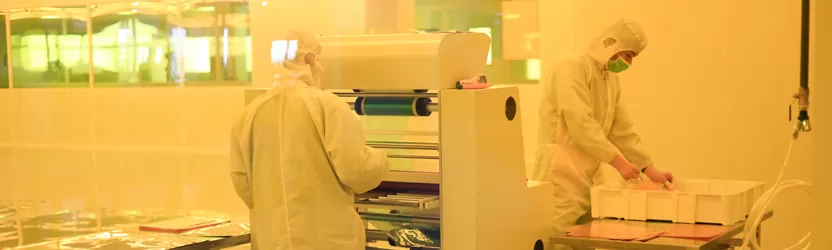
Maintaining Longevity in High-Density LED Strips Through Effective Heat Dissipation
- 13 Jun 2024
Managing thermal output is a fundamental challenge we face as an LED lighting manufacturer, especially with the trend towards higher-density strips. The concentration of more LEDs into a compact space generates significant heat, which, if not properly controlled, can degrade light output and shorten operational life. Our approach to this issue involves a multi-layered strategy focused on material science and mechanical design. Effective thermal management is not an optional feature but a core requirement for producing reliable high-performance lighting.
Employing Advanced Substrate Materials
The foundation of heat management lies in the printed circuit board (PCB) itself. While standard flexible strips use a simple copper layer, we utilize metal core PCBs (MCPCBs) for high-density applications. The core of these boards is often an aluminum alloy, a material chosen for its excellent thermal conductivity. This layer acts as a primary highway, rapidly drawing heat away from the individual LED chips. This method prevents thermal buildup at the source, which is a critical first step for any LED strip light manufacturers committed to product durability and consistent performance.
Integrating Efficient Thermal Pads and Adhesives
A crucial, often unseen component is the thermal interface material. Simply attaching an LED strip to a surface is insufficient if heat cannot transfer effectively. We incorporate high-performance thermal pads or thermally conductive adhesives on the back of our strips. These materials fill microscopic air gaps between the strip and the installation surface, creating a seamless path for heat to migrate from the PCB to a heat sink or mounting structure. This process is vital for dissipating thermal energy into the environment and maintaining a lower operating temperature.
Optimizing Design for Maximum Surface Contact
The physical design of the strip and its installation guidance are final, critical elements. We design our strips with a wider copper trace width to reduce electrical resistance and subsequent heat generation. Furthermore, we provide clear specifications for installers, emphasizing the necessity of mounting high-density strips onto aluminum profiles or other suitable heat-sinking surfaces. This practice dramatically increases the surface area available for cooling. For an LED lighting manufacturer, this holistic view—from internal design to external application—is what ensures the longevity of the product in the field.
The relentless pursuit of effective heat dissipation is what separates transient products from enduring solutions. It is a complex puzzle solved through material selection, adhesive technology, and intelligent design principles. At LEDIA Lighting, we engineer these thermal management strategies into the DNA of our high-density LED strips. Our commitment is to provide you with lighting that not only meets its performance specifications on day one but continues to deliver brilliant, stable light far into the future.